Published: 3 November 2026
Two quotations sit on your table. One says baiting, the other says drill-and-inject soil treatment, and the prices are close. Which one should you sign?
This guide is for homeowners and landlords in KL and Selangor making that call. It puts termite baiting vs soil treatment side by side and matches them to five things only you know:
- Whether termites are active in the house right now.
- What kind of home you live in.
- Whether a renovation is coming.
- What you can spend over five years.
- Whether you need one method or both.
Want a second opinion on your quotation?
Our inspector can tell you which method your house actually needs before you pay for either. See our termite control service →
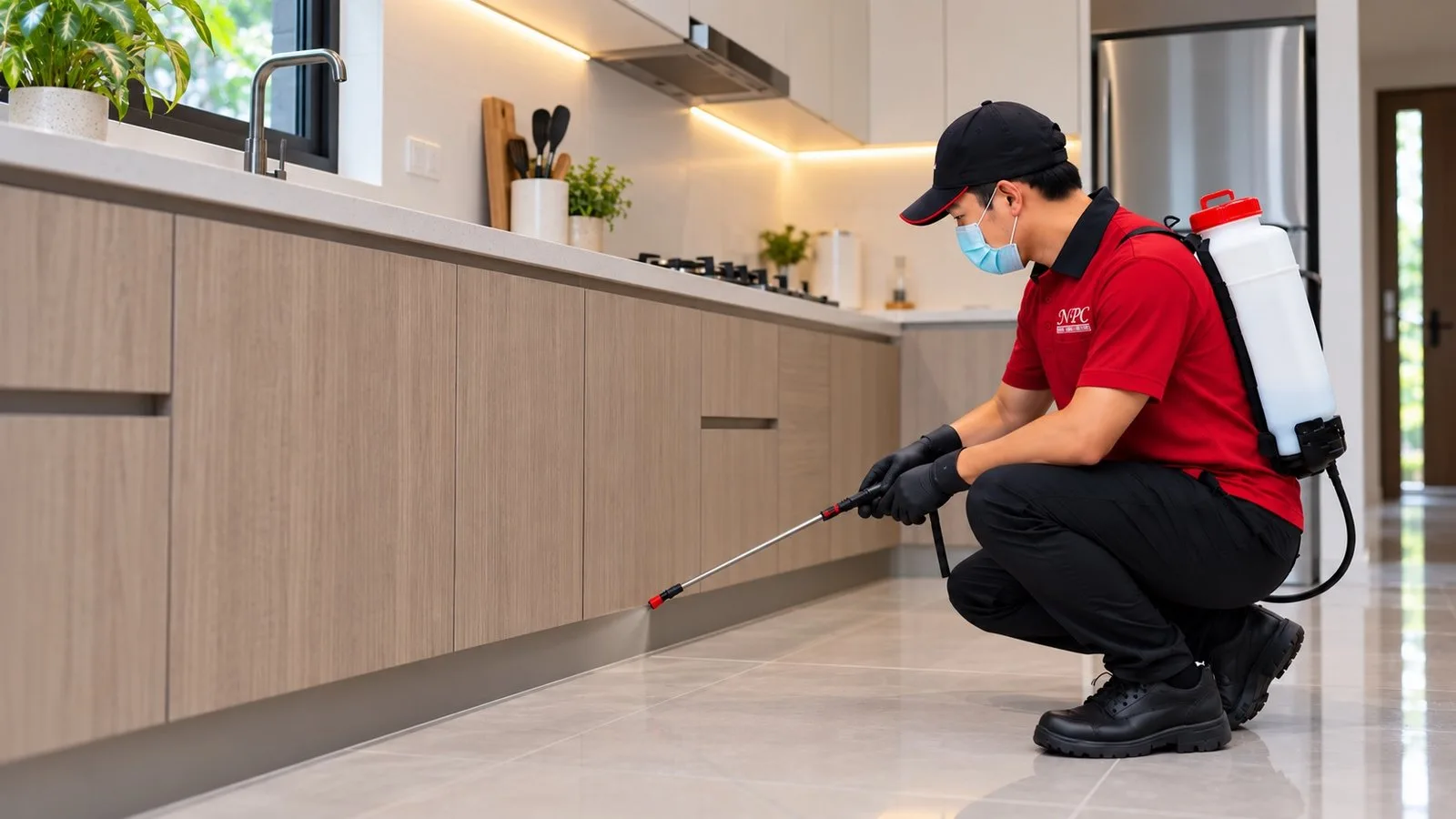
Here is a short look at NPC’s team at work.

1Termite Baiting vs Soil Treatment: What Is the Real Difference?
Quick Answer: The real difference in termite baiting vs soil treatment is the target. Baiting feeds termites a slow-acting bait that they carry back to the nest, so it aims to eliminate the colony. Soil treatment puts a termiticide layer in the ground around the building, so it aims to keep termites out. One removes, the other blocks.
Both are proven methods. They simply do different jobs:
- Baiting works on the colony. Stations are placed where termites are feeding or travelling. Workers eat the bait and share it, and the colony declines over weeks. Our guide to how a termite baiting system kills colonies explains each visit.
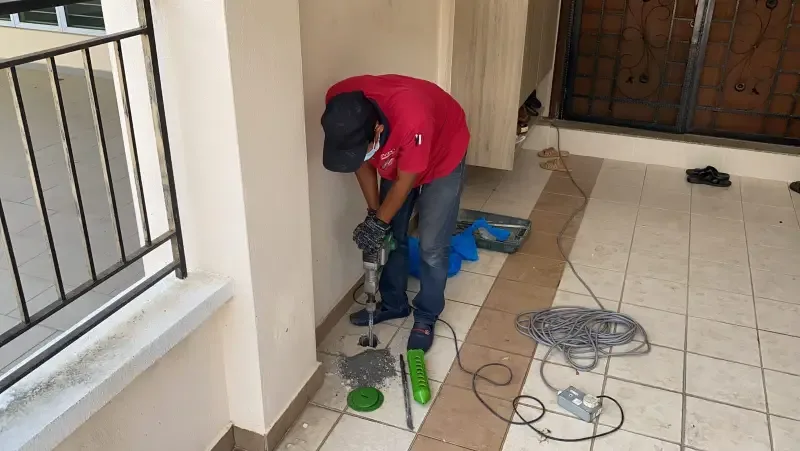
- Soil treatment works on the building. Termiticide is injected through small holes along the walls and floors to form a treated zone. Termites that cross it are killed or blocked. Our anti-termite soil treatment guide covers how the barrier is laid.
The useful question is which job your house needs done first.
2Are Termites Active Now? Which Method Comes First
Quick Answer: If termites are active inside your home now, baiting usually comes first, because a barrier laid around a live colony leaves the termites already inside untouched. If no termites are present and you want prevention, a soil barrier is often the better first choice. The table matches seven common situations to a starting method.
| Your situation | Better first choice | Why | Then |
|---|---|---|---|
| Live termites in door frames or cabinets now | Baiting | Aims to wipe out the colony that is already inside | Add a soil barrier later if termites are common on your street |
| No termites now, but neighbours have had them | Soil barrier | Protection starts on the day of treatment | Book a yearly inspection |
| Building a new house or an extension | Pre-construction soil treatment | The soil is open before the slab is cast | Keep the treatment record with your house papers |
| Big renovation planned in the next year or two | Baiting now | New slabs and drilling would break a barrier laid today | Soil barrier once the works are finished |
| Condo or flat unit above the ground floor | Baiting or spot treatment | There is no soil around the unit to treat | Report it to the management office |
| Marble, tiled porch or parquet you do not want drilled | Baiting or in-ground stations | No holes through finished floors | Check stations on schedule |
| Large termite mounds in the garden | Inspection first | Fungus-growing termites are harder to bait | Method decided after the species is known |
Source: decision guide by NPC Pest Control, 2026, with fungus-growing termite note from the Journal of Economic Entomology 2025 review.
Fresh mud tubes, soft door frames or swarmers at the lights all point to an active colony. If you have spotted a tube but are not sure it is live, our guide to termite mud tubes on your wall shows a simple break-and-check test.
Why order matters in termite baiting vs soil treatment:
- A barrier around a live colony can trap termites inside. Workers already in the walls keep eating, and may only be found again months later.
- Bait needs termites to find it. If there is no activity, there is nothing to feed, so baiting alone does little for prevention.
Not sure whether your home needs any treatment yet? Our risk check on whether your home needs anti-termite treatment helps you decide.
3Termite Baiting vs Soil Treatment by House Type
Quick Answer: Termite baiting vs soil treatment also depends on the home. Terraces, semi-Ds and bungalows touch the soil, so both methods work, though longer wall lines raise barrier costs. Upper-floor condo units have no soil to treat, so baiting or spot treatment is the practical choice. Older houses with extensions often suit baiting first.
| Home type | Baiting | Soil barrier (drill-and-inject) | Baiting, then soil barrier | Yearly monitoring stations |
|---|---|---|---|---|
| Intermediate terrace | Good fit | Good fit | Good fit | Possible |
| Corner terrace or semi-D | Good fit | Good fit | Good fit | Good fit |
| Bungalow with a garden | Good fit | Possible | Good fit | Good fit |
| Older house with extensions | Good fit | Possible | Good fit | Possible |
| Shophouse | Good fit | Possible | Possible | Poor fit |
| Condo or flat, ground floor | Good fit | Possible | Possible | Poor fit |
| Condo or flat, upper floor | Good fit | Poor fit | Poor fit | Poor fit |
Source: treatment-planning guide by NPC Pest Control, 2026. Assumes termites are active or common in the area. Not measured data.
What to watch for in each home type:
- Corner terraces, semi-Ds and bungalows. More wall line means more drilling and a higher price.
- Older houses with extensions. Each extension adds a slab joint where termites can enter, which a barrier may not fully seal.
- Shophouses and ground-floor condos. Common areas belong to management, so a barrier needs their approval. Baiting inside the unit avoids that.
- Upper-floor units. Termites arrive through cracks and ducts, not soil, so a barrier around your unit is not possible.
Before deciding, a full termite inspection maps the entry points, which tells you whether a barrier can cover them all.
4Planning a Renovation? How It Changes Termite Treatment
Quick Answer: A renovation changes termite baiting vs soil treatment because new slabs, hacked floors and drilled walls can break a soil barrier laid beforehand. If works are planned in the next year or two, treat active termites with baiting now, then lay the barrier after the renovation, or treat the soil before the new slab is cast.
Renovation is a common reason a barrier fails early. Digging, new concrete over untreated soil and cut floors each open a gap in the treated zone.
Match your plan to your timing:
- Renovating within a year. Use baiting for any live termites. Hold off on the full barrier until the works finish.
- Adding a kitchen or room extension. Ask for pre-construction anti-termite treatment on the soil before the slab is cast.
- Just finished renovating. This is the best time for a drill-and-inject barrier, as all the new joins are in place.
Renovation also matters for any warranty you hold. Our guide on whether a termite warranty covers re-infestation explains why works can void cover, and our post-construction treatment owner’s guide covers keeping it valid.
Renovation coming up?
Tell us your timeline and we will plan termite treatment around the works, so you only pay once. Plan termite treatment around your renovation →
5Termite Baiting vs Soil Treatment Cost Over 5 Years
Quick Answer: Over five years, termite baiting vs soil treatment costs depend on the path, not the first invoice. For a Klang Valley terrace, baiting is indicatively RM1,200 to RM3,500 and a soil barrier RM2,500 to RM4,500. A barrier around a live colony often leads to extra baiting later, while yearly monitoring adds a recurring fee.
| Spend so far (RM) | Year 0 | Year 1 | Year 2 | Year 3 | Year 4 | Year 5 |
|---|---|---|---|---|---|---|
| No termites yet: soil barrier only | RM3,500 | RM3,500 | RM3,500 | RM3,500 | RM3,500 | RM3,500 |
| Active colony: baiting, then soil barrier | RM2,350 | RM5,850 | RM5,850 | RM5,850 | RM5,850 | RM5,850 |
| Active colony: soil barrier first, baiting when termites return | RM3,500 | RM5,850 | RM6,400 | RM6,950 | RM6,950 | RM6,950 |
| Active colony: baiting, then yearly monitoring stations | RM2,350 | RM3,750 | RM5,150 | RM6,550 | RM7,950 | RM9,350 |
Source: illustrative scenario by NPC Pest Control, 2026, for a Klang Valley intermediate terrace house, using the mid-points of our indicative ranges (baiting RM2,350, soil barrier RM3,500, monitoring RM1,400 a year, spot treatment RM550). Repair costs not included. Not a quotation.
The figures are indicative ranges from our anti-termite treatment cost guide; your quote follows an inspection.
What the five-year view shows:
- The cheapest first quote is not always the cheapest path. A barrier laid around a live colony can lead to baiting and spot treatment later.
- Baiting then a barrier costs less than getting the order wrong. It also clears the colony first, which limits damage.
- Monitoring stations add up. At RM800 to RM2,000 a year, they suit homes with repeated attacks more than low-risk houses.
When comparing quotations, ask how many visits and follow-up checks each price includes. Our 8 checks for a termite control company list what a written quote should state.
6What Does Research Say About Termite Baiting vs Soil Treatment?
Quick Answer: Research on termite baiting vs soil treatment supports both, for different jobs. A Malaysian area-wide study cleared termites at bait stations in about 40 to 65 days. Laboratory work found that fipronil soil far from the nest killed as little as 1.5% of the colony, which is why barriers are used to protect buildings.
| Published finding | Result |
|---|---|
| Days to clear termites at in-ground bait stations (USM area-wide study) | about 40 days |
| Days to clear termites at above-ground bait stations, same study | about 65 days |
| Baited premises with no reinfestation (survey of Southeast Asian pest managers) | more than 90% |
| Colony killed when fipronil soil sat 1.5 m from the nest (laboratory) | as little as 23.5% |
| Colony killed when fipronil soil sat 7.5 to 12.5 m from the nest (laboratory) | as little as 1.5% |
Sources: Scientific Reports 2026; Journal of Economic Entomology 2025 (review and survey); Journal of Economic Entomology 2024 (laboratory). Dark bars = baiting results (day bars scaled to 65 days); light bars = colony killed by a soil barrier.
What the studies found:
- Baiting clears colonies in weeks. A 2026 area-wide study in Scientific Reports used 11,511 in-ground stations and cleared termite activity in about 40 days in-ground and 65 days above-ground.
- A little bait can go a long way. A 2020 study in Insects found bait in one of six active stations was enough to destroy a connected Coptotermes gestroi colony, usually within 4 to 8 weeks.
- Reinfestation after baiting is low. A 2025 Southeast Asian review reported reinfestation in fewer than 10% of baited premises, but fungus-growing termites remain harder to bait.
- Barriers protect, but rarely reach the nest. A 2024 laboratory study found colony kill fell to as little as 1.5% when treated soil sat 7.5 to 12.5 m from the nest.
Soil barriers do hold up well over time when applied properly. A 2022 review in Insects notes the US standard requires soil termiticides to give five years of complete protection in field tests.
7Can You Combine Termite Baiting and Soil Treatment?
Quick Answer: Yes, you can combine termite baiting and soil treatment, and many Malaysian homes with active termites benefit from it. The usual order is baiting first until the colony is gone, then a soil barrier to keep new colonies out. Laying both at once can stop termites reaching the bait, so timing matters.
When combining makes sense:
- Repeated attacks. The house has been treated before and termites returned.
- Neighbours with termites. New colonies keep arriving from next door or a vacant lot.
When one method is enough: a single, contained attack in a low-risk area may only need baiting plus a yearly inspection. A new, termite-free home may only need a barrier.
If you are buying a newly handed-over house, check what the developer’s anti-termite certificate and warranty already covers before paying for more.
8How to Choose Between Termite Baiting and Soil Treatment
Quick Answer: To choose between termite baiting and soil treatment, confirm whether termites are active, note your house type, check your renovation plans, compare the five-year cost of each path and ask the inspector to explain the order. A good recommendation names the method, the sequence and what happens if termites return.
How to choose between termite baiting and soil treatment
Work through these steps before you sign.
- Book an inspection first. Ask the inspector to confirm whether termites are active, which species and where they enter.
- Answer the active-or-preventive question. Live termites point to baiting; a clean house points to a barrier or monitoring.
- Check your house type. Upper-floor units and heavily finished floors lean towards baiting.
- Look at your renovation plans. If works are coming, delay the full barrier until they are done.
- Compare the five-year path. Add up the first treatment, any follow-up and any yearly fees.
- Get the plan in writing. The quote should state the method, visits, chemicals used and what happens if termites return.
Under Malaysia’s Pesticides (Pest Control Operator) Rules 2004, a licensed operator must give you a written report of the pesticide, method and area treated. Keep it with your house papers.
9Conclusion: Match the Method to the Job
Quick Answer: In termite baiting vs soil treatment, each method has its own job. Baiting comes first when termites are active, and a soil barrier fits prevention, new builds and the period after a renovation. Your home type and five-year budget fine-tune the choice, and many homes use both, in the right order.
Visit the NPC Pest Control homepage to learn about our work across KL and Selangor, or see our termite control service to book a visit.
10Frequently Asked Questions
1. Is termite baiting safer than soil treatment for children and pets?
Baiting uses a small amount of bait inside closed stations, so very little chemical goes into the home. Soil treatment puts a larger volume of termiticide into the ground along the walls, applied by licensed staff. Both are considered safe when done properly; keep children and pets away during the work.
2. Can I switch from baiting to soil treatment halfway?
Avoid it while the colony is still feeding. A barrier can cut termites off from the bait before they have spread it through the nest. Finish the baiting programme first, confirm activity has stopped, then add the barrier.
3. Do I need both baiting and soil treatment?
Not always. Baiting alone may be enough if termites are rare on your street and you inspect yearly. Homes with repeated attacks, or neighbours with termites, often benefit from baiting first and a soil barrier afterwards.
4. Does NPC Pest Control offer both methods?
NPC Pest Control is a licensed pest control operator in Puchong with over 15 years of work across Kuala Lumpur and Selangor, and inspections are free. Call 03-8061 1875 or 016-335 9799, Monday to Saturday, 9am to 6pm, to discuss which method fits your home.
Still torn between baiting and a soil barrier?
Let us inspect your home, find where the termites are coming from, and explain which method fits your house, your plans and your budget.
Book a free termite inspection →