Last updated: 22 September 2026
1What Is a Termite Baiting System?
Quick Answer: A termite baiting system in Malaysia is a set of plastic stations placed on active termite trails indoors or in the soil around a building. Each station holds a cellulose bait mixed with a slow-acting insect growth regulator. Foraging termites eat it and carry it home, which lets the treatment reach a colony you cannot see or spray.
NPC Pest Control is a licensed operator based in Puchong, with over 15 years of termite work in Kuala Lumpur and Selangor. Owners often expect termites to vanish in a day, like after a spray. A termite baiting system in Malaysia is built to be slow, and that is exactly why it works.
This guide explains how a termite baiting system in Malaysia kills a colony, what happens at each visit, how long it takes and when it is the wrong choice. For the full service, from inspection to warranty, see our termite control services page. If you are still deciding whether your house needs treatment at all, read does your home need anti-termite treatment first.
Seen mud tubes or wings near a window?
Our team inspects for free, confirms the species and tells you whether baiting suits your home. See how our termite treatment works →
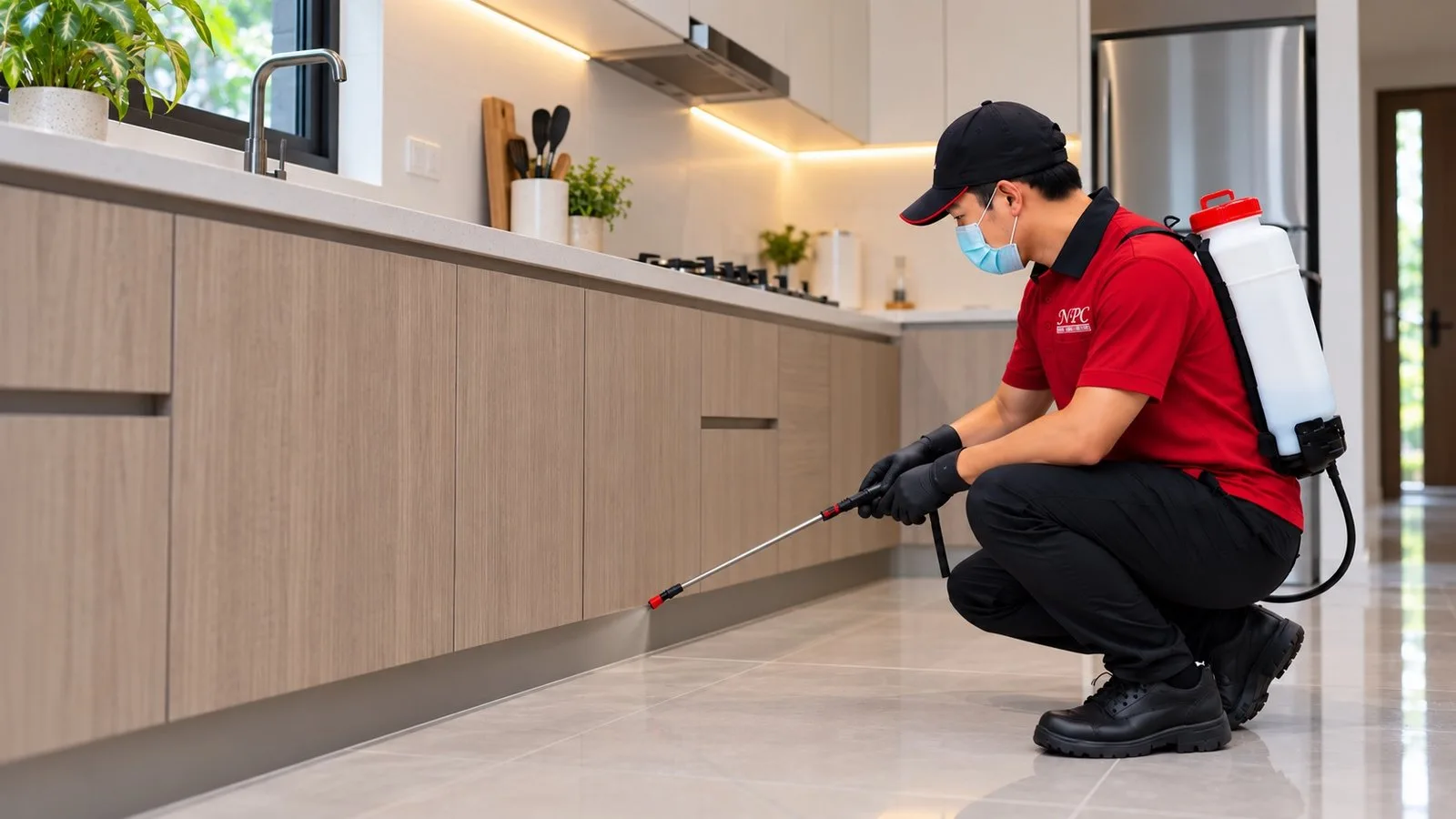
Here is a short look at NPC’s licensed team at work.

2How Does a Termite Baiting System Kill the Whole Colony?
Quick Answer: A termite baiting system in Malaysia kills the colony through sharing, not contact. Worker termites eat the bait and pass it mouth to mouth to soldiers, young termites and the queen. The active ingredient, usually a chitin synthesis inhibitor, stops termites from building a new outer skin. When they try to moult, they die, and the colony slowly collapses.
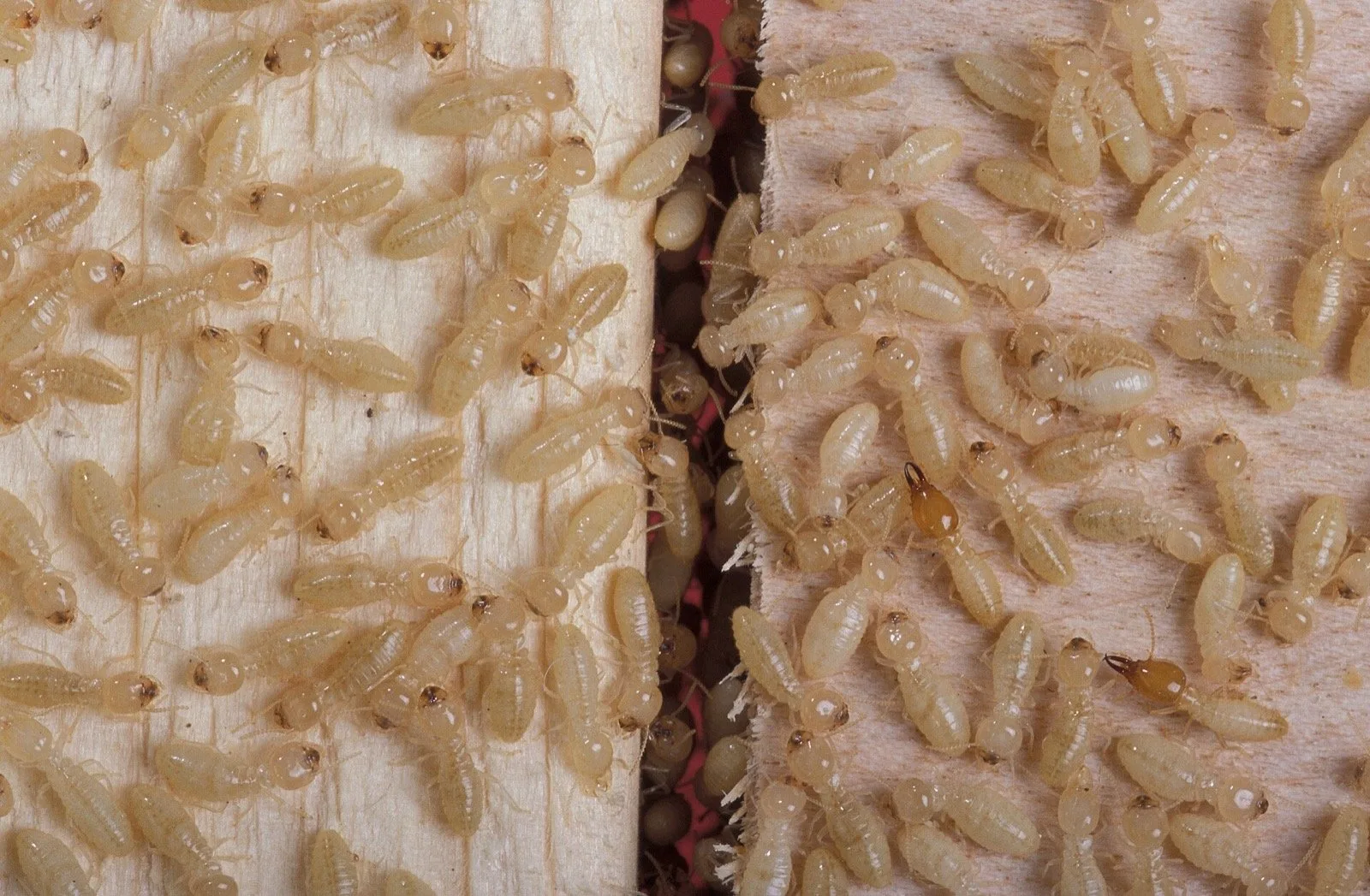
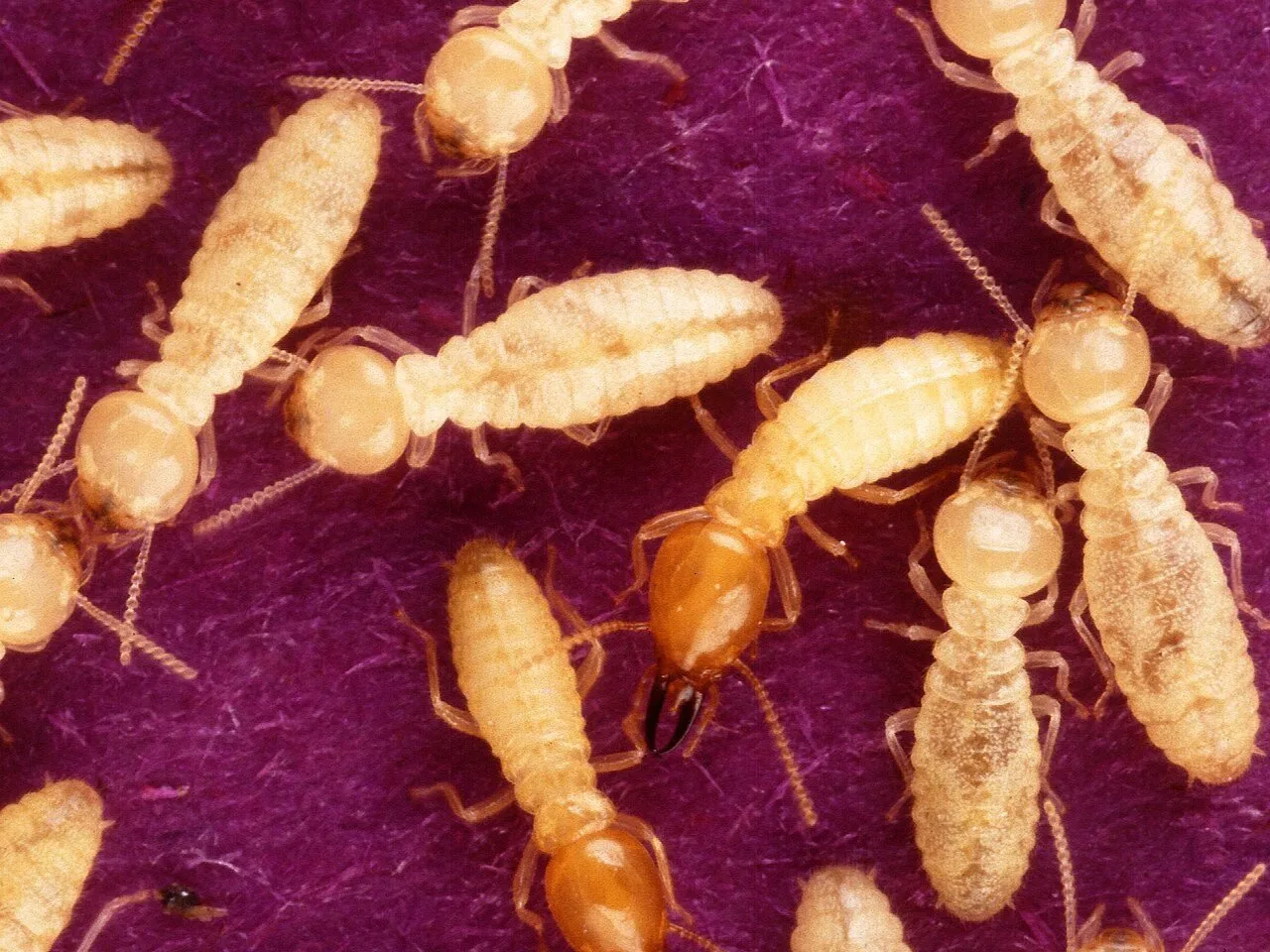
Subterranean termites, the kind that damage most Malaysian homes, nest in the soil. Only workers leave to find food, then feed everyone else. A spray kills only the workers it touches. A termite baiting system turns those same workers into delivery riders for the treatment.
- Workers find the station. The bait is made of cellulose, the same food they get from timber, so they accept it readily.
- The bait is shared. Termites feed each other constantly, so the active ingredient spreads through the colony over days and weeks.
- Moulting fails. Termites must shed their skin to grow. A chitin synthesis inhibitor such as chlorfluazuron or hexaflumuron blocks the new skin from forming.
- The colony runs out of workers. With no new workers to feed it, the queen and the rest of the nest die.
Slow is the whole point. If the bait killed quickly, dead termites would pile up at the station and the others would avoid it. A slow bait lets the colony keep feeding until enough has spread through the nest. Research on chlorfluazuron baiting of Coptotermes gestroi (Insects, 2020) showed that bait in just one of six connected active stations was enough to destroy the colony feeding across all six.
3Baiting vs Soil Treatment vs Spraying: Which Kills the Colony?
Quick Answer: Of the three common approaches, only a termite baiting system is designed to eliminate the colony itself. A soil barrier stops termites from crossing into the building and kills those that touch it. Spraying mud tubes kills the termites you can see, but the colony survives. The table compares how each method works in a Malaysian home.
| Method | How it works | Kills the colony? | Drilling | Time to result | Best for |
|---|---|---|---|---|---|
| Termite baiting system | Termites eat a slow bait and share it through the nest | Yes, designed to eliminate it | None | About 1 to 3 months | Active attack in a finished home |
| Soil barrier (drill-and-inject) | Termiticide layer in the soil along the walls | Not directly; blocks and kills those crossing | Along the wall line | Protection from day one | Preventing new attacks |
| Spot spraying of mud tubes | Kills termites on contact | No, colony survives | None | Hours, then termites return | Not recommended on its own |
| In-ground monitoring stations | Untreated wood checked on a schedule, baited when hit | Yes, once termites are intercepted | None | Ongoing early warning | Homes with soil around them |
Source: NPC Pest Control field practice, Klang Valley, 2026; baiting timeline from Malaysian studies cited in Section 5.
These methods are tools for different jobs. A termite baiting system in Malaysia deals with a colony that is already attacking the house. A soil barrier protects a building from new colonies, which our anti-termite soil treatment guide explains in detail. Many homes need both, in that order: bait first to remove the colony, then a barrier or monitoring to keep the next one out.
Spraying is the method to avoid on its own. Off-the-shelf sprays on mud tubes kill a few hundred workers and scare the rest into building a new route, often somewhere harder to find. That also slows any later baiting programme.
4What Happens at Each Termite Baiting Visit?
Quick Answer: A typical termite baiting system in Malaysia runs over several visits. The first installs stations on active trails. Follow-up visits, usually every two to three weeks, check how much bait has been eaten and top it up. As the colony weakens, consumption drops, fewer stations stay active, and the final visit confirms no termites remain.
| Measure | Visit 1 (install) | Week 3 | Week 6 | Week 9 | Week 12 |
|---|---|---|---|---|---|
| Bait eaten (index) | 0 | 100 | 70 | 25 | 0 |
| Active stations (of 6) | 6 | 6 | 4 | 1 | 0 |
| New mud tubes found | 4 | 2 | 1 | 0 | 0 |
Source: illustrative model of a single-colony terrace house programme, peak bait consumption = 100, NPC Pest Control, 2026.
This is what a successful termite baiting system in Malaysia looks like. Bait consumption rises as more workers find the stations, then falls as the colony weakens. The drop is good news, not a sign the bait has stopped working.
At each visit our technician records three things: how much bait was eaten, which stations still have live termites, and whether any new mud tubes have appeared. That record shows you, visit by visit, that the colony is declining. If you are comparing providers, ask how many visits their quote includes, because a single-visit baiting job cannot track any of this. Our anti-termite treatment cost guide shows how visit numbers affect the price.
5How Long Does Termite Baiting Take to Eliminate a Colony?
Quick Answer: Most termite baiting in Malaysia takes about one to three months to eliminate a colony. Studies of Malaysian subterranean termites report around 4 to 8 weeks with chlorfluazuron bait, and an average of about 40 days for in-ground stations and 65 days for above-ground stations. Large or multiple colonies take longer.
| Baiting setting | Days to elimination | Days | Study |
|---|---|---|---|
| Above-ground stations, area-wide study | 65 | Scientific Reports, 2026 | |
| Selective baiting, slower colonies | 56 | Insects, 2020 (8 weeks) | |
| In-ground stations, area-wide study | 40 | Scientific Reports, 2026 | |
| Selective baiting, faster colonies | 28 | Insects, 2020 (4 weeks) |
Source: compiled by NPC Pest Control from Salim et al., Scientific Reports (2026) and Wan Umar & Ab Majid, Insects (2020). Averages rounded to whole days.
The figures come from Malaysian field work. In a large area-wide programme run by researchers at Universiti Sains Malaysia (Scientific Reports, 2026), 11,511 in-ground stations and 40 indoor stations were baited with chlorfluazuron. Termite activity at the in-ground stations was eliminated in an average of about 40 days, and indoor above-ground stations took about 65 days.
Several things stretch a termite baiting system timeline in a real Malaysian home:
- More than one colony. A corner house or a home next to open land can host two or three colonies, each needing time.
- Disturbed stations. Opening a station or spraying near it can make termites abandon it for weeks.
- Too few stations. Stations placed off the active trail get little feeding, so the bait spreads slowly.
Termites back after a spray treatment?
We will inspect for free and tell you whether a baiting programme can finish the job properly. Book a free termite inspection →
6Above-Ground or In-Ground Bait Stations: Which Does Your Home Need?
Quick Answer: Above-ground bait stations are fixed directly onto active mud tubes or damaged timber inside the house, so termites feed straight away. In-ground stations are buried in the soil around the building to intercept foraging termites. A termite baiting system in Malaysia often uses above-ground stations to eliminate an active attack and in-ground stations for ongoing monitoring.
| Property type | Above-ground stations | In-ground stations |
|---|---|---|
| Condo or apartment unit | Strong fit | Limited |
| Intermediate terrace house | Strong fit | Useful |
| Corner lot or semi-D | Strong fit | Strong fit |
| Bungalow with garden | Useful | Strong fit |
| Older shophouse | Strong fit | Limited |
| Factory or warehouse | Useful | Strong fit |
Source: illustrative guide from NPC Pest Control site surveys, Klang Valley, 2026.
Most Klang Valley homes start with above-ground stations, because terrace houses and condos have little open soil. A review of termite baiting in Southeast Asia (Journal of Economic Entomology, 2025) surveyed pest management professionals in the region. Most preferred above-ground baiting, citing building constraints and the low rate at which termites find in-ground stations.
In-ground stations earn their place on homes with gardens, bungalows and commercial sites with a long soil perimeter. Once an active colony is eliminated, they act as an early-warning system, which our termite inspection guide covers as part of routine checks. For factories and warehouses, see our commercial pest control page.
7What Should You Do During a Termite Baiting Programme?
Quick Answer: During a termite baiting system programme, your main job is to leave the stations and the termites alone. Do not open stations, spray insecticide, break mud tubes or move damaged furniture near them. Keep the area dry, note any new activity and let the technician check the stations on schedule. Most failed baiting jobs are disturbed ones.
How to prepare your home for termite baiting
Follow these steps from the day the stations go in until the colony is confirmed dead.
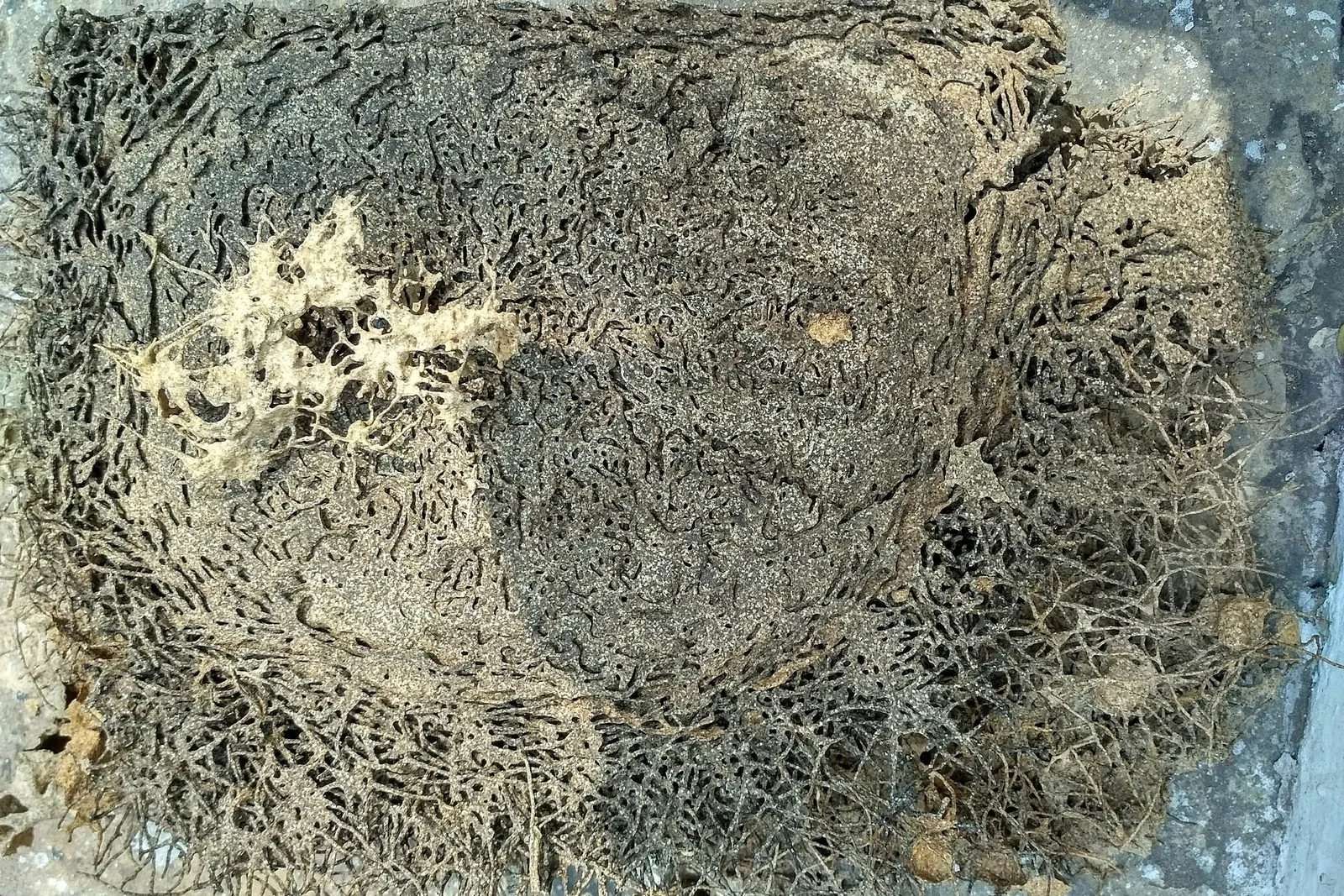
- Leave mud tubes intact. Do not scrape away tubes or damaged timber before the technician arrives. They show where the stations should go.
- Stop all spraying. Put away insect sprays and do not let anyone else treat the area, because sprays drive termites away from the bait.
- Do not open the stations. Every opening lets in light and air, which makes termites leave the station.
- Keep the area dry. Fix leaking pipes and aircon drains near the stations, because damp timber gives termites other food.
- Record new activity. Photograph any new mud tube or wings and show the technician.
- Keep every appointment. Missed visits mean empty stations, and an empty station lets the colony recover.
Our guide to white ant warning signs shows what to look for, so you can call before the damage spreads.
8Is a Termite Baiting System Worth It in Malaysia?
Quick Answer: For most homes with an active subterranean termite attack, a termite baiting system in Malaysia is worth it because it removes the colony without drilling floors and uses very little chemical. It is less suited to fungus-growing mound termites, homes that need protection before any attack, or owners who cannot allow several months of visits.
Is a termite baiting system in Malaysia reliable? The Southeast Asia review found that all bait products eliminated termite colonies and reinfestation occurred in fewer than 10% of baited premises. It also noted the limits. Baits worked well on Coptotermes, the main house-damaging group, but fungus-growing termites such as Macrotermes gilvus remain harder to control.
| Baiting is a good fit when | Consider another method when |
|---|---|
| Termites are active in door frames, cabinets or roof timber | There is no attack yet and you want prevention only |
| You want to avoid drilling marble or tiled floors | The problem is a mound-building, fungus-growing species |
| You have children, pets or food areas and want less chemical | You need results within days, such as before a handover |
If you are weighing up providers for a termite baiting system in Malaysia, our checklist for choosing the best termite control company in Malaysia explains what to ask about bait products and visit schedules. The wider guide to what to expect from termite control services covers how baiting fits with other treatments.
9Conclusion: Let the Bait Do Its Work
Quick Answer: A termite baiting system in Malaysia kills colonies by letting termites share a slow-acting bait until the whole nest dies. It takes weeks rather than days, needs no drilling, and works best when stations are placed on active trails, left undisturbed and checked on schedule. Follow it with monitoring or a barrier to keep new colonies out.
If you have seen mud tubes, wings or hollow timber, the next step is an inspection. It confirms the species, maps the active trails and tells you whether a termite baiting system in Malaysia is the right fit. For a broader view of treating every pest in your home, read what a pest control service includes, visit the NPC Pest Control homepage, or see our termite treatment service.
10Frequently Asked Questions
1. How long does a termite baiting system take to work in Malaysia?
Most colonies are eliminated in about one to three months. Malaysian studies report roughly 4 to 8 weeks with chlorfluazuron bait, and averages of about 40 days for in-ground stations and 65 days for above-ground stations. Several colonies, disturbed stations or damp timber can make it take longer.
2. Is termite bait safe for children and pets?
Termite bait is placed inside closed plastic stations and uses a small amount of active ingredient that targets insect moulting. That makes it a low-chemical option compared with spraying or soil injection. Keep children and pets away from the stations and never open them yourself.
3. Can I spray termites while the bait stations are in place?
No. Spraying kills the workers that carry bait back to the colony and drives the rest away from the stations. That slows or stops the programme. Leave mud tubes and damaged timber alone and tell your technician about any new activity instead.
4. Does baiting stop termites from coming back?
Baiting eliminates the colony that is attacking the house, and reinfestation is uncommon. It does not stop a new colony from arriving later. In-ground monitoring stations or a soil barrier after the colony is gone give ongoing protection.
5. Does NPC Pest Control offer termite baiting in Kuala Lumpur and Selangor?
Yes. NPC Pest Control inspects homes and businesses across Kuala Lumpur and Selangor for free, then recommends baiting, a soil barrier or both. Call 03-8061 1875, Monday to Saturday from 9am to 6pm, or request an inspection through our contact page.
Termites in your home right now?
Talk to NPC Pest Control. NPC Pest Control inspects for free, maps the active trails and sets up a baiting programme that runs until the colony is confirmed dead.
Book my free termite inspection →