
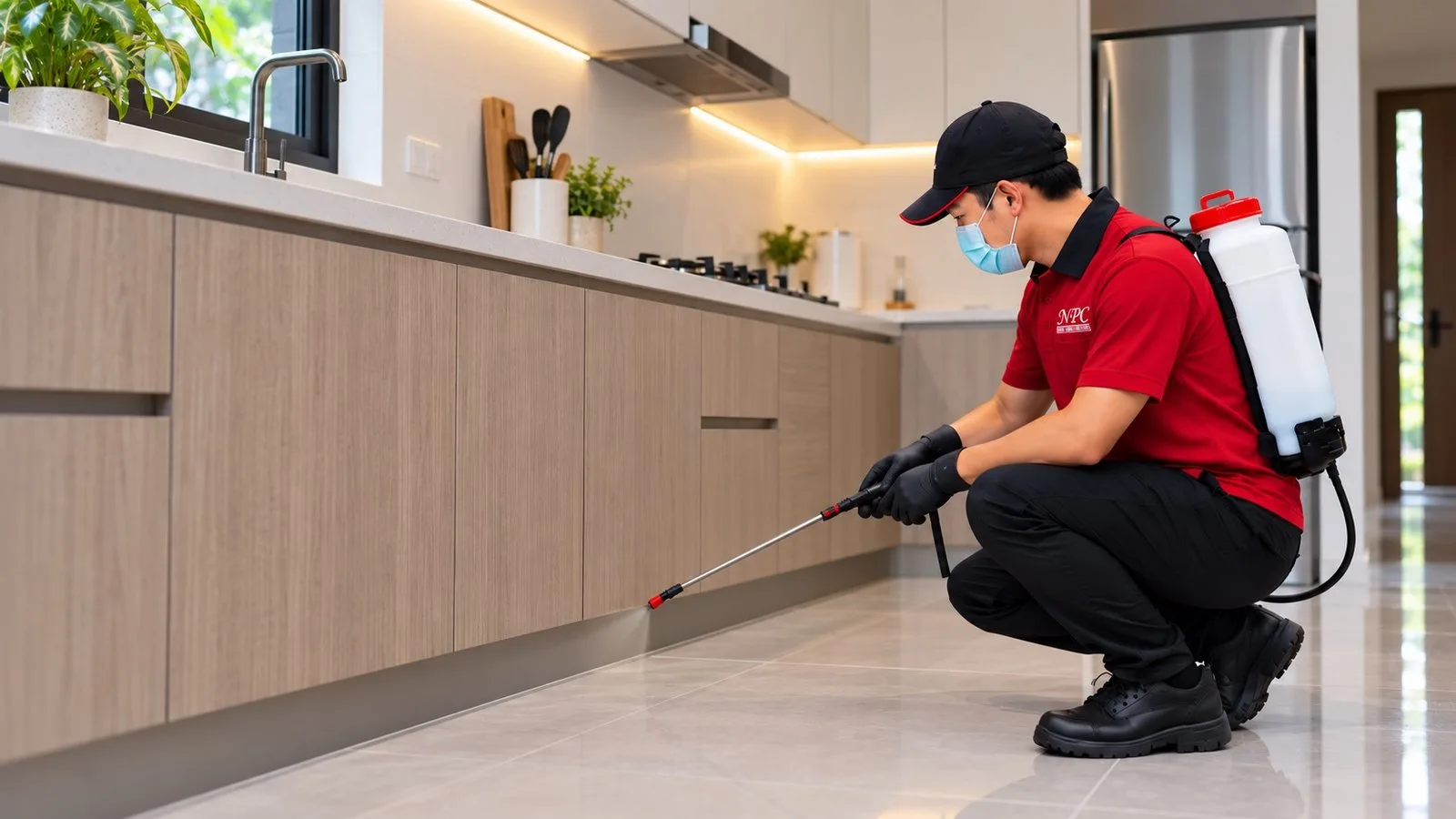
Last updated: 22 September 2026
A restaurant kitchen is warm, wet and open again in a few hours. It cannot be treated like a shoplot or a house.
This page explains how our restaurant pest control services work, zone by zone, and what a health officer checks first. It also covers certificate renewal, how often to book, and why a food court stall can be spotless and still get cockroaches. Food chains like KFC Holdings and Secret Recipe are on the NPC client list, and we have served KL and Selangor for more than 15 years. The promise is simple: proven, effective results, backed by a written warranty.
Saw a cockroach during service this week?
Do not spray it yourself tonight. A licensed technician can survey the kitchen after close and tell you where they are living.
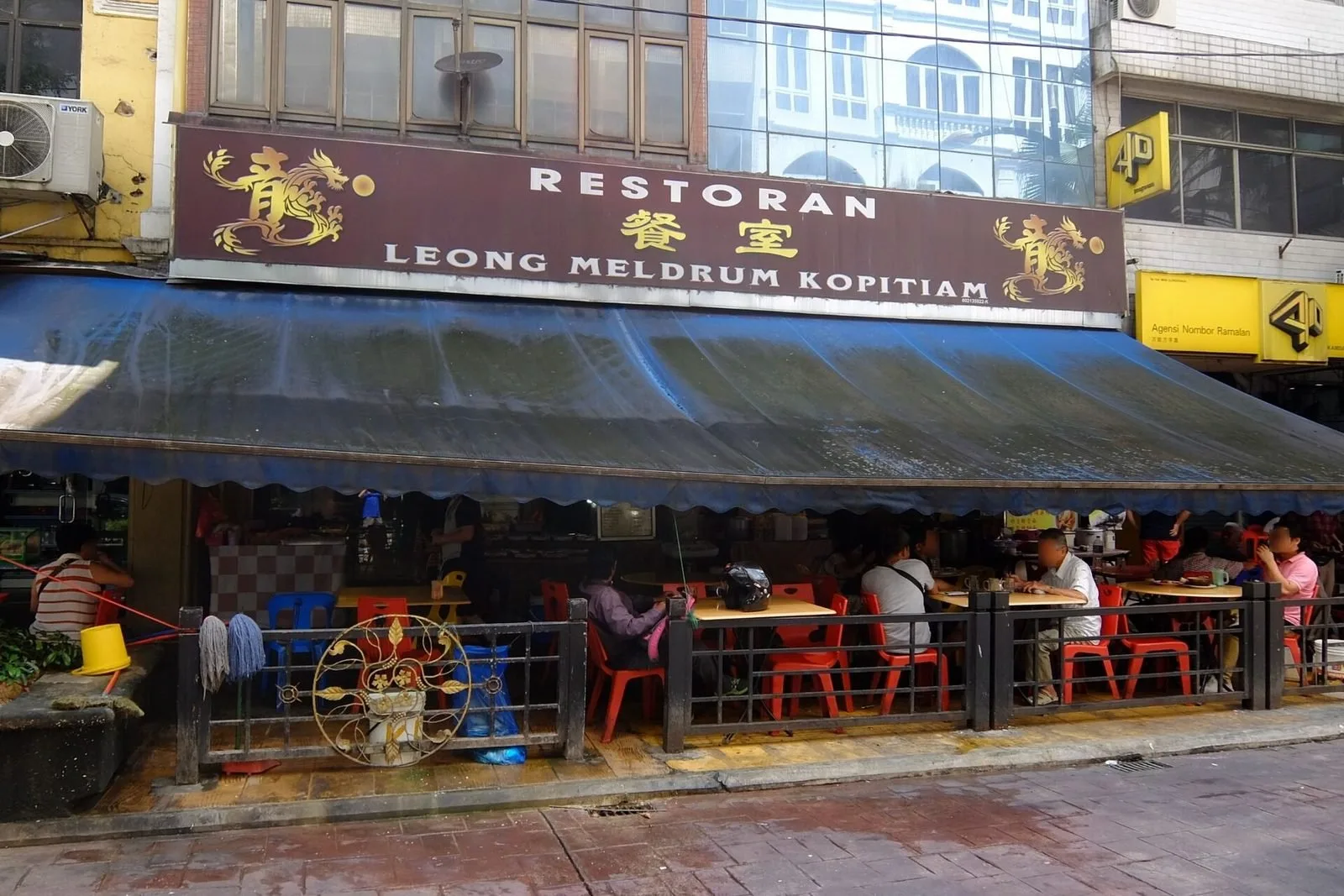
Quick Answer: Pest control for restaurants covers the kitchen, dry store, grease trap, bin area and back lane as one system. The pests are cockroaches, rats, flies and ants, plus the records you must show. Groups with several outlets can run it under one commercial pest control contract.
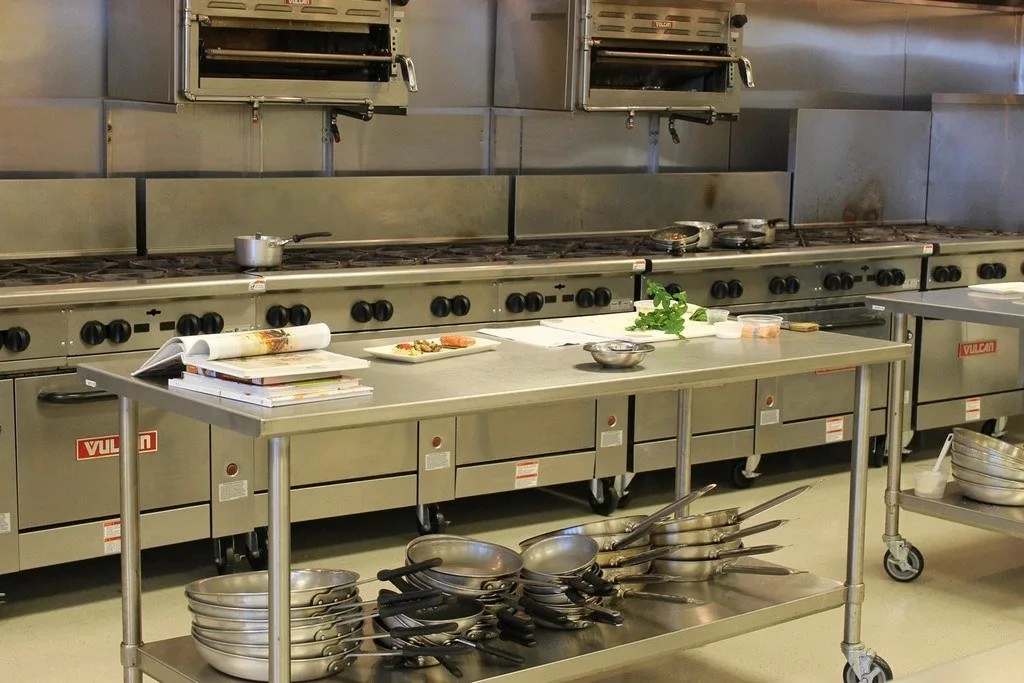
Every kitchen gives pests the same three things: warm gaps inside equipment, water that never dries, and waste by the back door.
The law puts the duty on you: Regulation 16 of the Food Hygiene Regulations 2009 says the occupier must keep food premises free from any pest. If a pest appears, the occupier must take all practicable steps to destroy it. A good contractor gives you the treatment and the proof.
Key takeaway: Treat the kitchen, drains and back lane as one job. Spraying the kitchen alone leaves the rats and flies at the back door.
Quick Answer: NPC works after close or before opening, never over open food. Prep surfaces get no spray at all. Pest control for restaurants runs on gel in cracks, monitored stations and drain work. Contact NPC to book a time around your service hours.
Every restaurant visit follows the same five steps, in the same order:
Typical Time on Site, by Kitchen Visit Step
| Step | Time on site | Typical duration |
|---|---|---|
| After-close access and set-up | 10–15 min | |
| Torch inspection | 20–30 min | |
| Gel placements and station checks | 30–40 min | |
| Drains, grease trap and bin area | 15–25 min | |
| Logbook and sign-off | 10–15 min |
Source: NPC Pest Control, typical single-kitchen visits in KL and Selangor, 2024–2026.
Why no spray? UC IPM notes that sprays do not give long-term control of cockroaches. They can also repel and scatter them to other areas. In a restaurant, that means the dining room.
Key takeaway: A contractor who turns up during service with a sprayer is treating your restaurant like a shoplot. Ask for after-close visits in writing.
Quick Answer: Restaurant pest control is decided by zone. Prep and service areas get monitoring only. Equipment voids get gel. Drains, the grease trap and the bin area carry most of the treatment. Outdoor rodent work follows our rat control method.
Treatment Method by Restaurant Zone
| Zone | Main pest | Method used | Chemical rule |
|---|---|---|---|
| Prep and service line | Cockroaches | Monitoring traps only | No spray, no residue |
| Equipment voids and hinges | Cockroaches | Gel in cracks and gaps | Crack and crevice only |
| Drains and grease trap | Flies | Treatment at the breeding source | After close only |
| Dry store | Ants, stored-food insects | Inspection, sealed bait | Away from open stock |
| Bin area and back lane | Rats | Numbered rodent stations | Locked outdoor bait |
Source: NPC Pest Control, F&B jobs in KL and Selangor, 2024–2026.
Most rat pressure starts outside, through gaps under the back door and around pipes. Our rat-proofing service closes them. Flies from the grease trap are covered under fly control.
Key takeaway: If your prep line smells of chemical after a visit, the zone rule was broken. Nothing should be sprayed where food is handled.
Quick Answer: A health officer or auditor usually starts with your file, not the kitchen. They go through it in order: licence copies, station map, logbook, then corrective actions. Restaurant pest control services should hand you all four. Licence copies are on our certificate page.
Restaurant Pest File, in the Order It Is Read
| Order | Document | What it proves |
|---|---|---|
| 1 | PCO and KKM licence copies | The work was done by a licensed operator |
| 2 | Numbered station map | Coverage is planned, not random |
| 3 | Signed logbook, dated per visit | The schedule was kept with no gaps |
| 4 | Corrective actions with close-out dates | Findings were fixed, not just noted |
Source: NPC Pest Control, F&B audit support in KL and Selangor, 2024–2026.
Item four is where outlets lose marks. A logbook full of “cockroach activity noted” with nothing closed out reads as a problem that was seen and left alone.
Copies of our licences go into your file too. You can see them on our certificate page.
Restaurants are often asked for a current pest control certificate. It may come up when the business licence is renewed with the local council, at a franchise audit, or when a mall or corporate client checks its tenants. NPC issues the certificate as a licensed operator, with our licence copies attached.
Key takeaway: Keep the file in the kitchen office, not at head office. The officer asks for it on the spot, and a missing logbook reads the same as no pest control.
Inspection or renewal coming up?
We can survey the kitchen, open a service file and plan your certificate around the renewal date. The survey is free.
Quick Answer: Visit frequency follows risk, not a package. A 24-hour kopitiam on a shared back lane needs more visits than a café that closes at six. Restaurant pest control services are quoted after a free kitchen survey, in writing.
Relative Service Load by Outlet Type
| Outlet type | Why the load differs | Typical starting frequency |
|---|---|---|
| Central kitchen | Long hours, big drains, many lines | Weekly |
| 24-hour kopitiam or mamak | No quiet window, open front | Fortnightly |
| Food court stall | Shared walls, drains and bins | Monthly, plus building programme |
| Full-service restaurant | Separate kitchen and dining room | Fortnightly or monthly |
| Café or bakery | Short hours, sugar and flour | Monthly |
Source: NPC Pest Control, F&B jobs in KL and Selangor, 2024–2026. Frequency is set at the survey.
There is no list rate. What moves the quote most:
Key takeaway: Start at the frequency the survey sets, then let the logbook move it. Three clean months can bring a kitchen down a level.
Quick Answer: Because the stall is not a closed room. Food court units share walls, ceiling voids, drains and a bin room. If the stall next door has a problem, it becomes yours. Pest control for restaurants in a food court works best when the building runs a programme too.
We see this often in mall food courts. The stall is cleaned nightly and cockroaches still reach the counter. Lift the panels and the trail usually leads into a shared void or drain.
Key takeaway: If you are treated on schedule and still see cockroaches, ask where they come from before you ask for more spray.
Quick Answer: Your staff see the kitchen every day, and we see it on visit day. A short sightings book, a closing routine and no do-it-yourself aerosols make the treatment last. Ants at sugar stations are covered on our ant control page.
The sightings book tells the technician where to start with the torch.
Quick Answer: Good restaurant pest control services work after close, keep chemicals off food prep, and leave a file an officer can read in minutes. NPC covers KL and Selangor, most often Puchong, Seri Kembangan, Serdang, Subang Jaya, USJ, Shah Alam and PJ, as well as Cheras. See all our pest control services.
Most kitchens need two or three pests covered under one schedule and one logbook. Related services: termite control, cockroach control, rat control, ant control, bed bug control, flea and tick control, mosquito control and fly control. We also provide disinfection and sanitising services, and pest control certificate renewal for F&B and medical premises. For pest control for restaurants in Malaysia, call 03 8061 1875 or WhatsApp 016 335 9799, Monday to Saturday, 9am to 6pm.
No. Work is done after close or before opening, so the kitchen is handed back ready for service. Nothing is applied to prep surfaces, so there is no closed day and no lost trade.
No. Prep and service areas get monitoring traps only. Gel goes inside equipment voids and cracks, never on a food surface. Rodent bait stays in locked stations outside, at the bin area or back lane.
Yes. As a licensed pest control operator, NPC issues the certificate your council, franchise or client asks for, together with our licence copies. It carries more weight when it sits on top of a year of signed visits, so plan it into the contract.
Our licence copies, a numbered station map, a signed logbook with a date for every visit, and corrective actions with the date each one was closed. These show the steps the Food Hygiene Regulations 2009 ask the occupier to take.
Tell us. Activity in a treated area during the contract is re-treated at no charge. If you report a problem, we come back within 48 hours, and the visit goes into your logbook.
The short video below, from a pesticide maker, shows how a professional crew treats a heavy cockroach problem in a commercial kitchen with gel and crack-and-crevice work.

Want your kitchen ready for the next inspection?
Book a free kitchen survey. A licensed technician walks the kitchen, grease trap and bin area after close, then sends a written quote covering visits, records, certificate renewal and warranty terms.