
Published: 15 November 2026
Every home kitchen in Malaysia gets a visitor now and then. A cockroach behind the rice cooker, a line of ants to the kopi spill, a few small flies over the bananas. One sighting is not a crisis. But when the same kitchen pests keep coming back, the reason is usually something we do every day without thinking.
This guide covers:
- How to tell which pest you have from the clues it leaves.
- The seven kitchen habits that draw cockroaches, ants, rats, flies and stored-food beetles.
- A simple nightly routine and when it is time to call for help.
Not sure which pest is in your kitchen?
Our technicians identify the pest and where it hides before any treatment. See what our home pest control covers across KL and Selangor. Explore our pest control services →
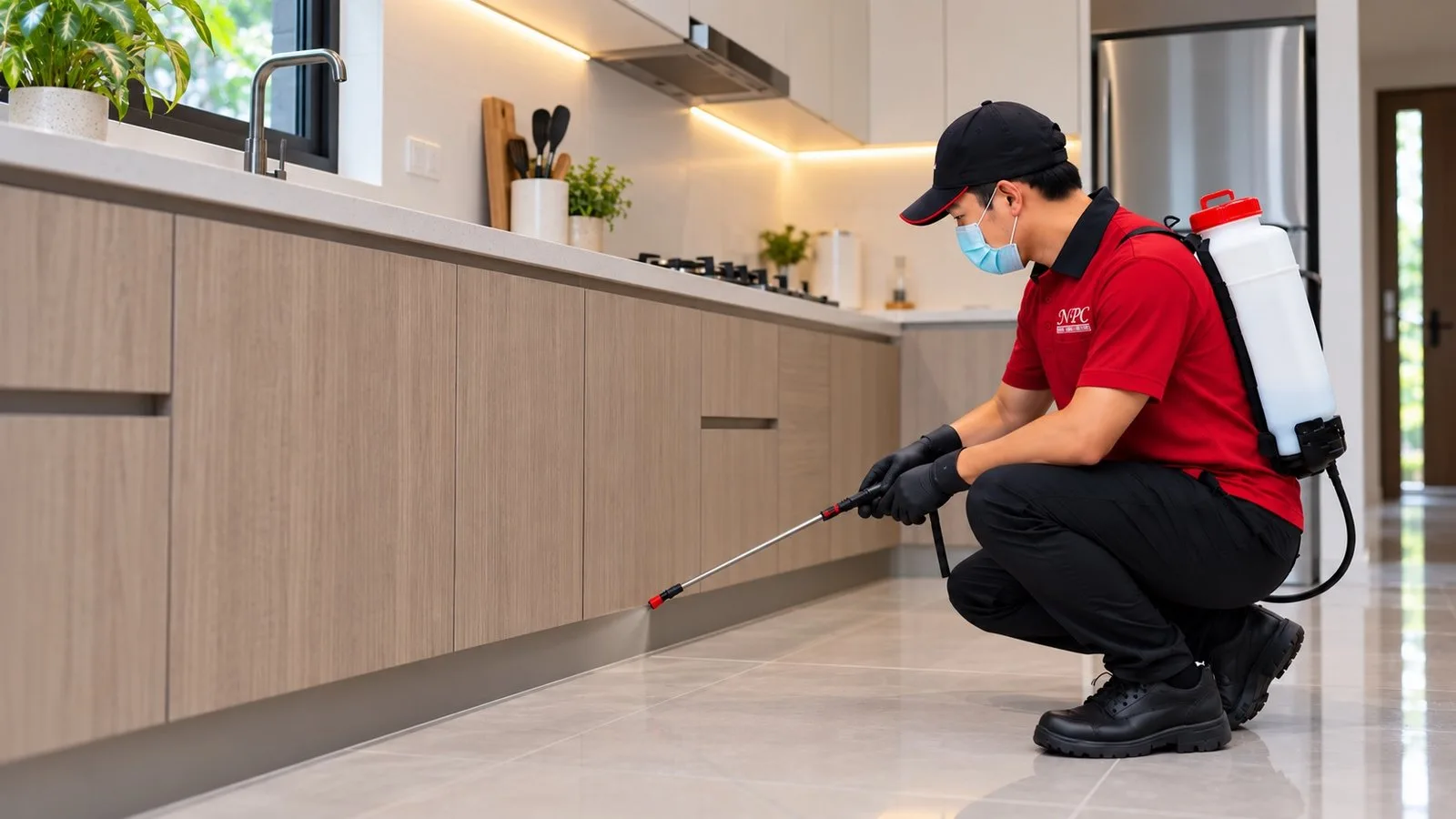
Here is a short look at NPC’s team at work.

1What Are the Most Common Kitchen Pests in Malaysia?
Quick Answer: The most common kitchen pests in Malaysian homes are German and American cockroaches, ants, rats, fruit flies and stored-food insects such as rice weevils and flour beetles. Warm, humid weather lets all of them breed year-round, so a small habit that feeds them can turn a few sightings into a steady problem within weeks.
Each pest leaves its own clues. Matching the clue to the pest tells you which habit to fix first.
| What you notice | Likely pest | Where to look first |
|---|---|---|
| Pepper-like black specks in drawer corners and hinges | German cockroaches | Under the sink, behind the fridge, cabinet hinges |
| Large reddish-brown insect near the floor trap at night | American cockroaches | Sink and floor-trap drains, back door gap |
| A thin line of tiny insects to the sugar jar or a spill | Ants | Follow the line back to the crack where it starts |
| Rice-grain droppings, gnawed bags, grease marks on walls | Rats | Behind the stove, rubbish bin, gaps around pipes |
| Tiny red-eyed flies over the fruit bowl or sink | Fruit flies | Overripe fruit, recycling cans, sink drain, damp mop |
| Small beetles or webbing in rice, flour or oats | Stored-food beetles and moths | The oldest open pack in the cupboard |
Source: guide by NPC Pest Control, 2026, based on field experience in Klang Valley homes. Not measured data.
Some lookalikes also turn up near the kitchen. Small silver insects in a damp cupboard of old newspapers are often silverfish, which thrive in Malaysian humidity. They feed on paper and starch rather than food on the counter.
2Does Your Dish Rack and Sink Attract Cockroaches?
Quick Answer: Yes. Cockroaches need water more than food, and a wet dish rack, damp sponge or wok left in the sink overnight gives them both. German cockroaches hide in the cabinet under the sink and come out at night, so a sink that stays wet and greasy until morning is their nightly meal.
According to Penn State Extension, one German cockroach egg case holds 30 to 48 eggs and hatches in about four weeks. A kitchen that feeds them every night lets each batch survive.
Sink-side habits to change:
- The overnight wok. Wash it after dinner. Oil and food bits left in it are a full meal for cockroaches.
- The wet dish rack. Empty the drip tray and wipe it dry before bed.
- The sponge and dishcloth. Squeeze them dry and hang them up instead of leaving them in a puddle.
- The sink and floor traps. Fit covers and close them at night, because larger American cockroaches climb up from the drains.
Our guide to gel, spray or both for cockroach control explains what professionals use once cockroaches are breeding.
3Why Do Ants Keep Coming Into the Kitchen?
Quick Answer: Ants come into the kitchen for sugar, grease and protein, and they leave a scent trail that guides the rest of the colony to the same spot. A drop of syrup, a sticky drink can, a sugar jar without a tight lid or a pet bowl is enough to start a line across the counter.
The UC IPM ants pest note advises wiping invading ants with soapy water to remove the scent trail, storing food in sealed containers and taking rubbish out daily. It also notes that spraying ants indoors will not stop more ants from coming in.
Ant-friendly habits:
- Sugar, honey and kaya jars with sticky rims or loose lids.
- Drink cans and cups left on the counter or in the recycling unrinsed.
- Crumbs around the toaster, rice cooker and microwave.
- Pet food left in the bowl after the meal.
Killing the ants you see does little while the colony lives on. Our article on why DIY ant baits fail explains why, and our ant control page shows how the nest is treated.
4What Draws Rats Into a Home Kitchen?
Quick Answer: Rats come into kitchens for food, water and shelter. Rubbish left in an open bin overnight, pet food, rice in thin bags and fruit on the counter all feed them. They get in through gaps around pipes, under the back door and through drains, often from the back lane or a neighbouring shop.
The US Centers for Disease Control and Prevention says the best way to prevent rodents is to remove their food sources, water and the items that give them shelter.
Rat-friendly habits in Malaysian kitchens:
- Kitchen rubbish left overnight in an open bin or a bag by the back door.
- Rice and dry food kept in sacks or thin plastic on the floor.
- Back door left open in the evening for air, with a gap under it.
- Clutter such as cardboard and old pots stacked in the wet kitchen.
If you hear scratching in the ceiling or see droppings, our guide to signs you need a rat control professional explains what to look for. Our rat control page covers trapping and proofing.
Seeing droppings or hearing the ceiling at night?
A technician can find how rats get in and seal the gaps before they breed. Book a rat inspection →
5What Are the Tiny Flies Around the Fruit Bowl?
Quick Answer: The tiny flies around the fruit bowl are usually fruit flies. They lay eggs on ripe or rotting fruit and also breed in unrinsed cans, juice boxes, damp mops and the slime inside sink and floor drains. Removing the breeding spot works better than chasing the adults with spray.
Utah State University Extension lists ripe fruit, soda cans, juice boxes, mop and broom heads and floor drains as breeding sites, and advises regular drain cleaning and vinegar traps.
| Kitchen habit | Cockroaches | Ants | Rats | Flies | Stored-food beetles |
|---|---|---|---|---|---|
| Wet dish rack and damp sponge | High | Medium | Low | Medium | Low |
| Wok or dishes left in the sink overnight | High | High | Medium | High | Low |
| Open rice bin or flour pack | Medium | Low | High | Low | High |
| Pet bowls left out overnight | High | High | High | Medium | Low |
| Uncovered sink and floor traps | High | Low | Medium | High | Low |
| Unrinsed recycling and overnight rubbish | High | High | High | High | Low |
| Ripe fruit left on the counter | Medium | Medium | Medium | High | Low |
Source: guide by NPC Pest Control, 2026. Not measured data. Ratings reflect typical Klang Valley homes; your kitchen may differ.
Fixes for the fly habits:
- Ripe fruit: keep bananas, papaya and mangoes in the fridge once ripe, and throw out anything soft.
- Recycling: rinse cans and bottles before they go in the bag.
- Drains: scrub the sink trap weekly and pour hot water down it.
- Mops: rinse and dry the mop head after use.
House flies are a bigger worry because they land on food after rubbish. Our fly control guide explains how flies are controlled where food is prepared.
6Why Are There Bugs in Your Rice Bin?
Quick Answer: Bugs in the rice bin are usually rice weevils, flour beetles or pantry moths, and most arrive inside a pack of food you bought. Once inside, they spread to other open packs. Storing rice, flour, oats and spices in containers with tight lids keeps an infestation to one pack.
The UC IPM pantry pests guide says these pests are usually brought home in infested food. It advises containers with tight-fitting lids, since plastic bags are not enough, and keeping flour, spices and grains you rarely use in the freezer.
What to do if you find them:
- Throw out any pack that shows even slight signs of insects.
- Wash the shelves with soap and water and vacuum the corners to remove eggs.
- Keep everything sealed for several months after, in airtight boxes or the fridge.
- Buy smaller packs of food you use slowly.
Food factories and warehouses face the same insects at a larger scale. Our guide to stored product pests in the food industry covers that side.
7Are Kitchen Pests a Health Risk at Home?
Quick Answer: Yes. Cockroaches, rats and flies can carry germs onto food and surfaces, and cockroach allergen builds up in house dust, where it can trigger allergies and asthma. Research from US homes found the kitchen floor is where that allergen is most often found at high levels, and that bait plus cleaning cut it sharply.
| Finding | Result |
|---|---|
| US kitchen floors above the allergy-sensitisation level | 13% of homes (Environ Health Perspect, 2006) |
| US living room floors above the same level | 11% of homes (Environ Health Perspect, 2006) |
| US kitchen floors above the asthma-symptom level | 10% of homes (Environ Health Perspect, 2006) |
| US living room floors above the asthma-symptom level | 3% of homes (Environ Health Perspect, 2006) |
| Allergen drop on kitchen floors after bait, cleaning and coaching, 6 months | 96% lower (J Allergy Clin Immunol, 2003) |
| Allergen drop on beds in the same homes, 6 months | 84% lower (J Allergy Clin Immunol, 2003) |
Sources: Environmental Health Perspectives, 2006 (PubMed 16581539), national survey of 831 US homes; Journal of Allergy and Clinical Immunology, 2003 (PubMed 12897740), randomised trial in 31 urban homes.
A 2006 national survey in Environmental Health Perspectives found cockroach allergen above the asthma-symptom level on 10% of kitchen floors, against 3% of living room floors. In a 2003 trial in the Journal of Allergy and Clinical Immunology, bait, professional cleaning and simple coaching cut kitchen floor allergen by 96% in six months.
Why this matters for families:
- Children with asthma are most affected by cockroach allergen in dust.
- Dead cockroaches still count, because their bodies and droppings keep releasing allergen until cleaned up.
- Cleaning matters after treatment, since killing cockroaches alone leaves the allergen behind.
8What Is a Good Nightly Routine to Keep Kitchen Pests Out?
Quick Answer: A good nightly routine to keep kitchen pests out takes about ten minutes: wash the wok and dishes, dry the sink and dish rack, seal food and pet food, wipe counters, cover the drains and take the rubbish out. Done every night, it starves cockroaches, ants, rats and flies.
How to keep kitchen pests out with a nightly routine
Do these before bed, every night.
- Wash the wok and dishes. Leave nothing in the sink, and scrape food scraps into a closed bin.
- Dry the sink and dish rack. Empty the drip tray and hang the sponge and dishcloth to dry.
- Seal food and pet food. Close rice, sugar and biscuit containers and pick up the pet bowls.
- Wipe the counters and stove. Clear crumbs and grease around the rice cooker, toaster and hob.
- Cover the sink and floor traps. Close the covers so nothing climbs up from the drains.
- Take the rubbish and recycling out. Rinse cans first and tie the bag before it leaves the kitchen.
| One kitchen, two paths | Week 0 | Week 1 | Week 2 | Week 4 | Week 6 | Week 8 |
|---|---|---|---|---|---|---|
| Old habits kept (pests seen per week) | 30 | 32 | 29 | 34 | 31 | 35 |
| Nightly routine started (pests seen per week) | 30 | 22 | 15 | 8 | 5 | 3 |
Source: illustrative scenario by NPC Pest Control, 2026. Not measured data. A routine alone rarely reaches zero when pests already breed inside walls or drains.
The routine cuts sightings fast, but pests already breeding inside cabinets or drains need treatment as well. If you sprayed and they returned, our guide on cockroaches coming back after spraying explains why.
9When Should You Call Pest Control for Kitchen Pests?
Quick Answer: Call pest control when kitchen pests keep returning after two or three weeks of good habits, when you see cockroaches in daylight, find rat droppings or gnaw marks, or see insects in several food packs. These signs mean the pests are breeding inside walls, cabinets or drains.
A professional visit starts with an inspection to find the source, then targets it with bait, traps or proofing that suits a kitchen.
Signs it is past DIY:
- Daytime cockroaches, which mean the hiding spots are full.
- Droppings in drawers or on top of cabinets.
- Pests in more than one room, such as bedrooms or the living room.
- Neighbours with the same problem, which points to shared drains or walls.
Our pest control services cover cockroaches, ants, rats and flies in homes, and our cockroach control page explains the follow-up plan for kitchens. Our Selangor pest control pricing guide shows typical costs.
10Conclusion: Fix the Habit, Then the Pest
Quick Answer: Kitchen pests in Malaysia follow food, water and shelter. A dry sink, sealed food, closed drains and rubbish out every night take away what cockroaches, ants, rats, flies and pantry beetles need. When pests are already breeding, combine the habits with a professional treatment.
Start tonight with the habit that matches your pest, and keep it going for a few weeks. Visit the NPC Pest Control homepage to learn about our work across KL and Selangor.
11Frequently Asked Questions
1. What is the most common kitchen pest in Malaysian homes?
Cockroaches and ants are the ones most homes see first. Small German cockroaches live inside kitchen cabinets, while larger American cockroaches come up from drains. Ants follow sugar and grease, and rats, fruit flies and rice weevils appear when food or rubbish is left out.
2. Can I keep rice in the original bag?
It is better not to. Weevils and other stored-food insects often arrive inside the pack, and thin plastic bags do not stop them spreading. Move rice into a container with a tight-fitting lid, and keep small amounts you rarely use in the fridge or freezer.
3. Is it safe to spray insecticide in the kitchen?
Spraying near food, plates and cooking surfaces is best avoided. Sprays only kill the insects they touch and can push cockroaches deeper into cracks. Baits placed in cracks, away from food, work better and leave far less residue on surfaces you cook on.
4. Does NPC Pest Control offer free inspections?
Yes. NPC Pest Control is a licensed pest control operator in Puchong with over 15 years of work across Kuala Lumpur and Selangor, and inspections are free. Call 03-8061 1875 or 016-335 9799, Monday to Saturday, 9am to 6pm.
Still sharing your kitchen with pests?
We inspect your kitchen, find what is drawing pests in and where they hide, then plan the treatment around it.
Book a free inspection →