Last updated: 22 September 2026
1Why Are Flies a Serious Problem for Food Businesses?
Quick Answer: Flies land on waste, drains and raw food, then walk and feed on plates, counters and ready-to-eat food. They carry bacteria on their legs, mouthparts and in their vomit and droppings. For a restaurant, cafe or food factory, that means risks to food safety, hygiene inspections and reputation. That is why fly control services in Malaysia focus on food premises.
This guide is for restaurant, cafe, hotel kitchen, food factory and hawker operators in Kuala Lumpur and Selangor. It covers the flies you will meet, where they breed, what fly control services in Malaysia should include and how often to book them. It is written by NPC Pest Control, a licensed operator in Puchong with over 15 years of pest work across the Klang Valley. For the service itself, see our fly control service page.
Malaysian research backs up the risk. A 2023 study in the International Journal of Food Microbiology caught 90 filth flies at wet markets in Klang and found Salmonella on 17.8% of them. Almost half of those Salmonella strains were resistant to several antibiotics. An earlier Malaysian study in Tropical Biomedicine found bacteria such as Escherichia, Klebsiella and Staphylococcus on house flies caught at food courts and food processing areas in Peninsular Malaysia.
Flies in the kitchen before lunch service?
Our technicians trace flies back to where they breed, so you fix the cause instead of chasing adults. See how our fly treatment works →
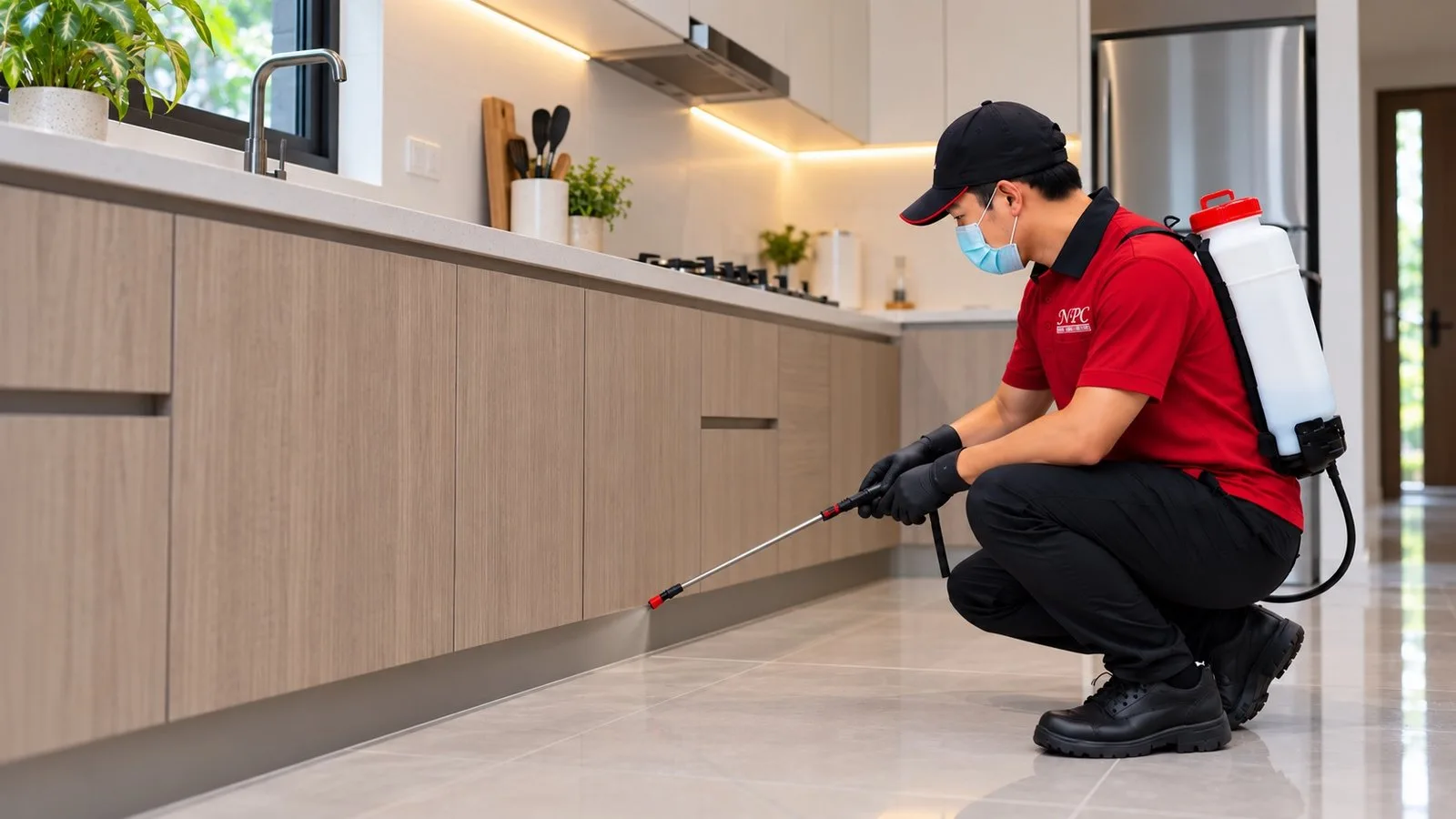
First, a short look at NPC’s licensed team at work.

2Which Flies Are Common in Malaysian Food Premises?
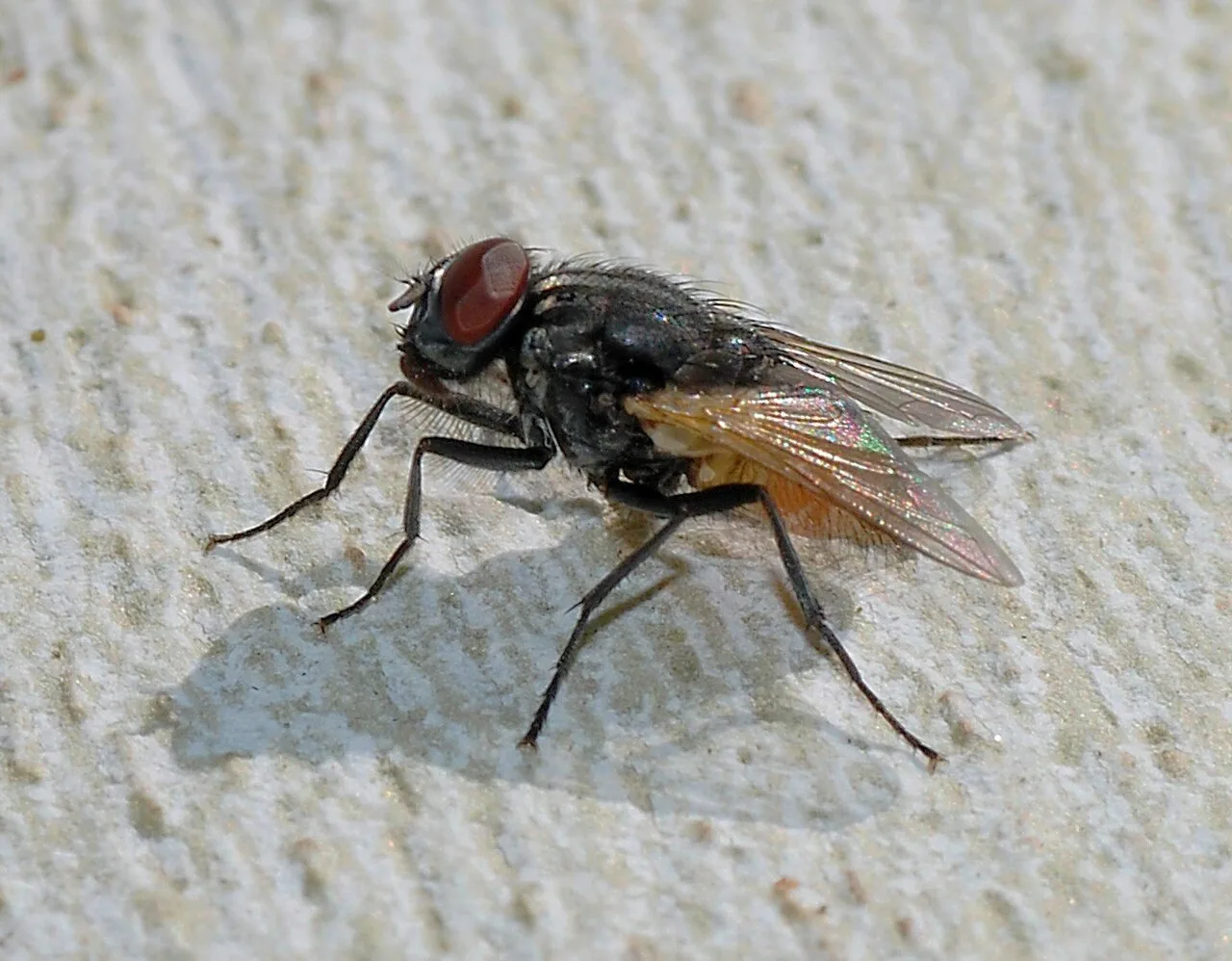
Quick Answer: Most food businesses in the Klang Valley deal with four kinds of fly: the house fly, the blow fly, the small fruit or vinegar fly and the drain fly. Each breeds in a different place and needs a different fix. The table below shows how to tell them apart and where fly control services in Malaysia look first.
| Fly | How to spot it | What it breeds in | Where to look first |
|---|---|---|---|
| House fly | Grey, medium size, buzzes around food and tables | Bins, food waste, wet rubbish | Bin area and back door |
| Blow fly | Large, shiny green or blue, loud | Meat and fish scraps, dead animals | Bin centre and back lane |
| Fruit or vinegar fly | Tiny, tan body, red eyes, hovers slowly | Overripe fruit, spilled juice, beer and sauces | Produce store and bar |
| Drain fly | Tiny, grey, furry wings, rests on walls | Slime film inside floor drains and grease traps | Floor drains and sinks |
| Flesh fly | Large, grey with a checked belly | Raw meat, rotting food, animal waste | Wet market and meat prep area |
Source: NPC Pest Control field guide, Klang Valley, 2026.
Size and behaviour tell you where to look. Big, noisy flies near the back door usually come from bins. Tiny flies over the fruit rack or bar come from fermenting food and spilled drinks. Small, furry flies on the wall above a sink come from the drain itself. A spray aimed at the dining area misses all three.
Flies are rarely the only pest in a food outlet. The same waste and grease that feed fly larvae also feed cockroaches and rats. If you see droppings or night activity as well, read about our cockroach control service and rat control service too. For how fly work fits into a wider plan, see our guide to what pest control services in Malaysia include.
3Where Do Flies Breed in a Restaurant Kitchen?
Quick Answer: Flies breed wherever wet organic matter sits for a few days: bin areas, floor drains, grease traps, under equipment, in fruit and vegetable stores and at loading bays. In Malaysian heat, a house fly can go from egg to adult in days rather than weeks. Fly control services in Malaysia find these spots first, because every adult you see started there.
| Premises | Bin area | Floor drains | Grease trap | Under equipment | Produce store | Loading bay |
|---|---|---|---|---|---|---|
| Restaurant | Common | Common | Common | Common | Occasional | Rare |
| Cafe or bakery | Occasional | Common | Occasional | Occasional | Common | Rare |
| Hawker stall or food court | Common | Common | Occasional | Occasional | Occasional | Rare |
| Hotel kitchen | Occasional | Common | Common | Occasional | Occasional | Rare |
| Food factory | Common | Common | Occasional | Rare | Occasional | Common |
Source: illustrative pattern from NPC Pest Control inspections, Klang Valley, 2026.
This pattern is based on what our technicians find during inspections. The hot spots are almost always the same places:
- Bin areas. Uncovered bins, bins emptied but never washed and food waste bags left overnight. This is the number one source of house and blow flies.
- Floor drains. The slimy film inside the drain pipe is where drain flies lay eggs. Pouring bleach down the drain rarely reaches it.
- Grease traps. A grease trap that is not pumped on schedule feeds drain flies and fruit flies, and draws cockroaches too.
- Under equipment. Food trapped under fryers, fridges and prep tables rots in the heat and becomes a hidden breeding site.
- Produce stores and bars. Overripe fruit, onion skins, empty juice and beer bottles all attract fruit flies.
Your neighbours matter too. In a row of shoplots or a food court, flies from a shared bin centre will visit every outlet. Good fly control services in Malaysia check the back lane as well as your kitchen. They tell you which sources you control and which to raise with the building manager.
4What Do Fly Control Services in Malaysia Include?
Quick Answer: A professional fly job starts with an inspection of the kitchen, storage, bin area, drains and back lane to find where the flies breed. The technician then removes or treats those sources, installs or services UV fly traps in the right places and gives a written report. Good fly control services in Malaysia also train staff and return on a set schedule.
A proper visit covers five parts:
- Inspection. Kitchen, prep areas, dry and cold stores, dishwashing area, floor drains, grease trap, bin centre and loading door. The technician notes fly species and where they gather.
- Source reduction. Clear advice on bin covers, washing schedules, drain cleaning and gaps under doors. This is where most of the results come from.
- Targeted treatment. Larvicide or a drain treatment where larvae live, and residual treatment on outside resting spots such as bin walls. Nothing is sprayed on food contact surfaces.
- Fly traps. UV light traps with glue boards placed away from food preparation, with the glue boards changed and counted on each visit.
- Service report. A written record of findings, treatments and trap catches that you can show at your next hygiene inspection.
How to prepare your kitchen for a fly control visit
These five steps help the first visit find the real source quickly.
- Keep the bins as they normally are. Do not deep-clean the bin area the night before, so the technician sees the real conditions.
- Note when flies are worst. Write down the time of day and the area, such as after lunch service or near the back door.
- Find your drain and grease trap records. Know when the grease trap was last pumped and which drains smell.
- Clear access. Make sure the technician can reach floor drains, the space under equipment and the bin centre.
- Brief the kitchen team. Ask the head chef or supervisor to be there, since they know where flies gather during service.
For restaurants and cafes, fly control usually sits inside a monthly programme with cockroach and rat control. Our restaurant pest control plans are built around that.
Health inspection coming up?
NPC inspects food premises across KL and Selangor for free and gives you a written plan and service reports. Book a free fly inspection →
5Do UV Fly Traps Work on Their Own?
Quick Answer: No. UV fly traps catch adult flies that are already inside, and the catch tells you how bad the problem is. They do not stop flies breeding in your bins and drains. The chart below shows how fly numbers typically change under four approaches, with traps working best alongside source removal. Illustrative guide.
| Approach | Week 0 | Week 2 | Week 4 | Week 8 |
|---|---|---|---|---|
| Kitchen fogging only | 100 | 45 | 95 | 110 |
| UV traps only | 100 | 80 | 75 | 75 |
| Bin and drain clean-up only | 100 | 60 | 40 | 35 |
| Source removal + UV traps + targeted treatment | 100 | 40 | 15 | 8 |
Source: illustrative model, typical house fly problem in a Klang Valley restaurant kitchen, NPC Pest Control, 2026.
Spraying alone gives a short dip, then a rebound. Fogging the kitchen kills adults on the day, but new flies hatch from the same bins and drains within a week. Fly control services in Malaysia that rely only on spraying leave you paying for the same visit again and again.
Use the trap as a counter. A trap catches flies after they arrive, so on its own it only slows things down. Its real value is the catch count. If the glue board by the back door fills fastest, the flies are coming from the back lane bins. If the one near the dishwashing area fills fastest, look at the drains. Where traps go matters as much as which trap you buy:
- Away from food. Never mount a trap directly above a prep table, where dead insects could fall onto food.
- Out of sight of the entrance. A light that can be seen from outside draws more flies in.
- Low and near entry points. Flies fly low, so a trap about 1.5 to 2 metres high near a back door catches more.
- Glue boards, not zappers, near food. Electric zappers can scatter insect parts. Glue boards hold them.
Our guide to UV versus glue board commercial fly traps compares the two types in detail.
6How Often Should a Food Business Book Fly Control?
Quick Answer: Most restaurants and cafes need a fly control visit once a month, with glue boards changed each time. Food factories and busy central kitchens often need visits every two weeks, while offices with a pantry only need a check every quarter. The chart below shows typical visit frequency by premises. Illustrative schedule.
| Premises | Visits per year | Visits | Typical schedule |
|---|---|---|---|
| Office with pantry | 4 | Quarterly | |
| Cafe or bakery | 12 | Monthly | |
| Restaurant | 12 | Monthly, with reports | |
| Hotel kitchen | 12 | Monthly, with reports | |
| Food factory or central kitchen | 24 | Fortnightly, with trap records |
Source: illustrative schedule, NPC Pest Control, 2026.
Frequency follows risk. The more food waste and the more open the premises, the more often fly control services in Malaysia should visit. Three things push the schedule up:
- Open kitchens and outdoor seating. Hawker stalls and open-air restaurants cannot close the door on flies.
- High waste volume. Central kitchens, catering and food factories produce more waste every day than bins can hold.
- Audits. Food factories working toward HACCP or other food safety audits need fly trap catch records on a steady schedule.
Between visits, a daily routine does most of the work: bins covered and emptied at close, drains brushed weekly, produce checked and doors kept shut. For offices, factories and warehouses, flies usually form part of a wider commercial pest control contract. After a fly problem linked to waste or a spill, some operators also book a sanitisation and disinfection service to clean affected surfaces.
Running a food factory or central kitchen?
We build fortnightly or monthly programmes with trap catch records ready for your audit. See our commercial pest control plans →
7How Do You Choose Fly Control Services You Can Trust?
Quick Answer: Check the licence first, then the method. Trustworthy fly control services in Malaysia inspect your bins, drains and back lane and explain where the flies breed. They place traps away from food and leave a written report after every visit. Be wary of anyone who offers to fog the kitchen without looking at your waste area.
Every company that applies pesticides must follow the Pesticides Act 1974 (Act 149), which controls the products used and the licensing of operators. Ask for the licence number. Then watch for these red flags:
- No inspection of the waste area. If the bin centre and drains are not checked, the source stays.
- Fogging near food. Space spraying in a working kitchen puts chemicals near food contact surfaces.
- No reports. Without a written record, you have nothing to show a health officer or an auditor.
- Traps in the wrong place. A trap above the prep table or facing the street window does more harm than good.
Food businesses also have a legal duty. Regulation 16 of the Food Hygiene Regulations 2009 says the proprietor must keep food premises free from any pest. NPC’s licence and Ministry of Health registration are on the NPC Pest Control homepage. If ants are also trailing to your food waste, our guide on why DIY ant baits fail explains how to deal with both.
8Conclusion: Fix the Source, Then Catch the Rest
Quick Answer: Flies in a food business breed in your bins, drains, grease traps and produce. Spraying the dining room does not reach them. Fly control services in Malaysia work when they remove the source first, then add well-placed UV traps, targeted treatment and regular visits with reports that satisfy a health inspection.
Before you book, keep your bin area as it normally is, note when and where flies are worst, and find your grease trap records. Expect an inspection of the waste area, source advice, trap placement and a written report in any plan from fly control services in Malaysia that you accept.
When you are ready, see how our fly treatment for restaurants and food premises works, or book a free inspection.
9Frequently Asked Questions
1. What do fly control services in Malaysia include?
A full fly service starts with an inspection of the kitchen, stores, bin area, drains and back lane to find where flies breed. It then covers source advice, larvicide or drain treatment, UV fly traps placed away from food, a written service report and regular follow-up visits.
2. Why do flies come back after fogging?
Fogging kills the adult flies in the air on the day, but it does not reach the eggs and larvae in your bins, drains and grease trap. New flies hatch within days. Removing the breeding source is what stops them coming back.
3. Where should a UV fly trap be placed in a kitchen?
Place UV fly traps near entry points and away from food preparation, never directly above a prep table. Keep them out of sight from outside doors and windows so they do not draw flies in, and use glue board units rather than zappers near food.
4. Is fly control required for a restaurant licence in Malaysia?
The Food Hygiene Regulations 2009 require food premises to be kept free from pests, including flies. Health officers look for flies, breeding sources and pest control records during inspections, so a regular programme with written reports helps you show you are meeting that duty.
5. Does NPC Pest Control offer free fly inspections?
Yes. NPC Pest Control inspects restaurants, cafes, hotel kitchens, food factories and offices across Kuala Lumpur and Selangor for free. Call 03-8061 1875, Monday to Saturday from 9am to 6pm, or request an inspection through our contact page.
Ready for a fly-free kitchen?
Book a free fly inspection with NPC Pest Control. Our licensed technicians will find where the flies breed, place traps where they work and give you a written plan with service reports for your next health inspection.
Book my free fly inspection →