Last updated: 22 September 2026
1What Do Termite Inspection Services in Malaysia Check?
Quick Answer: Termite inspection services in Malaysia check a building for live termites, old damage and the conditions that invite a new attack. The inspector walks every room and the outside perimeter, tests timber and walls for moisture and hollowness, and records mud tubes, wings and soil in cracks. The visit ends with a report and a treatment plan.
NPC Pest Control is a licensed operator based in Puchong, with over 15 years of termite work across Kuala Lumpur and Selangor. Most owners call us after they spot one sign, such as a mud line on a wall or a door frame that feels soft.
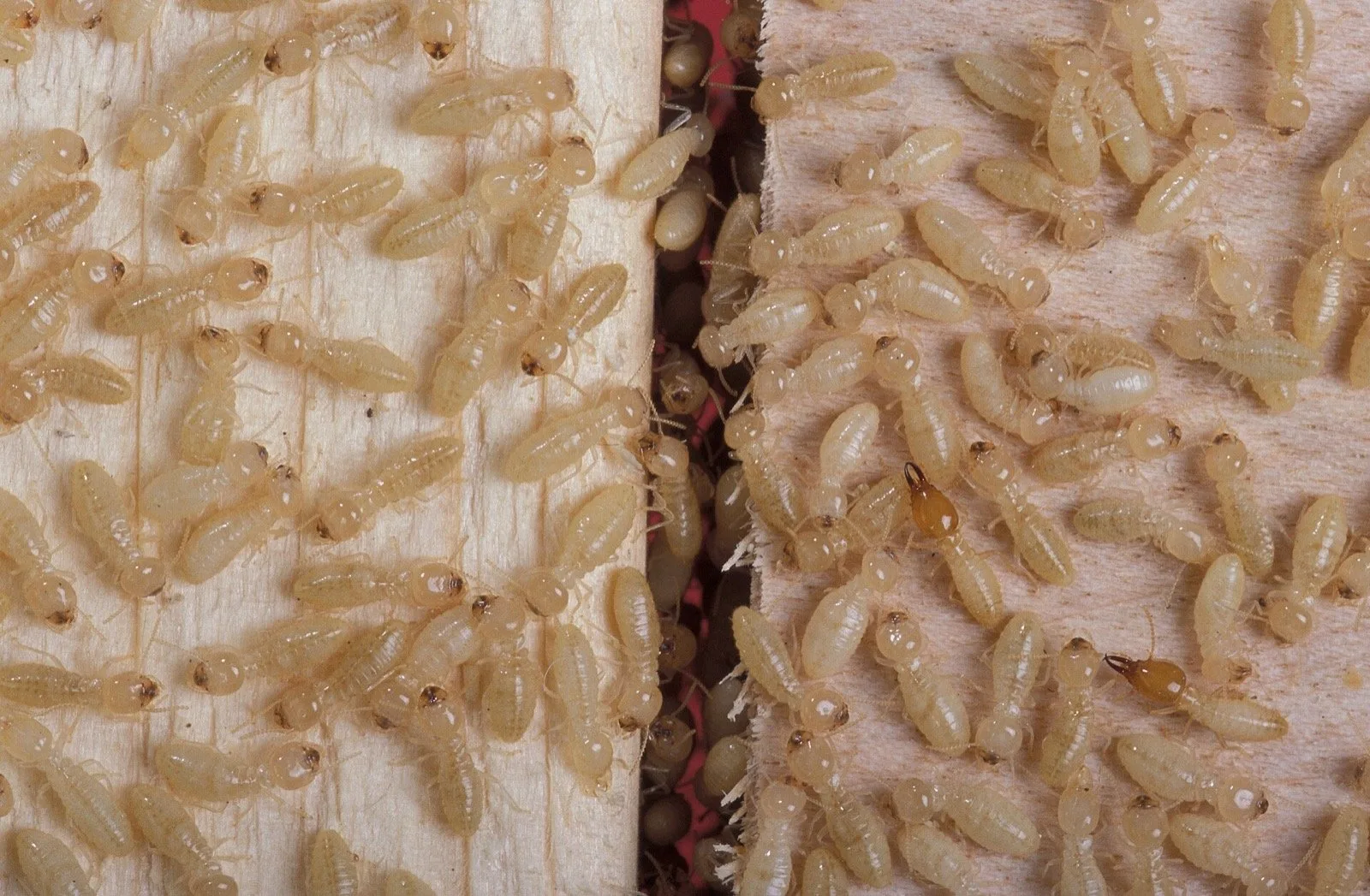
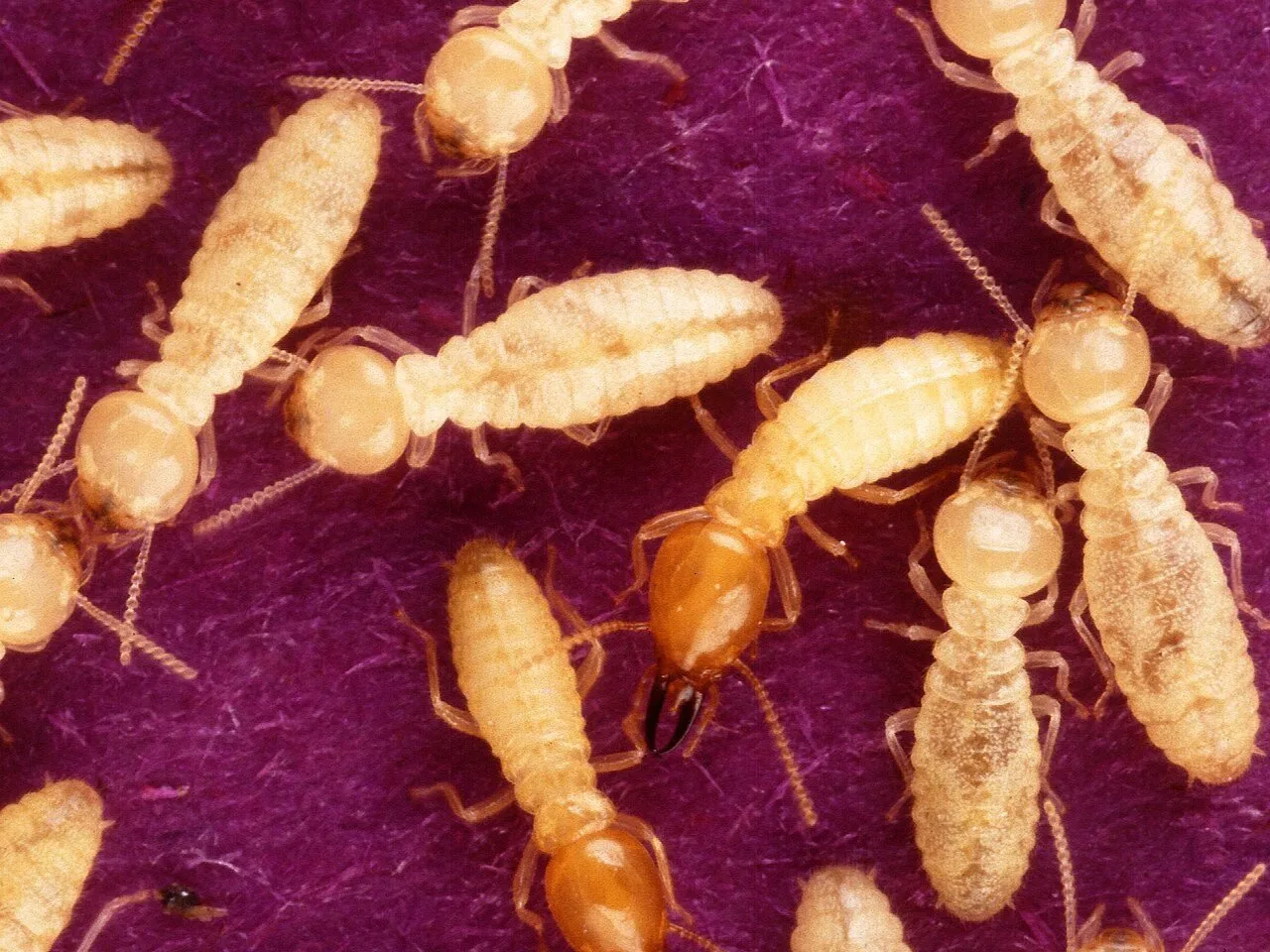
Subterranean termites are the main threat here. A study in Tropical Life Sciences Research (2013) found Coptotermes gestroi in all nine infested buildings it examined in Pulau Pinang. These termites live in the soil and travel up into the house, which is why a proper inspection starts low and outside.
An inspection has three jobs:
- Find activity. Confirm whether termites are feeding in the building right now, and where.
- Measure damage. Judge how far the attack has spread into timber, cabinets and ceilings.
- Spot the risks. Note leaks, soil contact and gaps that will attract the next colony.
This guide explains what termite inspection services in Malaysia should cover, what they cannot see, and how often to book one. For treatment itself, see our termite control services page.
Seen mud tubes or a soft door frame?
Our inspectors check the whole house and tell you plainly whether termites are active. See how our termite inspection and treatment works →
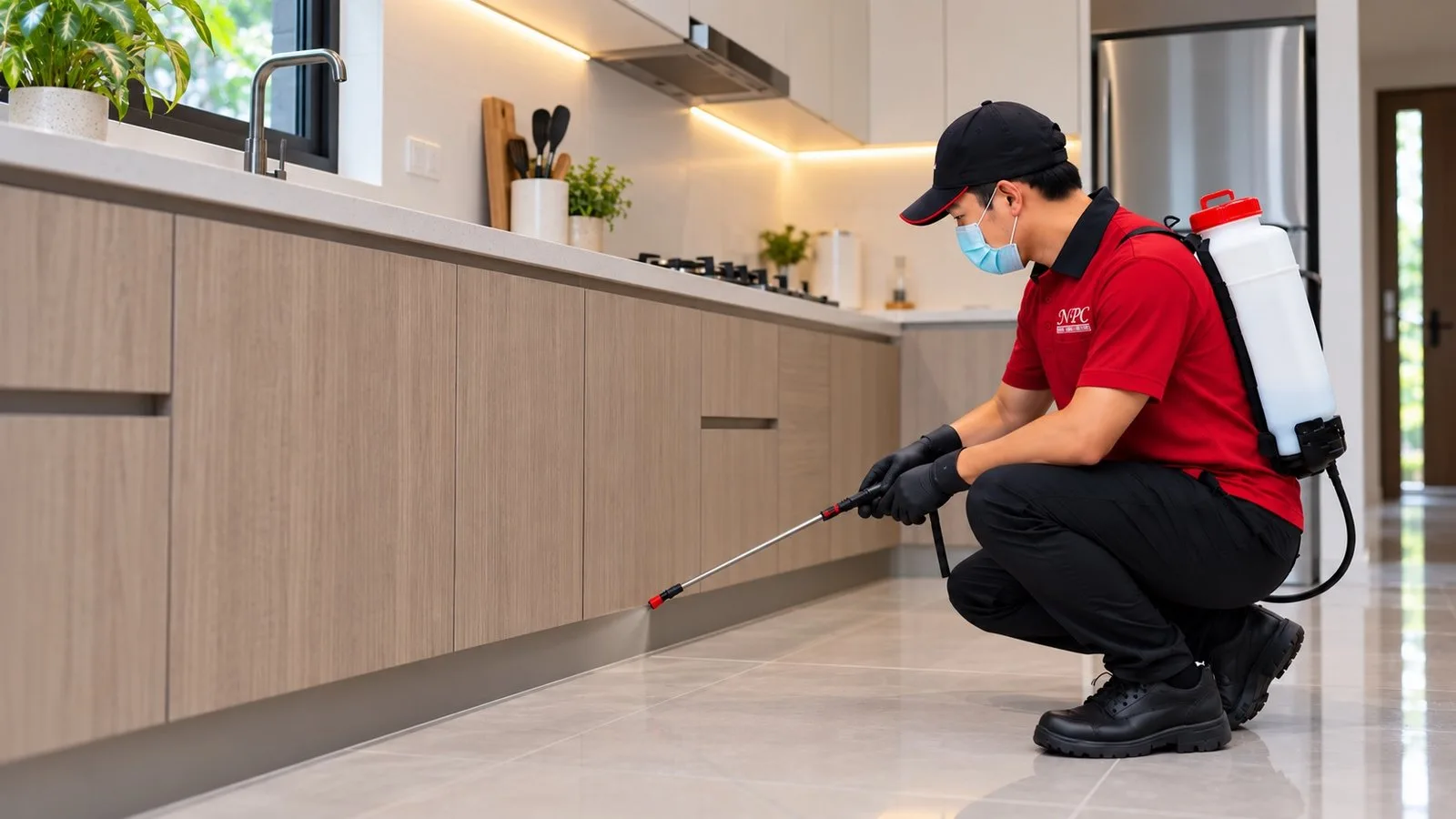
Here is a short look at NPC’s licensed team at work.

2Where Do Termite Inspectors Look First?
Quick Answer: Termite inspection services in Malaysia look first where soil, moisture and timber meet. In a Malaysian home that means door and window frames, kitchen and bathroom walls, built-in wardrobes and cabinets, timber or parquet floors, the roof space and the outside perimeter. Termites travel up from the soil, so the lowest and wettest parts of the house come first.
We follow the same route in every house, so nothing is skipped. The table lists each zone, what we check there, and why termites like it.
| Zone | What we check | Why termites go there |
|---|---|---|
| Outside perimeter and garden | Mud tubes on walls, soil against the house, tree stumps and timber in the garden | Colonies live in the soil and enter at ground level |
| Porch, planter boxes and car porch | Cracks, expansion joints and soil-filled planters touching walls | Planters keep soil damp right against the structure |
| Door and window frames | Hollow sound when tapped, soft corners, soil in joints | Timber meets masonry, often close to the floor |
| Kitchen and bathroom walls | Moisture readings, bubbling paint, soil along tile grout | Leaking pipes keep walls damp, which termites need |
| Built-in cabinets and wardrobes | Back panels, skirting behind, bottom shelves | Fixed units hide the wall for years |
| Timber and parquet floors | Lifting or hollow boards, soil in gaps | Floors sit directly on the slab and its cracks |
| Roof space and ceilings | Roof timbers, sagging or stained ceiling boards | Termites can climb inside walls to reach the roof |
| Pipe and cable entries | Gaps where pipes and wiring pass through the slab or walls | Service gaps are hidden highways into the house |
Source: NPC Pest Control inspection checklist, Kuala Lumpur and Selangor, 2026.
Research backs the “start low” rule. A survey of 80 traditional houses in Aceh, Indonesia, published in Insects (2020), found 51% infested by Coptotermes gestroi or Nasutitermes matangensis, and the lower parts of the houses were attacked most often and most severely.
Built-ins are the zone owners forget. Kitchen cabinets and wardrobes fixed against a wall hide the wall itself. Termites can climb behind them for months, so we open every door, empty a corner if needed and check the back panels and the skirting behind them.
3Which Signs Show That Termites Are Active?
Quick Answer: The clearest signs of active termites are fresh mud tubes, timber that sounds hollow or gives way, soil packed into cracks and joints, and piles of discarded wings near windows or lights. Bubbling paint and sagging ceiling boards are also warnings. Inspectors break a small section of mud tube to see whether live termites are inside.
Not every sign means an active colony. Old, dry mud tubes can be left over from an attack that was treated years ago. That is why termite inspection services in Malaysia should confirm activity, not just list what they see. The heat map shows where each sign usually turns up in different buildings.
| Sign | Terrace house | Semi-D or bungalow | Condo unit | Shop lot |
|---|---|---|---|---|
| Mud tubes on walls or pipes | Common | Common | Rare | Common |
| Hollow door or window frames | Common | Common | Sometimes | Sometimes |
| Soil in tile joints or skirting | Common | Sometimes | Sometimes | Sometimes |
| Discarded wings after rain | Sometimes | Sometimes | Sometimes | Sometimes |
| Damaged built-in cabinets | Common | Common | Common | Rare |
| Sagging or stained ceiling boards | Sometimes | Common | Rare | Sometimes |
Source: illustrative guide from NPC Pest Control site inspections, Klang Valley, 2026.
Each sign tells us something different:
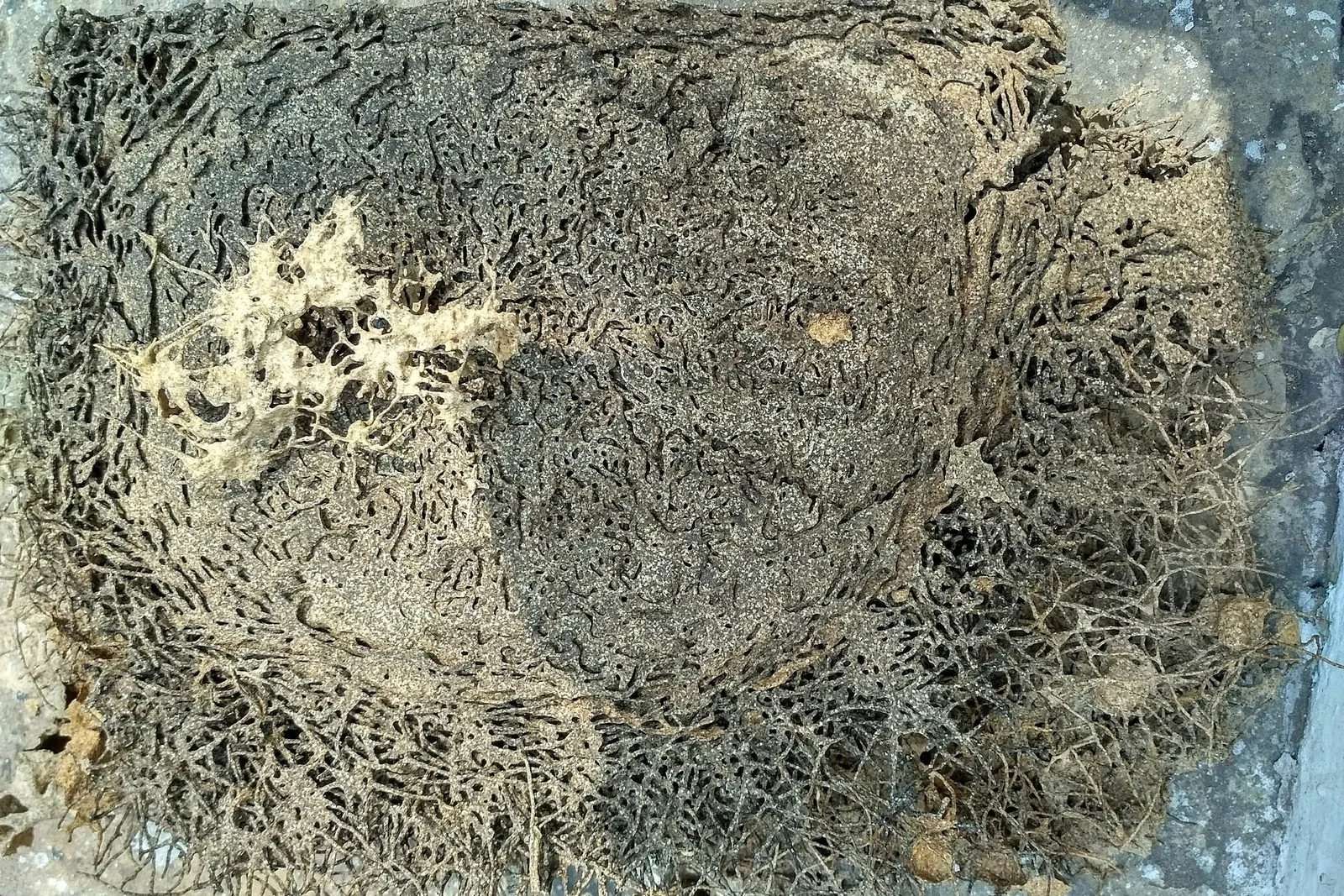
- Mud tubes. Pencil-thin earth tunnels on walls or pipes. A moist, freshly built tube means termites are using it now.
- Hollow timber. Termites eat the inside of wood and leave the painted surface, so a frame can look fine until it is tapped.
- Discarded wings. Winged termites swarm after rain, drop their wings and look for a place to start a new colony.
- Soil in cracks. Termites pack soil into joints to keep their tunnels damp, often along tiles and skirting.
More detail is in our guide to early warning signs of white ants.
4What Tools Do Termite Inspectors Use?
Quick Answer: Termite inspection services in Malaysia rely on a torch, a tapping tool and a moisture meter, because termites need damp conditions and hollow timber gives itself away when tapped. Some operators add a thermal camera or an acoustic sensor to scan walls without breaking them. The tools help, but the inspector’s route and experience matter more than any single device.
Here is what each tool does on a typical visit:
- Torch and mirror. For dark corners, under sinks, behind cabinets and inside the roof space.
- Tapping tool or screwdriver handle. Tapping timber reveals hollow sections without cutting into them.
- Moisture meter. High readings in a wall or frame point to a leak, and often to termites working behind the surface.
- Thermal camera or sound sensor. Useful for scanning large walls, but a reading still needs a physical check to confirm.
The chart shows how we typically split our time on an intermediate terrace house.
| Inspection zone | Share of the visit | Minutes |
|---|---|---|
| Outside perimeter, garden and porch | 18 | |
| Kitchen, bathrooms and wet walls | 12 | |
| Door and window frames | 10 | |
| Built-in cabinets and wardrobes | 10 | |
| Roof space and ceilings | 8 | |
| Floors, pipe and cable entries | 7 |
Source: NPC Pest Control field practice, intermediate terrace houses in the Klang Valley, 2026. Typical figures; each house differs.
Most termite inspection services in Malaysia need about an hour for a thorough visit to a terrace house. Semi-Ds, bungalows and shop lots take longer, and our commercial pest control team schedules factories and warehouses as separate site surveys.
5What Can a Termite Inspection Not See?
Quick Answer: Even the best termite inspection services in Malaysia cannot see inside solid walls, under floor tiles, beneath the concrete slab or behind fixed panels without opening them. Inspectors judge these areas from indirect signs such as moisture, hollow sounds and nearby mud tubes. A good report says clearly which areas were not accessible, so you know what was and was not checked.
Most guides describe termite inspection services in Malaysia as if they find everything. They do not, and an honest operator will tell you so. These are the common blind spots in Klang Valley homes:
- Behind tiled walls. Kitchen and bathroom tiles hide the wall; termites can travel up the gaps behind them.
- Under the slab. The colony itself usually lives in the soil below or outside the house, out of sight.
- Sealed ceilings. Plaster ceilings with no access hatch limit what we can check in the roof space.
When we cannot reach an area, we note it in the report and may suggest monitoring stations to catch hidden activity. Our guide to the termite baiting system explains how stations also double as an early-warning tool.
Want a second opinion on a previous inspection?
We will walk the house again and explain what was checked, what was missed and what to do next. Book a follow-up termite inspection →
6How Often Should You Book a Termite Inspection?
Quick Answer: Most landed homes in Malaysia should book a termite inspection once a year, and more often if termites were found nearby or the house has had a leak or renovation. Condo units need one mainly when signs appear. Book one before buying any resale landed home, and after a treatment warranty ends.
The illustrative model below compares three owners of the same terrace house after a colony moves in next door.
| Owner’s habit | Month 0 | Month 6 | Month 12 | Month 18 | Month 24 | Month 36 |
|---|---|---|---|---|---|---|
| Inspected every year | 0 | 8 | 10 | 3 | 6 | 5 |
| Inspected every three years | 0 | 8 | 22 | 38 | 55 | 12 |
| Waits for visible damage | 0 | 8 | 22 | 38 | 55 | 85 |
Source: illustrative model by NPC Pest Control, 2026 (0 = no damage, 100 = severe structural damage; treatment assumed soon after termites are found). Not a laboratory measurement.
The owner inspected yearly catches the attack while damage is still small. The owner who waits for visible damage usually finds it only after door frames or cabinets fail. The same rhythm keeps treatment warranties valid, as our guide to post construction anti termite treatment explains.
Book an extra inspection when:
- You are buying a resale landed home, ideally before the sale is final.
- A neighbour has had termites treated in the last year.
- Your home has had a burst pipe, a long leak or flooding.
- You have hacked floors, extended the kitchen or built a new room.
7What Should a Termite Inspection Report Include?
Quick Answer: A report from termite inspection services in Malaysia should list every area checked, where termites were found, whether they are active, the likely species, the extent of damage and the conditions attracting them. It should also note areas that could not be reached and recommend a specific treatment.
A verbal “you have termites, treatment costs this much” is not enough. The report is what you use to compare quotes, claim from a developer or show a buyer. Check that yours covers:
- Findings by area. Room-by-room notes, with photos of mud tubes, damage and moisture readings.
- Activity status. Active, inactive or old damage, for each location.
- Species. Whether it is a Coptotermes species or another termite, because it changes the treatment.
- Recommendation. Bait, a soil barrier, spot treatment or monitoring, with reasons.
From there, our guide to what to expect from termite control services covers the treatment stage.
How to prepare your home for a termite inspection
A little preparation helps the inspector reach every zone in one visit.
- Clear the edges. Move boxes and furniture about 30 cm away from walls where you can.
- Empty the problem cabinets. Clear the kitchen cabinet or wardrobe where you saw signs, so the back panel can be checked.
- Show the access points. Tell the inspector where the ceiling hatch, the water tank and the pipe entries are.
- Leave the evidence. Do not spray or break mud tubes before the visit; they show where termites are travelling.
- Gather the paperwork. Find any old treatment reports or warranty cards from the developer or previous owner.
8How Much Do Termite Inspection Services in Malaysia Cost?
Quick Answer: Many termite inspection services in Malaysia inspect homes for free and charge only for treatment, while detailed pre-purchase or commercial reports may be charged separately. NPC Pest Control inspects homes in Kuala Lumpur and Selangor for free. The real cost question is the treatment that follows, which depends on the method and the size of the building.
A free inspection is only worth having if it is thorough. Watch for these warning signs of a rushed visit:
- No time spent outside. The perimeter, garden and porch are where most colonies enter.
- A price before the walk-through ends. A quote given at the door is a guess.
Treatment prices vary widely by method and home type. Our anti-termite treatment cost guide gives indicative Klang Valley ranges, and our guide to anti-termite soil treatment explains the barrier option.
9Conclusion: Inspect the Whole House, Then Decide
Quick Answer: The best termite inspection services in Malaysia follow a fixed route through the whole building, confirm whether termites are active, state what they could not check and put everything in a written report. Book one yearly for landed homes, before buying a resale house and after any leak or renovation, then choose treatment based on the findings.
Start with the inspection, not the product. It tells you whether you need bait, a barrier or nothing yet. For a wider view of home pest care, read what a pest control service includes, visit the NPC Pest Control homepage, or see our termite treatment service.
10Frequently Asked Questions
1. How long does a termite inspection take?
A thorough inspection of an intermediate terrace house takes about an hour. Semi-Ds, bungalows and shop lots take longer because they have more walls, timber and outside perimeter to check. A visit of only a few minutes is unlikely to cover every zone.
2. Is a termite inspection free in Malaysia?
Many operators inspect homes for free and charge only for treatment. Detailed pre-purchase or commercial survey reports may be charged separately. NPC Pest Control inspects homes in Kuala Lumpur and Selangor for free.
3. Should I get a termite inspection before buying a house?
Yes, especially for a resale landed home. Sellers rarely hand over old treatment records, and renovations may have broken earlier protection. An inspection before the sale is final tells you whether you are buying a termite problem.
4. Can termites be found if there is no visible damage?
Often, yes. Inspectors use moisture readings, tapping and signs such as soil in joints to find termites before damage shows.
5. Does NPC Pest Control offer termite inspection services in Kuala Lumpur and Selangor?
Yes. NPC Pest Control provides termite inspection services across Kuala Lumpur and Selangor, with a written report and a treatment recommendation. Call 03-8061 1875, Monday to Saturday from 9am to 6pm, or request an inspection through our contact page.
Not sure what is behind your walls?
NPC Pest Control inspects your whole home for free, confirms whether termites are active and gives you the findings in a written report.
Book my free termite inspection →