Last updated: 22 September 2026
1What Is Pre Construction Anti Termite Treatment?
Quick Answer: Pre construction anti termite treatment is a liquid termiticide sprayed onto the levelled, compacted soil before the concrete slab is poured, plus the soil along footings and foundation walls. It forms a treated layer that subterranean termites must cross to reach the building. Once the slab is cast, this layer can never be reached again.
This guide is for developers, contractors, architects and owners building their own house. Most articles explain what the treatment is. Here we focus on the site: when each stage happens, who must be there, and what quietly breaks the barrier between treatment day and handover.
NPC Pest Control is a licensed operator in Puchong with over 15 years of termite work across Kuala Lumpur and Selangor. For how our termite service works on finished buildings, see our termite control service page.
- It is a one-time chance. The soil under the slab is only open for a few days.
- It guards the building only. The barrier stops termites getting in, but colonies in the surrounding ground survive.
- It needs the builder’s help. Most barrier failures start with plumbers, landscapers and other trades.
Planning a slab pour in the next few weeks?
Tell us your pour dates and we will plan each treatment stage around them. See how our termite protection is planned →
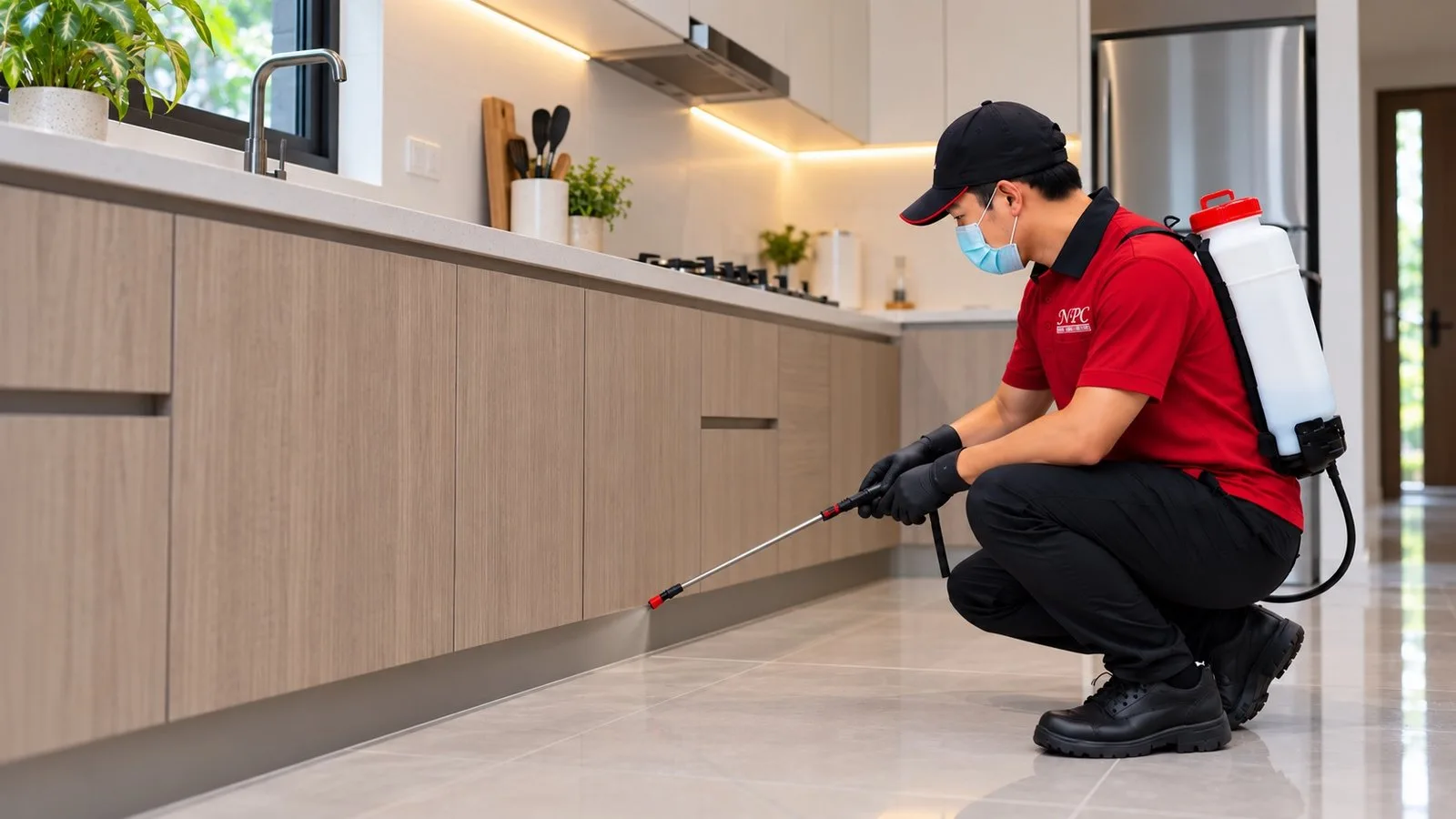
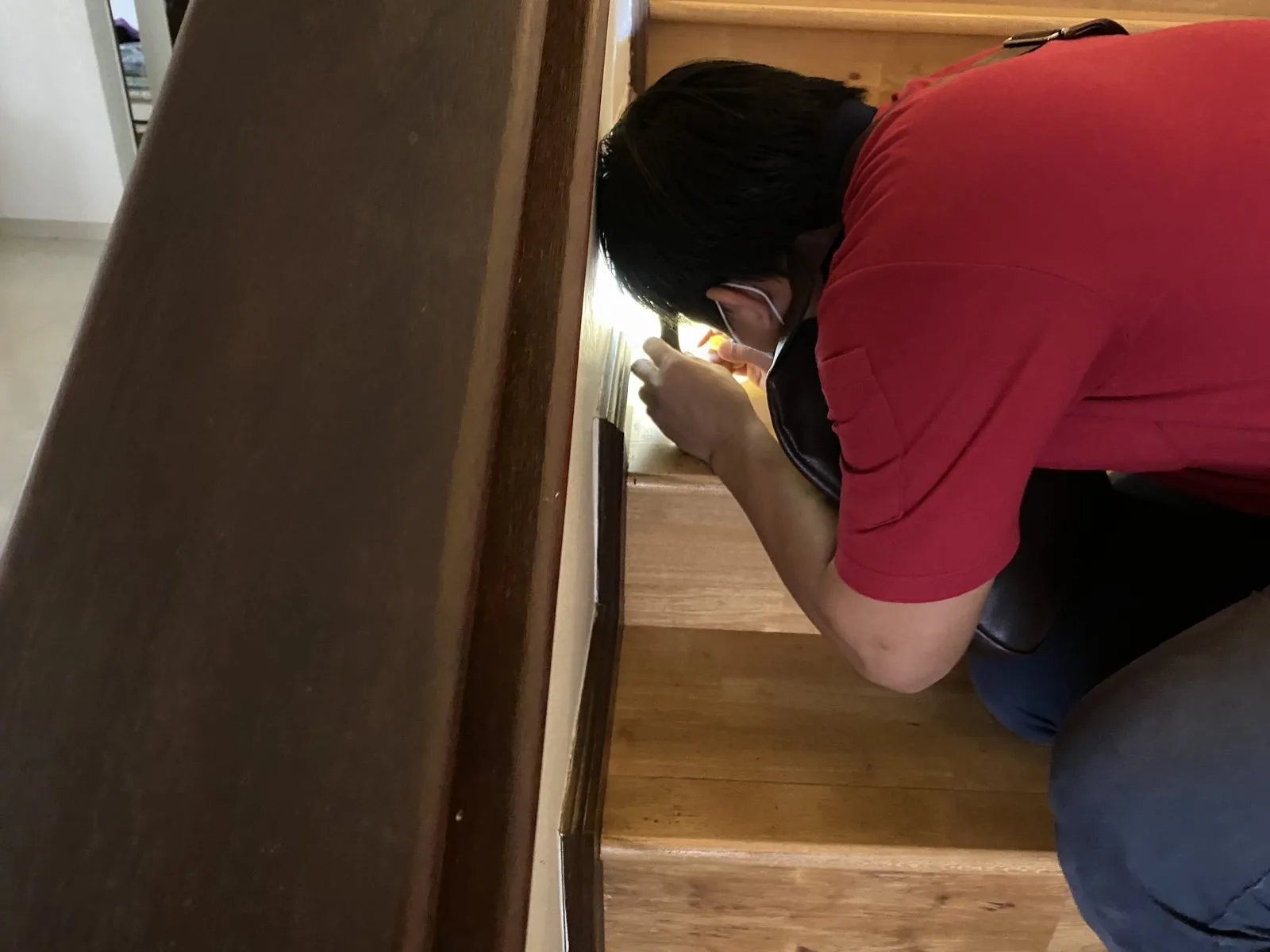
First, a short look at NPC’s licensed team at work.

2When Should Pre-Construction Termite Treatment Be Done?
Quick Answer: Pre-construction anti-termite treatment is done in stages that follow the build over several visits. Footing trenches are treated before the footings are poured, slab areas after levelling and plumbing but before the vapour barrier and concrete, and the outside soil after backfill and final grading. Missing a stage leaves a gap.
| Stage | When | What is treated | Builder’s job | Common mistake |
|---|---|---|---|---|
| 1. Footings | Before footings are poured | Soil in footing trenches and around pile caps | Trenches dug and cleaned, pour date confirmed | Treating after rebar cages hide the trench floor |
| 2. Ground slab | After levelling, services and rebar; before the plastic sheet and concrete | Whole slab area, pipe openings, bath traps, construction joints | Plumbing and conduits finished, timber cleared | Spraying before the plumbers have finished |
| 3. Raised or later slabs | Before each later ground-contact pour | Porches, car porch, apron and extension slabs | Tell the operator about every extra pour | Forgetting the porch or car porch slab |
| 4. Outside perimeter | After backfill, drains and final grading | Soil band along outside walls and around columns | Landscaping and fencing done first | Treating before landscaping, which then buries it |
Source: NPC Pest Control site practice in Kuala Lumpur and Selangor, 2026, following the staged approach in North Carolina Department of Agriculture pre-construction termite guidance.
The stages follow guidance from the North Carolina Department of Agriculture, which lists four points in a build where the soil must be treated. It notes that careful scheduling can usually cover them in three trips.
The slab stage is the one that cannot be moved. The treatment goes on after the plumbing, formwork and reinforcement are in, and just before the plastic sheet and concrete.
For how the soil barrier itself works on termites, see our guide to anti-termite soil treatment in Malaysia.
3Is Pre Construction Anti Termite Treatment Required in Malaysia?
Quick Answer: Pre construction anti termite treatment is usually set by the building contract and specifications, so buyers rarely arrange it themselves. What the law does require is that the work is done by a licensed operator using registered pesticides, and that the customer gets a written report of what was applied, where and how much.
Anyone doing pest control for hire must hold a licence under the Pesticides Act 1974. The Pesticides (Pest Control Operator) Rules 2004 add three points that matter on a building site:
- Termite work is a major job. An assistant may only work under the personal supervision of a licensed applicator who is on site.
- Registered products only. The termiticide must be registered for that use in Malaysia.
- A written report is owed. It names the active ingredient, trade name, concentration, method, area treated and quantity used.
Ask for the report after every stage and file it with the project records. It is the only proof the soil under the slab was treated. Our checklist for the best termite control company in Malaysia covers how to check a licence and a report before you appoint anyone.
4What Breaks a Pre-Construction Termite Barrier on Site?
Quick Answer: Most barriers from pre construction anti termite treatment are broken by other work on site. Pipes laid after treatment, untreated fill brought in, heavy rain before the pour, timber left in the ground and late landscaping all create untreated paths. Each one lets termites reach the slab without crossing treated soil.
| Project type | Pipes laid after treatment | Untreated fill added | Rain before the pour | Timber left in soil | Late landscaping or drains |
|---|---|---|---|---|---|
| Landed terrace house | Medium | Medium | Medium | High | High |
| Semi-D or bungalow | High | Medium | Medium | High | High |
| Home extension or renovation | High | High | Medium | High | Medium |
| Shop office | Medium | Medium | High | Medium | Low |
| Factory or warehouse | High | High | High | Medium | Medium |
| School, clinic or public building | Medium | Medium | Medium | Medium | Medium |
Source: illustrative guide from NPC Pest Control site experience in Kuala Lumpur and Selangor, 2026. Individual sites vary. Not a measured study.
The Mississippi State University Extension guide for homebuilders warns that removing treated soil or adding untreated soil after treatment creates an entry point. It also names form boards and stakes left in the ground as a common cause of infestation.
The usual weak points on Malaysian sites:
- Pipe and conduit openings. Every service pipe through the slab is a crack termites can follow. Fit collars and treat around each one.
- Untreated fill. Extra sand or earth added after treatment sits on top of the barrier and must be treated again.
- Rain before the pour. Monsoon downpours can wash treated soil, so a long delay between treatment and concrete needs a re-check.
- Timber left in the soil. Pegs, off-cuts and formwork buried in backfill feed termites right beside the building.
Warehouses, factories and shop offices face the same risks on a bigger scale. Our commercial pest control team can plan treatment across large pours.
5How Should Builders Coordinate Pre-Construction Treatment?
Quick Answer: Builders should give the pest control operator the pour schedule, hold the vapour barrier until the slab is treated, and tell every trade not to dig into treated soil. Any disturbed or new soil gets re-treated before concrete. Good pre construction anti termite treatment is a coordination job as much as a spraying job.
How to keep a pre-construction termite barrier intact
These steps are what we ask of the site team on every project.
- Share the concrete schedule early. Send footing and slab pour dates to the operator so each stage is booked two to three days ahead.
- Finish services first. Lay under-slab pipes, conduits and drains before the slab stage is treated.
- Clear timber and debris. Remove pegs, off-cuts and roots from the area before spraying.
- Treat, then lay the sheet. Put the plastic sheet down only after the treatment, and pour soon after.
- Report every disturbance. Tell the operator about new trenches, added fill or rain damage so those areas can be re-treated.
- Treat the outside at final grade. Book the perimeter stage after backfill and landscaping, not before.
- Collect the reports. Keep each stage report with the handover documents for the owner.
Brief the site on day one. A short talk to the plumbing and landscaping crews prevents most barrier damage. For how a finished building is checked afterwards, see our guide to what a termite inspection covers.
Building a house or extension in KL or Selangor?
We can walk the site with your contractor and set the treatment stages before work starts. Plan my pre-construction treatment stages →
6How Long Does Pre-Construction Termite Treatment Last?
Quick Answer: Pre construction anti termite treatment typically protects for about five years, the benchmark regulators use for soil termiticides. Field data show pyrethroid slab treatments lasting five to seven years and some non-repellent products longer. After that, protection depends on a perimeter treatment, yearly inspections and, where needed, baiting.
| Benchmark or treatment | Years of protection (bar = upper value, max 12) |
|---|---|
| US EPA performance standard for soil termiticides | 5 years complete protection, yearly reinspection |
| Pyrethroid slab pretreatment (field data) | 5 to 7 years |
| Bifenthrin and fipronil at all US Forest Service sites | 100% protection for 5+ years |
| Non-repellent perimeter treatment (field data) | 2 to 12 years, depending on product |
Sources: Insects, 2022, review of termite control methods (EPA standard and US Forest Service field tests); Mississippi State University Extension, What Homebuilders Need To Know About Termites, 2021. US field data; Malaysian heat and rain can shorten these periods.
The five-year benchmark comes from the US EPA standard described in a 2022 review in the journal Insects: complete protection for five years, with a yearly reinspection. The review found only bifenthrin and fipronil gave 100% protection for five years or more at every US Forest Service test site. The Mississippi State guide reports five to seven years for pyrethroid slab treatments.
Malaysian soil is harder on termiticides. Heat, heavy rain and flooding break chemicals down faster than in the test sites. Plan on the pre-construction barrier covering the first years of the building’s life.
When that first barrier fades, owners move on to a post-construction anti-termite treatment or a termite baiting system.
7What Happens to the Barrier Between Treatment and Handover?
Quick Answer: The barrier is strongest on the day it is sprayed and weakest if the site is not managed. In our illustrative model, a site where trades are not briefed loses almost half its protected area by handover. A site that re-treats every disturbance keeps nearly all of it.
| Site approach | Week 0 | Week 4 | Week 8 | Week 12 | Week 16 | Week 20 | Week 24 |
|---|---|---|---|---|---|---|---|
| Treated once, trades not briefed | 100 | 92 | 84 | 76 | 68 | 60 | 55 |
| Treated, gaps patched when noticed | 100 | 96 | 91 | 88 | 85 | 82 | 80 |
| Staged plan: disturbances re-treated, perimeter treated at final grade | 100 | 99 | 98 | 98 | 97 | 97 | 98 |
Source: illustrative model by NPC Pest Control, 2026, based on common site events on landed builds in the Klang Valley. Index values, not measurements. Not a measured study.
The model follows a typical landed build. Each dip matches a common site event.
- Weeks 1 to 4: the slab is safe once poured. The risk sits at the edges and pipe openings.
- Weeks 8 to 16: drains, fences and apron slabs cut into the outside soil.
- Weeks 20 to 24: landscaping and extra fill cover or replace treated soil.
This is why the outside perimeter is treated last, at final grade. If you are unsure whether your own home is still protected, our guide on whether your home needs anti-termite treatment walks through the risk signs.
8How Much Does Pre-Construction Anti-Termite Treatment Cost?
Quick Answer: Pre-construction anti-termite treatment is quoted per square foot of treated area after the plans are checked. It usually costs far less than treating the same building later, because no drilling through finished floors is needed. The main cost drivers are floor area, number of stages, fill type and the product chosen.
For comparison, a drill-and-inject barrier on a finished intermediate terrace house in the Klang Valley is an indicative RM2,500 to RM4,500, as shown in our anti-termite treatment cost guide. Doing it before the slab avoids most of that labour.
What moves the price:
- Treated area. Ground floor slab, footings and perimeter, measured from the plans.
- Number of stages. Several pour dates mean several visits.
- Fill type. Coarse fill and stone need more solution per square foot than compacted earth.
- Product and warranty. Longer-lasting termiticides and longer warranties cost more.
Readers who prefer Malay can read our panduan kos pest control anai-anai. For how pre-construction work fits into the full range of termite services, see our guide to termite control services in Malaysia.
9Conclusion: The Barrier Is Only as Good as the Site
Quick Answer: Pre construction anti termite treatment is the cheapest termite protection a building will get, but only if the site keeps it whole. Plan the stages around the pour dates, re-treat anything disturbed, treat the perimeter last and hand the owner every report with a date for the first inspection.
The chemical does its job when the site does its job. A builder who guards the barrier through every trade hands over a building that starts its life protected. Pre construction anti termite treatment then buys the owner years before any drilling is needed.
For more on protecting homes and businesses, visit the NPC Pest Control homepage, see what a pest control service includes, or read how our termite treatment service protects finished buildings.
10Frequently Asked Questions
1. When is pre-construction anti-termite treatment done?
It is done in stages: in the footing trenches before the footings are poured, on the levelled slab area after plumbing and before the plastic sheet and concrete, and along the outside walls after backfill and final grading.
2. Can pre-construction treatment be done after the slab is poured?
No. Once the concrete is down, the soil under the slab cannot be sprayed. A finished building needs post-construction treatment instead, usually drilling through the floor to inject the soil, or a baiting system.
3. Is pre-construction termite treatment enough on its own?
It protects the building for the first several years. After that, protection depends on a perimeter treatment, yearly inspections and topping up the barrier or adding bait stations when needed.
4. Does rain affect pre-construction anti-termite treatment?
Heavy rain soon after spraying can wash treated soil, especially on sandy fill. If a storm hits before the concrete is poured, ask the operator to check and re-treat the affected areas.
5. Does NPC Pest Control do pre-construction termite treatment?
Yes. NPC Pest Control is a licensed operator based in Puchong serving Kuala Lumpur and Selangor. We plan treatment stages around your pour dates and give a written report after each stage. Call 03-8061 1875 or 016-335 9799, Monday to Saturday from 9am to 6pm.
Pouring a slab soon?
Our licensed team plans each treatment stage around your concrete schedule and hands you a written report for your records.
Get a pre-construction treatment quote →