Published: 1 November 2026
You move a cabinet and see a thin brown line of mud climbing the wall. Is it termites, ants, a wasp, or nothing at all?
This guide is for homeowners, landlords and tenants in KL and Selangor who have just found a termite mud tube, or something that looks like one. It covers:
- What a real termite mud tube looks like, and the lookalikes.
- A simple break-and-check test to see if termites are still active.
- What not to do, and the right next step.
If you want the full list of termite warning signs from early to late stage, our guide to early white ant warning signs covers them. This article looks closely at one sign, the mud tube itself.
Not sure what you are looking at?
Send us a clear photo of the tube and where it starts and ends, and we will tell you whether it looks like termites. See our termite control service →
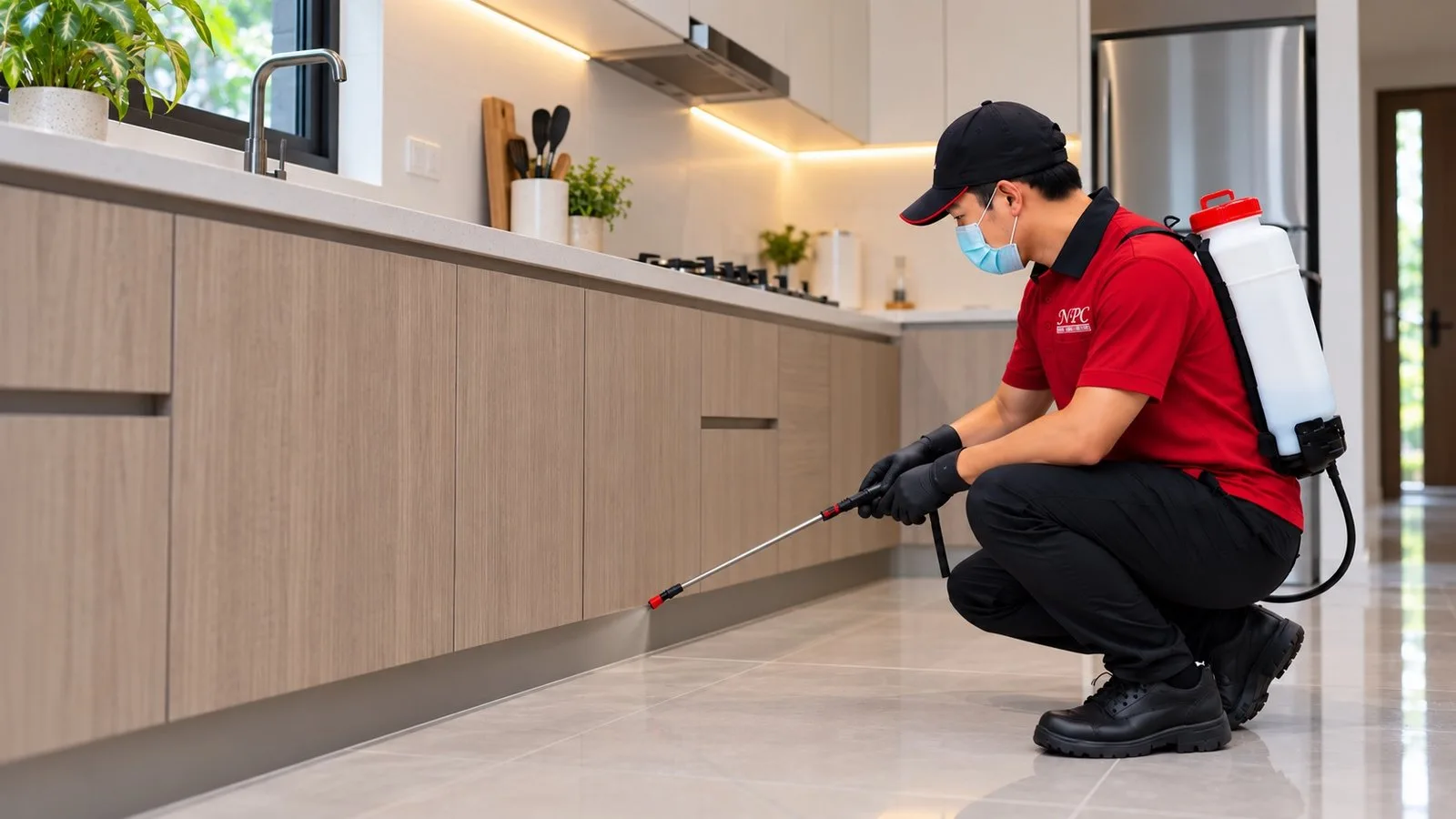
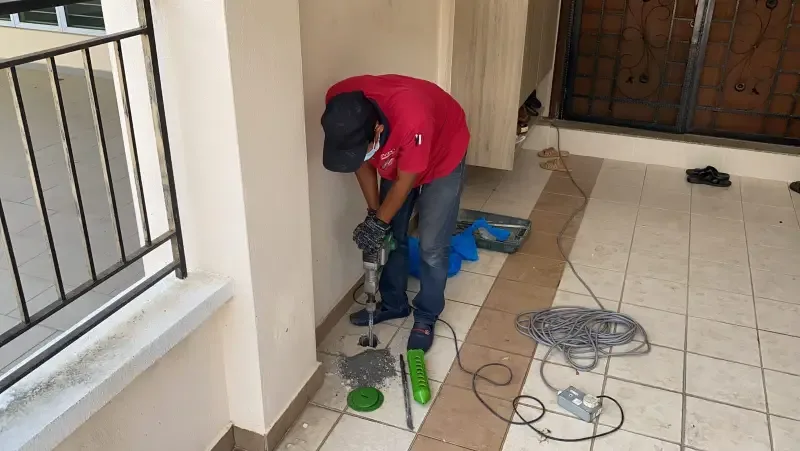
Here is a short look at NPC’s team at work.

1What Does a Termite Mud Tube Look Like?
Quick Answer: A termite mud tube is a narrow, earth-coloured tunnel, usually about the width of a pencil, built from soil, chewed wood and termite saliva. It runs in a fairly continuous line from the ground, a floor crack or a wall joint towards timber. The surface feels gritty, and inside it is hollow.
Subterranean termites dry out and die in open air, so they build these covered runways to travel between the soil and the wood they eat. Penn State Extension describes them as earth-coloured tubes that act as a protected runway, and notes that winged termites may also use them as exits when they swarm.
Four features of the real thing:
- A start and an end. It begins at soil, a crack or a joint, and heads for timber such as a door frame, skirting or cabinet.
- A roof. The tunnel is closed on top, so you never see insects walking along it.
- Gritty texture. It looks like dried mud with fine grains of soil.
- Branches. Busy tubes split and fan out across a wall.
In KL and Selangor the builder is usually the Asian subterranean termite, Coptotermes gestroi. A 2026 study in the Journal of Economic Entomology found its tubes grew longer and branched more as colony size rose, so a large, branching network usually means a big colony.
2Termite Mud Tube or Ant Trail? How to Tell Termites From Ants
Quick Answer: To tell a termite mud tube from an ant trail, look at the roof. Termites travel inside a closed tunnel and are pale and soft, while ants walk in the open, carry loose soil crumbs and have dark, hard bodies with a pinched waist. If you can see the insects walking, it is almost certainly ants.
| What you found | What it looks like | Where it shows up | Deciding clue |
|---|---|---|---|
| Termite mud tube | Brown, gritty, pencil-width tunnel with a roof | Runs from soil, a floor crack or a wall joint up to timber | Pale termites inside; a break is sealed within days |
| Ant trail or soil crumbs | Loose crumbs or a line of soil grains, no roof | Along skirting, tile joints and wall edges | Dark ants walking in the open |
| Mud wasp nest | Short mud cells or a small pot, often in a cluster | Under eaves, ceilings and cupboard corners | Not joined to the ground; round exit holes |
| Mud on a garden tree | Wide mud sheets or tubes on the bark | Tree trunks, stumps and fence posts outdoors | Termites feeding on the tree |
| Old, empty tube | Dry, pale and crumbly | Same places as a live tube | No insects inside and no repair after you break it |
| Water stain or salt bloom | Flat brown stain or white powdery crust | Lower walls, behind planters, near pipes | No raised tunnel and nothing hollow to open |
Source: identification guide by NPC Pest Control, 2026, with ant and termite body features from Penn State Extension.
Termites are called white ants here, but they are very different insects. Penn State Extension lists the body clues:
- Waist. An ant has a narrow, wasp-like waist; a termite’s body is broad all the way along.
- Antennae. Ant antennae are bent like an L; termite antennae are straight.
- Wings. The US EPA termite guide adds that a winged ant’s front wings are longer than its hind wings, while a termite’s wings are about equal.
Some ants do carry soil grains out of tile joints and leave small heaps along the skirting. Those heaps are loose and open. Our guide to why DIY ant baits fail explains what to do if ants turn out to be the cause, and our ant control service deals with the nest.
3Other Mud Tube Lookalikes: Wasp Nests, Garden Trees and Wall Stains
Quick Answer: Mud wasp nests are short, clustered cells or small pots under eaves, ceilings and cupboard corners, and they are not joined to the ground. Mud on a garden tree means termites are feeding on that tree. Brown water stains and white salt crusts are flat, with nothing hollow to open. Only a raised tunnel joined to soil or a crack is the real thing.
How to rule out each lookalike:
- Mud wasp nests. Potter and mud dauber wasps build cells side by side, often with round exit holes. They sit high in sheltered corners and never connect to soil.
- Mud on garden trees. Some termites build wide mud sheets on bark. A 2018 PeerJ study filmed one such species building extensive mud tubes on tree trunks. Check walls and timber near the tree.
- Water stains and salt bloom. Damp walls leave brown tide marks or white powder. Press with a fingernail; there is no tunnel.
4Where Do Termite Mud Tubes Appear in Malaysian Homes?
Quick Answer: Termite mud tubes in Malaysian homes usually appear near water and timber: the outer wall at ground level, door frames, skirting and kitchen cabinets. They also follow wall cracks, floor joints and pipe runs. Ground-floor units and landed homes see them most, but tubes can show up on upper floors too.
| Home type | Outer wall at ground level | Door frames and skirting | Kitchen cabinets and sink | Wall cracks and floor joints | Pipe and cable runs |
|---|---|---|---|---|---|
| Terrace or link house | Common | Common | Common | Common | Sometimes |
| Semi-D or bungalow | Common | Common | Sometimes | Common | Sometimes |
| Older house with timber parts | Common | Common | Sometimes | Common | Rare |
| Shophouse | Sometimes | Sometimes | Common | Common | Common |
| Condo or flat, ground floor | Rare | Common | Common | Common | Common |
| Condo or flat, upper floor | Rare | Sometimes | Sometimes | Sometimes | Common |
Source: inspection guide by NPC Pest Control, 2026. Not measured data.
Termites follow moisture and timber, so kitchen cabinets, bathroom door frames and walls behind planters are common spots. In condos they can climb through cracks and service ducts.
Places worth checking with a torch:
- Under kitchen cabinets. Pull out the kick board if you can.
- Door frames at floor level. Especially bathroom and back doors.
- Floor cracks and pipe entries. Gaps as thin as a card lead to the soil.
Older houses with extensions and timber parts tend to have more of these seams. A 2020 survey of traditional houses in Aceh, Indonesia found 51% infested, with the lower parts attacked most. Our guide to older homes in Petaling Jaya explains why renovations open new routes.
5How to Check if a Termite Mud Tube Is Active
Quick Answer: To check if a termite mud tube is active, break a small 2 cm gap in the middle with a screwdriver, look inside for pale termites, then take a photo and check again after two to three days. Active termites seal the gap with fresh, darker mud. An old, abandoned tube stays broken and crumbles.
| Share of the gap sealed again | Day 0 | Day 1 | Day 2 | Day 3 | Day 5 | Day 7 |
|---|---|---|---|---|---|---|
| Active tube in a damp, shaded spot | 0% | 70% | 100% | 100% | 100% | 100% |
| Active tube on a dry, bright wall | 0% | 30% | 60% | 90% | 100% | 100% |
| Old, empty tube | 0% | 0% | 0% | 0% | 0% | 0% |
Source: illustrative scenario by NPC Pest Control, 2026, for a 2 cm break in the middle of a tube. Repair speed varies by colony and weather. Not measured data.
This break-and-check test works because termites repair damage fast. When a tube is opened, soldier termites rush to guard the breach. In the PeerJ tree-trunk study, workers started repairs shortly after the disturbance and rebuilt from the bottom up.
How to check a termite mud tube at home
You need a flat screwdriver, a torch and your phone.
- Photograph the whole tube. Show where it starts and ends, with something for scale.
- Open a small gap. Break about 2 cm in the middle. Leave the rest of the tube alone.
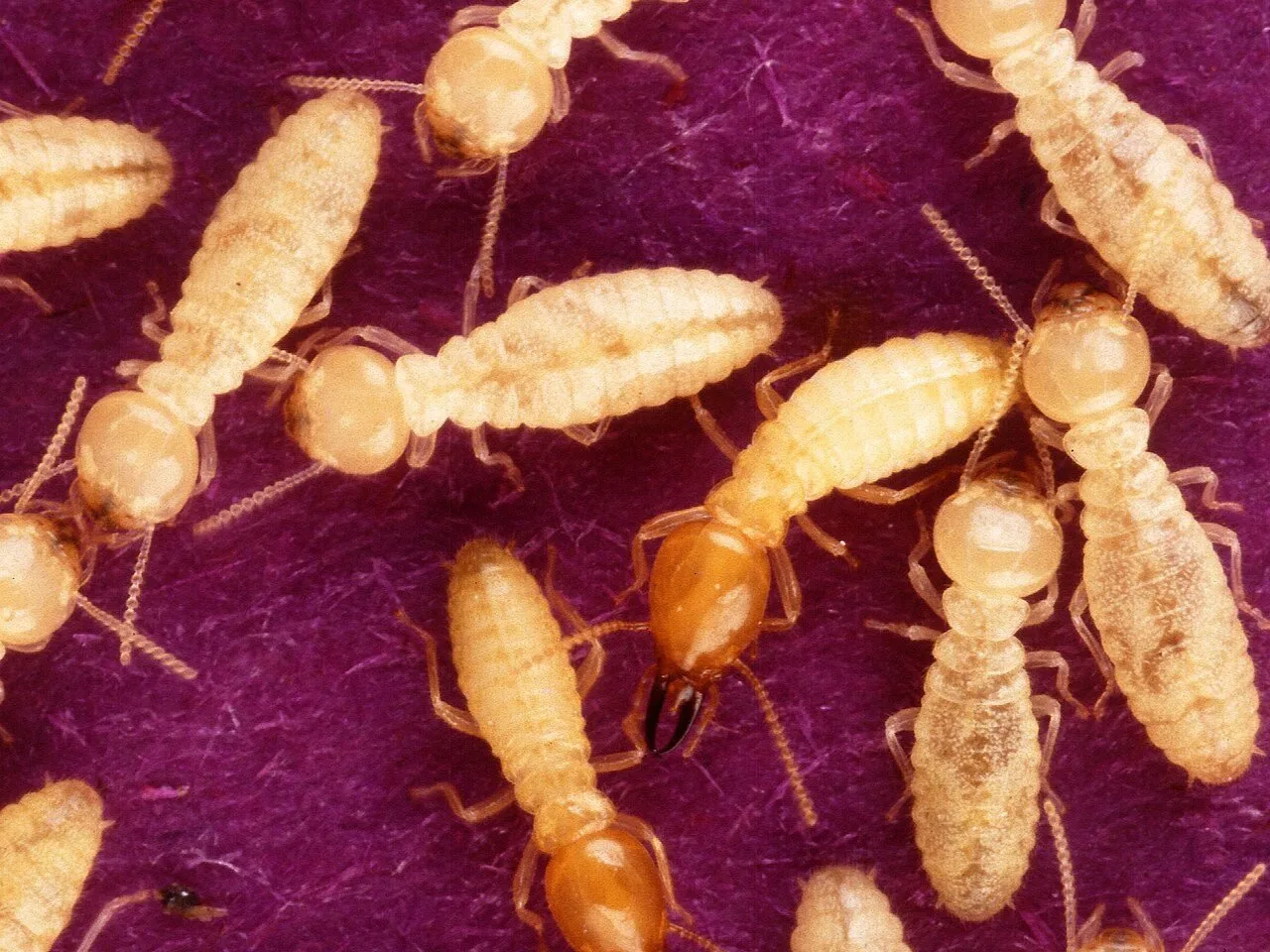
- Look inside. Pale, soft insects, or soldiers with brown heads, mean termites are active now.
- Tap nearby timber. The EPA suggests probing wood with a flat screwdriver to find hollow spots.
- Check again in two to three days. Fresh, darker mud over the gap confirms an active colony.
- Book an inspection. Send the photos, whatever the result.
A tube still broken after a week is probably old, but the colony may simply have moved to a hidden route.
6What Not to Do When You Find a Termite Mud Tube
Quick Answer: When you find a termite mud tube, do not spray it with insect spray, do not scrape the whole tube off, and do not pour chemicals into the soil yourself. These steps kill only the few termites in reach, push the colony to a new route, and remove the evidence an inspector needs to plan treatment.
| Published finding | Result |
|---|---|
| Infested Penang buildings where the termite was Coptotermes gestroi | 100% (9 of 9) |
| Traditional houses in Aceh, Indonesia, infested by termites | 51% of 80 |
| Termites still alive above ground a month after imidacloprid soil treatment | 31% to 40% |
| Termites still alive above ground after fipronil soil treatment | 3% to 4% |
| Colony killed when fipronil soil sat 7.5 to 12.5 m from the nest | as little as 1.5% |
Sources: Tropical Life Sciences Research 2013; Insects 2020; Insects 2016 (laboratory); Journal of Economic Entomology 2024 (laboratory). Dark bars = where termites are; light bars = treatment results.
Avoid these common mistakes:
- Spraying the tube. Household sprays kill a few workers. The colony simply builds around the spot.
- Scraping it all away. A 2026 study in Biology Letters found termites exposed to light built shelter tubes faster. Removing the tube rarely stops them.
- Treating the soil yourself. The EPA says termiticide should be applied by a trained professional, as poor application can contaminate the home.
- Sealing the crack at once. Filling the gap hides the activity without killing the colony.
Even professional soil work has limits. In a 2016 laboratory study in Insects, 31% to 40% of termites already above ground survived a month after imidacloprid soil treatment. A 2024 study of C. gestroi found fipronil soil far from the nest killed as little as 1.5% of the colony.
7Is an Empty Termite Mud Tube Still a Problem?
Quick Answer: An empty mud tube is still worth an inspection. It proves termites reached that spot, and the colony may now use a hidden route inside the wall, under the floor or behind cabinets. An old tube can also be left over from an attack treated years ago, so check your treatment records first.
A tube may have been an exploring route that found no food, or the colony shifted after rain or a renovation. The Penang study found C. gestroi in all nine infested buildings it sampled.
Questions to answer about an empty tube:
- Was the house treated before? Find the report, the date and the method.
- Is there damage nearby? Tap skirting and door frames for a hollow sound.
- Are there fresh tubes elsewhere? Check the other places in Section 4.
A 2022 study in Environmental Entomology found tubes mixed with wood and droppings resisted water well, so an old tube can survive for years. Our termite inspection guide covers what an inspector checks around it.
Old tube, new worry?
We check the timber around it, look for hidden routes and tell you whether the colony is still there. Ask about a termite inspection →
8What to Do Next After You Find a Termite Mud Tube
Quick Answer: After you find a mud tube, photograph it, run the break-and-check test, and book a professional termite inspection. The inspector confirms the species and how far the colony has spread, then recommends a method, usually baiting to kill the colony or a soil barrier to protect the building, or both.
Treatment choice depends on your house, whether termites are active now, and your plans. Our termite baiting vs soil treatment comparison helps you decide between the two main methods.
Our guides for each step:
- Understanding baiting. See how a termite baiting system kills colonies.
- Understanding soil barriers. Read our guide to anti-termite soil treatment.
- Setting a budget. The anti-termite treatment cost guide lists typical price ranges.
- Choosing a company. Use our 8 checks for a termite control company.
If you rent, tell your landlord in writing and share the photos.
9Conclusion: Read the Tube, Then Call for an Inspection
Quick Answer: A termite mud tube is a raised, gritty tunnel joined to the ground or a crack, with pale insects hidden inside. Ant trails, wasp nests and stains look different. Break a small gap to see if it is repaired, leave the rest alone and skip the spray. Then book an inspection so the colony is treated at its source.
Start with your phone camera and a torch, and leave the tube where it is. Visit the NPC Pest Control homepage to learn about our work across KL and Selangor, or see our termite control service to book a visit.
10Frequently Asked Questions
1. How fast do termites rebuild a broken mud tube?
An active colony usually starts sealing a break within a day and closes it within a few days. Damp, shaded spots tend to be repaired fastest. If nothing has changed after a week, the tube is probably old.
2. Can a termite mud tube appear on a high floor of a condo?
Yes. Termites can travel inside wall cracks, service ducts and cable runs, so tubes sometimes appear well above the ground. Report it to the management office as well, because the colony may enter through common areas.
3. Does NPC Pest Control inspect termite mud tubes?
Yes. NPC Pest Control is a licensed pest control operator in Puchong with over 15 years of work across Kuala Lumpur and Selangor, and inspections are free. Call 03-8061 1875 or 016-335 9799, Monday to Saturday, 9am to 6pm.
Found a mud tube on your wall?
Leave it in place, take a photo, and let us confirm whether termites are active and how far they have spread.
Book a free termite inspection →