
Published: 4 November 2026
The termites are back. The treatment was done two years ago, the quotation said “warranty”, and now you want to know whether the company has to come back for free.
This guide is for homeowners, landlords and tenants in KL and Selangor holding a warranty after a treatment. It covers what the warranty usually includes, the conditions that can void it, and how to make a claim that gets accepted. Three things decide most claims:
- Where the termites came back. Inside the treated area, or somewhere new.
- What happened to the house since. Renovations, leaks and soil works all count.
- What paperwork you kept. The treatment report, warranty and inspection slips.
Not sure your old treatment still protects you?
A fresh inspection shows whether termites are active and where they are coming in. See our termite control service →
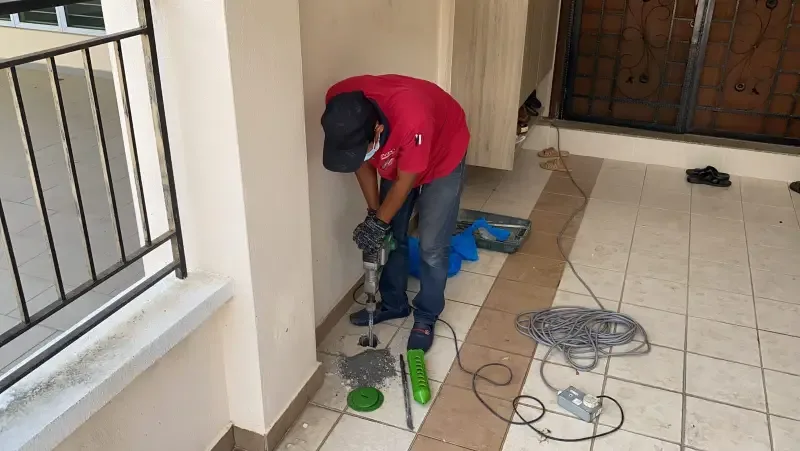
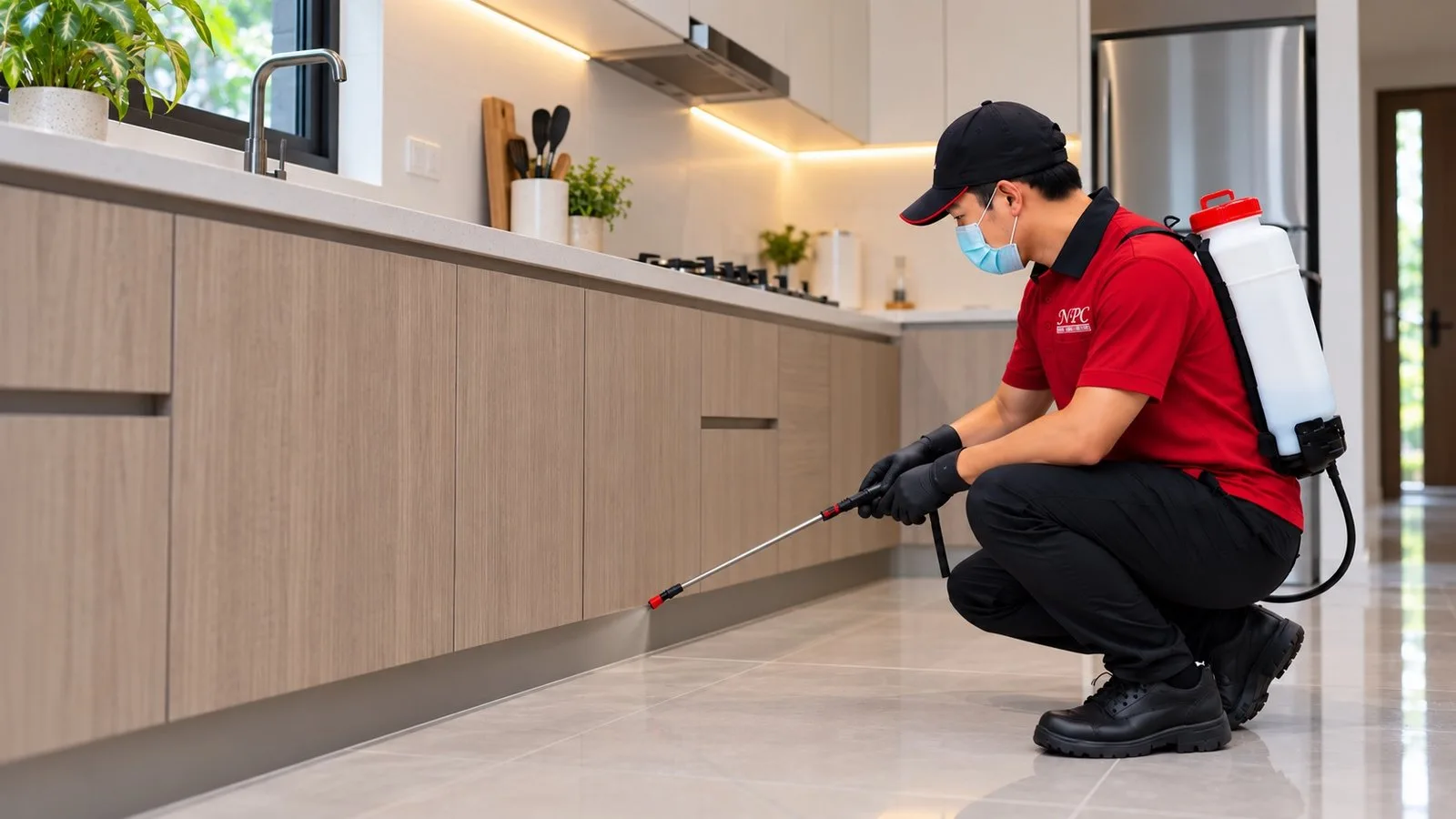
Here is a short look at NPC’s team at work.

1What Does a Termite Warranty Actually Promise?
Quick Answer: A termite warranty is a written promise from the pest control company that it will return and treat again if termites reappear in the treated area during a set period. Most warranties promise service. They seldom promise money for damaged timber, so read which of the two your paper offers before termites return.
Most homeowners picture a warranty as cover for everything termite-related. In practice it is usually narrower. A typical warranty sets out four things:
- The treated area. The walls, floors or stations named in the treatment report.
- The period. The number of years the promise runs from the treatment date.
- The remedy. Usually re-treatment of the affected spot at no charge.
- The conditions. What you must do, and avoid, to keep the cover alive.
The method matters too. A soil barrier warranty promises the treated zone keeps termites out, while a baiting warranty usually covers re-baiting if activity returns. Our comparison of termite baiting vs soil treatment explains how each method works.
2What Does a Termite Warranty Usually Cover and Exclude?
Quick Answer: A termite warranty usually covers re-treatment when termites return to the treated area within the period. It usually excludes repairs, untreated areas, damage after renovations, and problems caused by leaks or missed inspections. The table shows the typical position for seven situations; your own wording always decides.
| Situation | Typical position | What that usually means | What you can do |
|---|---|---|---|
| Termites return to a treated area during the warranty period | Usually covered | Free re-treatment of the affected area | Report it quickly and keep the station or tube untouched |
| Termites found in an area that was never treated | Often excluded | A new quotation for the new area | Check the treated-area plan in your report |
| Repairs to doors, cabinets, roof timber or floors | Usually excluded | Most warranties cover treatment only | Ask in writing whether any damage cover exists |
| Termites after hacking, a new slab or an extension | Often excluded | The barrier may be treated as broken by the works | Tell the company before works start |
| Termites after missed yearly inspections | Often voided | Cover may lapse when visits are skipped | Keep every inspection slip |
| Termites near a leaking pipe or damp wall left unfixed | Often excluded | Moisture problems are usually the owner’s duty | Fix leaks and keep the repair receipt |
| Termites after you sell or rent out the house | Depends on the terms | Some warranties transfer, some end | Ask before you sign the sale or tenancy |
Source: guide by NPC Pest Control, 2026, based on common terms in Malaysian termite treatment quotations. Your own warranty wording always decides.
Exclusions are rarely hidden on purpose. They sit in the small print because the company cannot control what happens to the house after it leaves. Look for these words in your paperwork:
- “Treated area” or a site plan. Termites outside it are a new job.
- “Structural alteration” or “renovation”. Works that disturb floors or walls.
- “Subject to inspection”. Cover depends on the scheduled visits taking place.
- “Damage” or “consequential loss”. Usually listed as not covered.
Bought a new house with a developer’s certificate? That is a different paper with its own rules, covered in our guide to the anti-termite certificate and warranty at handover.
3Does a Termite Warranty Cover Re-Infestation?
Quick Answer: A termite warranty usually covers re-infestation when termites return to the treated area during the warranty period and the owner has kept to the conditions. It may not cover termites that were already living above ground when the barrier went in, or a new colony entering through an area that was never treated.
“Re-infestation” can mean three different things, and each is handled differently:
- The same colony was never fully removed. A soil barrier can block termites without killing the nest. One 2016 laboratory study in Insects found 31% to 40% of termites already above ground survived after imidacloprid soil treatment. This is normally covered if it shows inside the treated area.
- A new colony crossed the treated zone. This is the case a barrier warranty exists for.
- Termites entered somewhere untreated. An extension, a garden shed or an upper-floor duct may sit outside the plan.
Baiting has a good record here. A 2025 Southeast Asian review reported reinfestation in fewer than 10% of baited premises. Even so, the warranty still matters for the few that return.
Spotted fresh mud on a wall? Our guide to termite mud tubes on your wall shows how to tell whether the tube is live before you call.
4What Voids a Termite Warranty?
Quick Answer: The most common things that void a termite warranty are renovation works that break the treated zone, skipped yearly inspections, leaks or damp left unfixed, soil or planter boxes piled against walls, and spraying termites yourself. Each one either breaks the protection or removes the evidence the company needs to act.
| What the owner does | Soil barrier warranty | Baiting warranty | Spot treatment warranty |
|---|---|---|---|
| Hacking floors or casting a new slab | Likely to void | May affect | Usually no effect |
| Building an extension | Likely to void | May affect | May affect |
| Skipping the yearly inspection | Likely to void | Likely to void | May affect |
| Leaving a leak or damp wall unfixed | May affect | May affect | Likely to void |
| Piling soil or planter boxes against the wall | Likely to void | Usually no effect | Usually no effect |
| Spraying termites yourself | May affect | Likely to void | Likely to void |
| Moving or opening bait stations | Usually no effect | Likely to void | Usually no effect |
Source: guide by NPC Pest Control, 2026. Not measured data; your warranty wording decides.
Some of these surprise owners. Here is why each one counts:
- Renovation. Hacking floors or casting a new slab over untreated soil leaves a gap. Our pre-construction anti-termite treatment guide covers treating soil before new concrete.
- Missed inspections. Field standards assume yearly checks, so many warranties lapse without them.
- Moisture. Wet soil can weaken some chemicals. A 2020 study in the Journal of Economic Entomology found one week of flooding reduced imidacloprid’s effect in sand.
- DIY spraying. It scatters termites and can make them avoid bait stations.
Our post-construction treatment owner’s guide has more tips on keeping cover valid.
Planning a renovation on a treated house?
We can check what the works will disturb and plan re-treatment, so your protection stays in place. Plan termite protection around your works →
5How Long Should a Termite Warranty Last?
Quick Answer: A termite warranty should not run longer than the treatment can reasonably last. Published field tests show a good soil termiticide protects for about five years with yearly reinspection, and some wood treatments last two to under five. A long warranty with no inspection plan behind it is worth less than it looks.
| Treatment | Protection in field tests |
|---|---|
| Chlordane soil barrier at 1/8% (banned today, historic US field test) | 100% protection for 21 years |
| Lambda-cyhalothrin polyethylene sheet barrier | more than 5.5 years |
| US standard for a soil termiticide (with yearly reinspection) | 5 years of complete protection |
| Wood treatments (lower end of range) | 2 to under 5 years |
Source: Insects 2022 review of termiticide field tests. Bars scaled to 21 years. Light bar = a chemical no longer used.
A 2022 review in Insects notes the US standard asks a soil termiticide to give five years of complete protection in field tests, with yearly reinspection. Older chemicals such as chlordane lasted far longer, but they are banned today.
What this means when you compare quotes:
- Match the period to the method. Ask why the warranty runs for the years stated.
- Check the inspection schedule. A multi-year warranty should name yearly visits.
- Ask about renewal. Find out what it costs to extend cover once the period ends.
Our anti-termite treatment cost guide shows typical price ranges, so you can judge whether a long warranty is built into the price.
6How to Make a Termite Warranty Claim
Quick Answer: To make a claim, leave the termites and mud tubes untouched, photograph them with the date, find your treatment report and warranty, and contact the company in writing as soon as possible. Ask for an inspection and a written finding. Fast, documented reporting keeps damage small and the claim simple.
How to make a termite warranty claim
Follow these steps the day you find new activity.
- Leave the evidence alone. Do not spray, scrape or break open more timber. Termites that are disturbed move away, and the inspector needs to see them.
- Photograph and date it. Take wide and close-up photos of tubes, damaged wood or swarmers.
- Find your paperwork. Gather the treatment report, the warranty and every inspection slip.
- Report in writing. Send a WhatsApp message or email so there is a record of the date.
- Be home for the inspection. Point out every spot you found and ask what the inspector sees.
- Ask for the finding in writing. It should say whether the claim is accepted and what will be done.
| Damage index (week 0 = 10) | Week 0 | Week 2 | Week 4 | Week 8 | Week 12 |
|---|---|---|---|---|---|
| Reported the same week, evidence left alone | 10 | 12 | 13 | 13 | 13 |
| Reported after one month | 10 | 18 | 26 | 28 | 29 |
| Sprayed first, reported after three months | 10 | 20 | 32 | 48 | 62 |
Source: illustrative scenario by NPC Pest Control, 2026, for a door frame attack in a terrace house. Not measured data.
Your treatment report is the key document. Under Malaysia’s Pesticides (Pest Control Operator) Rules 2004, a licensed operator must give you a written report naming the pesticide, method and area treated, and keep a copy for two years. If you have lost yours, ask for a copy early.
7What If Your Termite Warranty Claim Is Refused?
Quick Answer: If your claim is refused, ask for the reason in writing and check it against your paperwork. If you still disagree, Malaysian consumer law expects services to be done with reasonable care and skill. The Tribunal for Consumer Claims hears service claims up to RM50,000 filed within three years.
Start by talking to the company. Many refusals come from a mix-up over the treated area, which a site visit can settle. If that fails, you have options under the Consumer Protection Act 1999:
- Implied guarantees. Section 53 implies that services are carried out with reasonable care and skill, and section 54 that they are reasonably fit for their purpose.
- No contracting out. Section 6 says these provisions apply despite anything to the contrary in an agreement.
- A low-cost tribunal. The Tribunal for Consumer Claims FAQ lists a RM5 filing fee, a RM50,000 limit and claims within three years.
This is general information, not legal advice. For a large claim, speak to a lawyer. A fresh termite inspection from another licensed company can also give you an independent written view.
8Termite Warranty Questions to Ask Before You Sign
Quick Answer: Before you sign, ask what the termite warranty covers, which areas are treated, how long it lasts, how many inspections are included, what voids it, whether it transfers to a new owner, and how to claim. Get every answer in writing, because a verbal promise is hard to prove later.
| Question | A good answer |
|---|---|
| Which areas are treated? | A plan or list in the report |
| Is it re-treatment only, or repairs too? | Stated plainly in the warranty |
| How many inspections are included? | A number and a schedule |
| What voids it? | A short, specific list |
| Does it transfer if I sell? | Yes or no, in writing |
If you are still choosing a company, our 8 checks for a termite control company show what else a written quote should state.
9Conclusion: Know Your Termite Warranty Before Termites Return
Quick Answer: A termite warranty is a promise to re-treat a named area for a set time, as long as you keep to its conditions. Know what is treated, keep the inspections, tell the company before works, and report new activity fast and in writing. Do that, and most re-infestation claims are simple.
Visit the NPC Pest Control homepage to learn about our work across KL and Selangor, or see our termite control service to book an inspection.
10Frequently Asked Questions
1. Is a termite warranty the same as insurance?
Usually not. Most termite warranties promise free re-treatment if termites return to the treated area. Paying for damaged doors, cabinets or roof timber is normally outside the warranty unless your paperwork says otherwise in writing.
2. Can I claim on the warranty if termites come back after a renovation?
Often you cannot, because hacking, new slabs and extensions can break the treated zone. Tell the company before works start and ask whether the affected area can be re-treated afterwards to keep your cover.
3. Does a termite warranty move to the new owner when I sell?
It depends on the terms. Some warranties name the property and transfer; others name the owner and end at the sale. Ask the company, and hand the buyer the warranty, treatment report and inspection slips.
4. Does NPC Pest Control offer free termite inspections?
Yes. NPC Pest Control is a licensed pest control operator in Puchong with over 15 years of work across Kuala Lumpur and Selangor, and inspections are free. Call 03-8061 1875 or 016-335 9799, Monday to Saturday, 9am to 6pm.
Termites back, and not sure where you stand?
Let us inspect your home, find where the termites are coming from, and give you a written report you can use with your warranty paperwork.
Book a free termite inspection →