Last updated: 23 September 2026
1Why Is Shah Alam Different From the Rest of Selangor?
Quick Answer: Because it was designed rather than grown. Numbered Sections, heavy planting, big industrial estates and low ground beside the river each carry their own pests, and they sit side by side. Pest control services in Shah Alam have to read the built form first, not the housekeeping.
Most Klang Valley towns filled in piece by piece. Shah Alam did not. It was laid out as a state capital, in Sections, with wide roads, large trees and industrial land set deliberately apart from housing. That plan still decides what turns up in your kitchen, and it is why pest control services in Shah Alam start with the building. Four things drive it:
- The greenery. The mature planting that makes the older Sections pleasant also holds mosquitoes.
- The housing type. Landed, walk-up and high-rise each fail in a different place.
- The industry. Warehouses and factories keep rodents and flies fed within walking distance of homes.
- The water. Parts of Shah Alam sit low, and pests follow a flood in a predictable order.
If you want the general picture first, our guide to what pest control services include in 2026 explains what a normal visit involves.
Not sure which of these applies to your street?
A free inspection reads the building and the ground around it before anything is sprayed, so you treat the real cause. See the pest control services we inspect for →
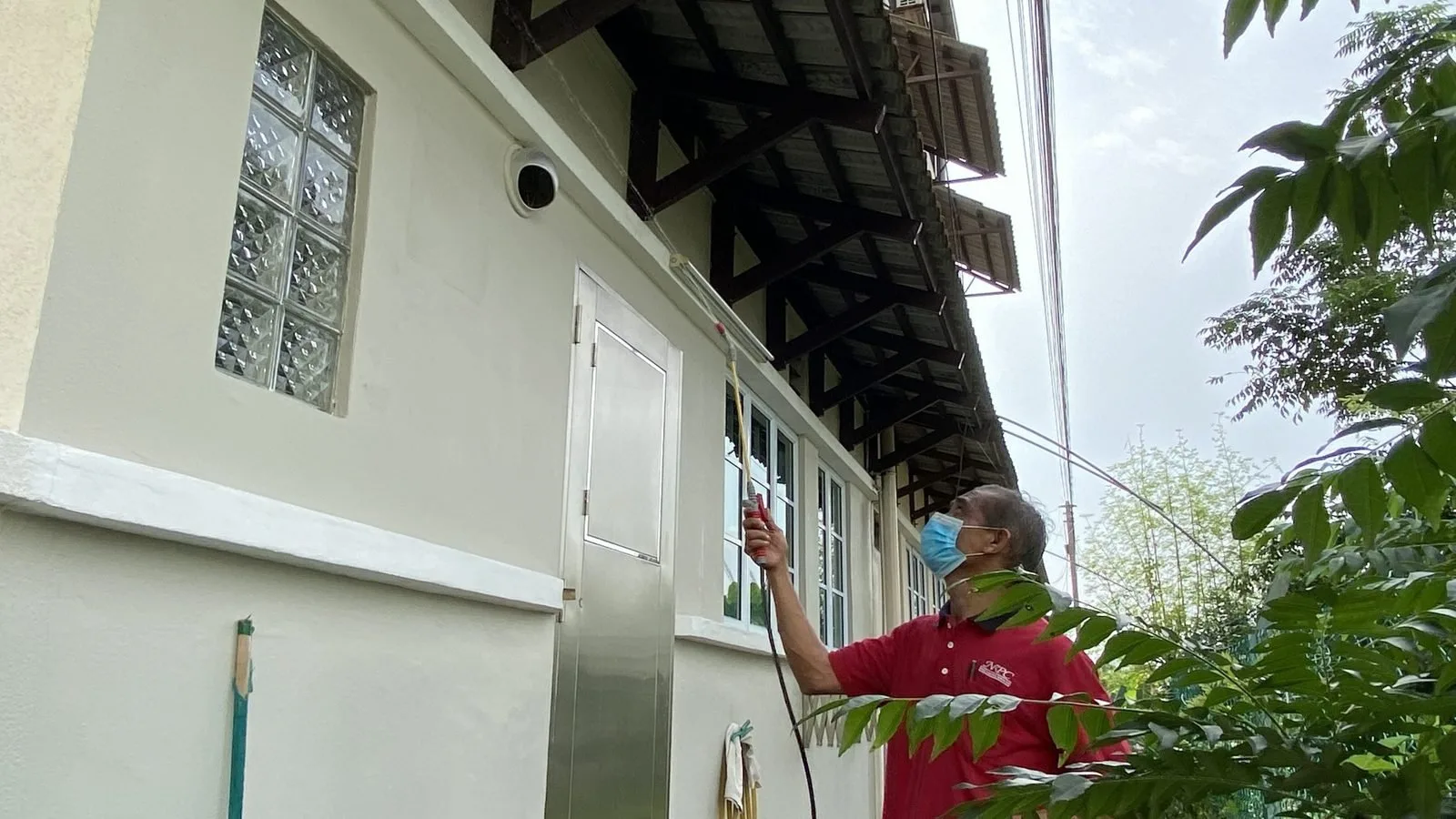
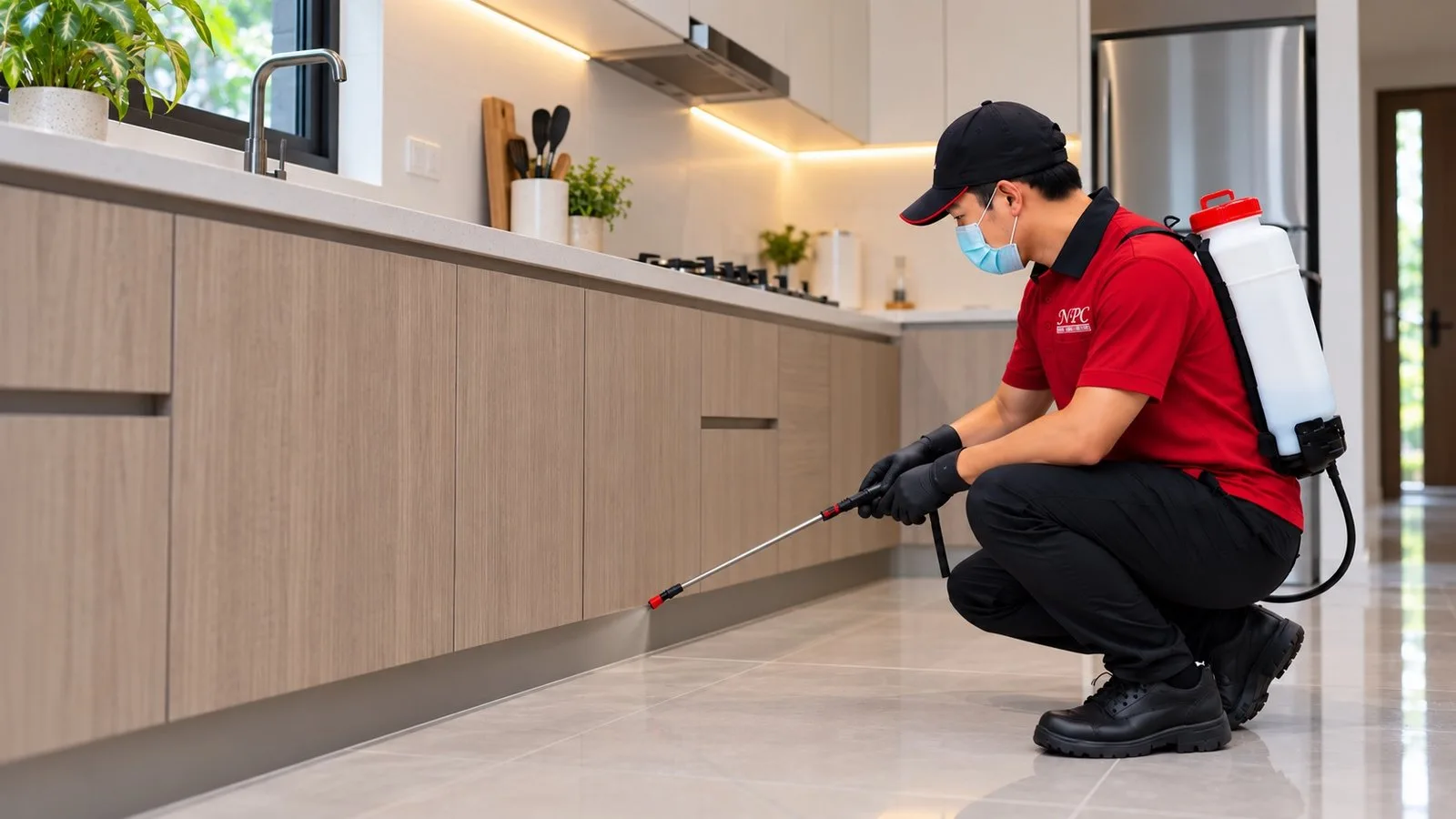
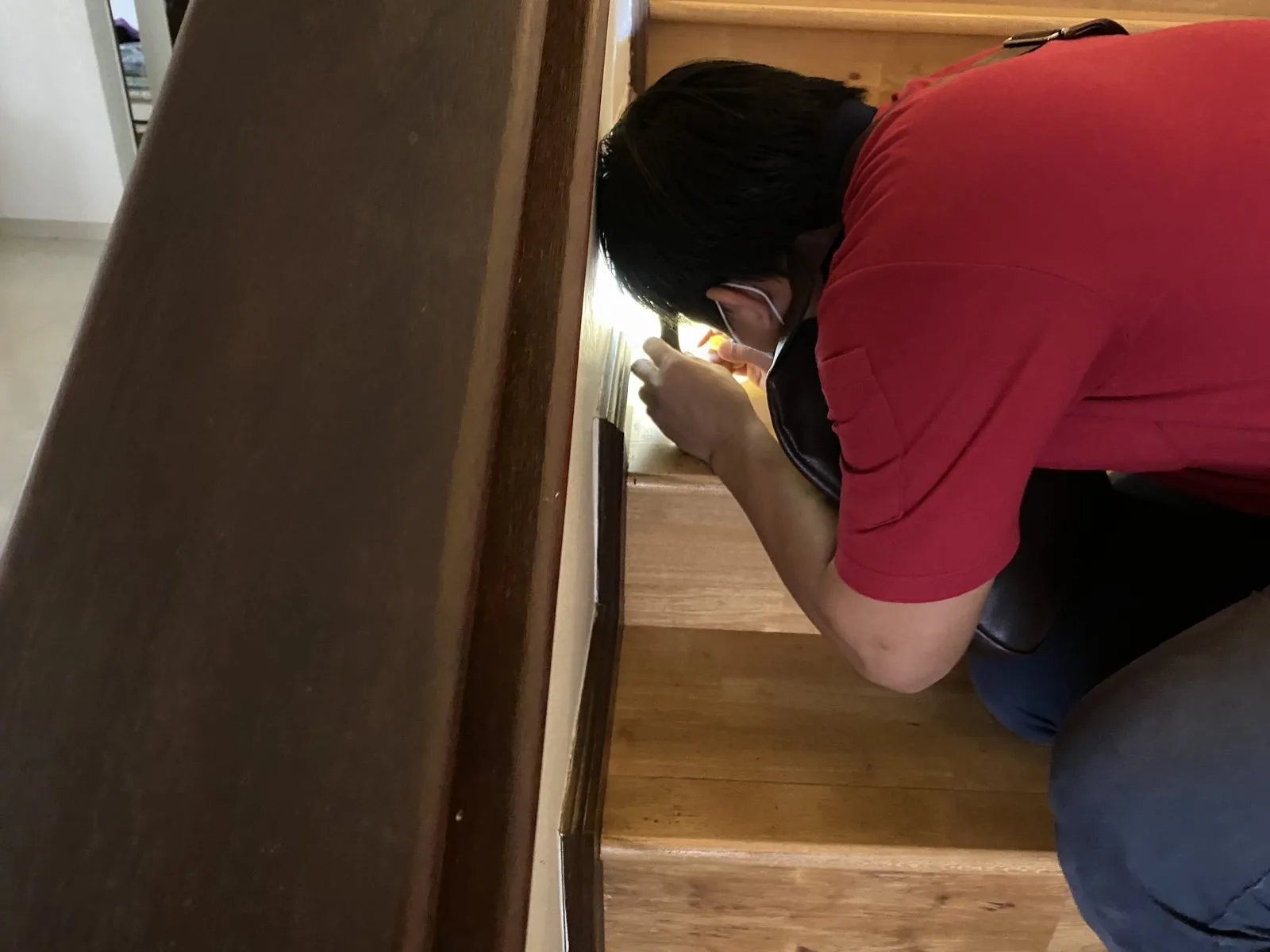
Here is a short look at our licensed team at work.

2What Kind of Shah Alam Home Do You Have?
Quick Answer: Five kinds cover most of the city: mature Section terrace, dense terrace or walk-up flat, high-rise on the LRT corridor, a home beside an industrial section, and a home on low ground. Each hands you a different set of pests, and that decides what pest control services in Shah Alam should be doing.
| Kind of Shah Alam home | What the built form gives you | What we usually get called about |
|---|---|---|
| Mature Section terrace | Big shade trees, planted gardens, deep verandahs. | Mosquitoes in the shade, termites in old timber, ants. |
| Dense terrace or walk-up flat | Shared corridor, bin bay, back lane, units close together. | Cockroaches through the block, rats at the bins. |
| High-rise on the LRT corridor | Refuse chute, riser ducts, car park, planter boxes. | Cockroaches in ducts, bed bugs carried in. |
| Home beside an industrial section | Warehouses, loading bays, factory drains, waste skips. | Rats and flies after dark, cockroaches all year. |
| Home in the flood corridor | Low ground, large culverts, silt, water that sits. | Mosquitoes, displaced rats, damp timber and termites. |
Source: NPC Pest Control field observations across Shah Alam, 2026. Our own grouping, not a survey.
Read the middle column first. It predicts the third better than the age or price of the house does.
- Trees and gardens mean mosquitoes and termites. Shade holds damp, and soil against a structure is how subterranean colonies get in. See our termite control page.
- Shared corridors, chutes and bin bays mean cockroaches and rats. One untidy unit supplies the staircase, and a tower is one connected space whatever the unit doors suggest.
- Warehouses mean rats and flies. Loading bays and waste skips are a food supply that never closes.
Our guide to common pests by area in Kuala Lumpur shows the same pattern across the city boundary, and the Puchong guide covers who owns the source when it sits on a boundary.
3Which Housing Type Actually Reports the Most Dengue?
Quick Answer: Landed housing, by a wide margin. In one Selangor district, 73.4 percent of 5,426 confirmed dengue cases came from landed homes, against 16.1 percent from high-rise housing. Landed homes drove the seasonal peaks, while towers kept a low-level trickle going all year.
| Share of cases | Housing category | What it covers |
|---|---|---|
| 73.4% | Landed housing | terrace, link and semi-detached homes |
| 16.1% | High-rise housing | flats, apartments and condominiums |
| 5.5% | Traditional or rural housing | kampung and older village homes |
| 3.4% | Institutional quarters | staff and institutional housing |
| 1.6% | Other categories | everything not classified above |
Source: Scientific Reports, 2026, 5,426 confirmed cases geocoded in one Selangor district, 2020–2024.
Those figures come from a 2026 study in Scientific Reports, which geocoded 5,426 confirmed cases in a Selangor district from 2020 to 2024 and sorted them by house type. Two findings matter here:
- Landed housing is where the outbreaks happen. Cases clustered there and spiked together, in the same weeks each year.
- High-rise housing never quite clears. The authors describe steady low-level transmission all year, a reservoir between outbreaks.
A separate 2026 spatial analysis in Scientific Reports agrees from another direction: terrace housing clustered most strongly, where built-up ground met vegetation. For timing see our Selangor seasonal pest guide, for treatment our mosquito control page.
4Does a Leafy Section Really Mean More Mosquitoes?
Quick Answer: Yes, and there is a Shah Alam study that says so. Researchers flew a drone over Section 24 and mapped mosquito habitat risk by housing type. Low-density terrace housing scored highest, dense terrace next, then medium-rise flats, with high-rise blocks lowest.
This surprises people. The greener, quieter part of a Section usually carries more mosquito risk than the flats down the road, and the reason is physical rather than social.
The 2026 study in Scientific Reports flew high-resolution imagery over Section 24, measured shade intensity and vegetation density, and combined both into one risk index. The highest-scoring fifth of the map captured 65 percent of the breeding-prone ground found on foot. The authors stress that vegetation alone does not explain it: it is vegetation and shade together, expressed through the housing shape. For a Shah Alam garden that means:
- Shade plus damp is the combination. A sunny yard dries out. A shaded one under mature trees does not.
- Planters, pot trays and drain ends do the work. These sit in exactly the shaded, sheltered ground the index scores highest.
- Cutting everything down is not the answer. Thinning dense planting near the house and emptying containers weekly gets most of the benefit.
It also explains why fogging alone disappoints here. Fog does not reach under dense planting, and it does not empty a pot tray, which is why pest control services in Shah Alam pair it with source reduction. See our guide to whether fogging actually works.
5What Should You Do After the Water Goes Down?
Quick Answer: Book the inspection once the house is dry enough to walk through. Flooding is consistently linked to more waterborne and vector-borne disease, with a lag of days to weeks, so pest control services in Shah Alam are most useful in that gap, before the problems arrive rather than after.
Parts of Shah Alam sit low, and residents there have been through this more than once. The pests do not all arrive at once, which is why one visit at the wrong moment feels wasted.
The evidence is clear on both the link and the delay. A 2026 systematic review in BMC Infectious Diseases pooled 71 studies and found flooding consistently associated with more leptospirosis and dengue, with the gap between the flood and the illness running from days to weeks. Duration matters too: a 2026 analysis in iScience covering 108 countries found each extra day of average flood duration was associated with a 0.37 percent rise in dengue incidence. Water that sits is worse than water that drains.
How to check your Shah Alam home after a flood
Do this once the house is dry enough to move around safely, with gloves and a torch.
- Tip out every container first. Pot trays, buckets, tyres, the tray under the outdoor unit.
- Check the drain and boundary for rats. Droppings, smear marks, fresh gnawing.
- Look under the kitchen units. Silt and damp behind cabinets feed cockroaches for months.
- Press the skirting and door frames. Soft timber after a soaking is what termites move into.
- Lift and dry anything stored on the floor. Wet cardboard is prime cockroach habitat.
- Write down what you found, with dates. It guides the operator and gives you a record.
Rodents deserve attention here, because the risk is not only damage. A 2024 study in the Journal of Vector Borne Diseases found 34.7 percent of 144 rats trapped at four Kuala Lumpur wet markets carried anti-leptospiral antibodies. Our guide to sealing the gaps rats use covers proofing, our rat control page the treatment, and our sanitisation and disinfection service the wash-down.
Flooded, or in a street that floods?
We inspect, proof and disinfect as one job, so the house is closed up before the mosquito and rodent pressure builds. Arrange a post-flood inspection →
6Which Pests Go With Which Kind of Home?
Quick Answer: Mosquitoes and termites concentrate in the leafy landed Sections and on low ground. Cockroaches and bed bugs concentrate in dense flats and high-rise blocks. Rats and flies concentrate near industry and bins. Pest control services in Shah Alam price and schedule those three groups quite differently.
| Pest | Mature terrace | Dense flat | High-rise | Beside industry | Flood corridor |
|---|---|---|---|---|---|
| Mosquitoes | High | Medium | Medium | Medium | High |
| Rats | Medium | High | Medium | High | High |
| Cockroaches | Medium | High | High | High | Medium |
| Termites | High | Low | Low | Medium | High |
| Ants | High | Medium | Medium | Low | Medium |
| Flies | Low | Medium | Low | High | Medium |
| Bed bugs | Low | Medium | High | Low | Low |
Source: illustrative guide by NPC Pest Control, 2026, based on Shah Alam jobs. Not measured data.
The grid is illustrative, drawn from our own Shah Alam jobs rather than a survey. Three rows are worth reading closely:
- Termites are a landed problem. Mature Sections combine old timber with planted soil against the structure, which is the classic setup for a subterranean colony.
- Cockroaches are a shared-building problem. Ducts, chutes and party walls move them between units however clean yours is. Our guide to why cockroaches keep coming back explains why the two common species need different methods.
- Flies point at premises, not at your bin. Persistent flies usually mean a grease trap, skip or loading bay nearby, which is a case for commercial pest control at the source.
Shah Alam’s industrial sections sharpen that last point. Factories, warehouses and logistics yards sit within a short rat run of housing, so proofing your own house helps but rarely settles it alone.
7How Long Does a Flood Keep Causing Problems?
Quick Answer: Longer than most people expect, and in stages. Rodent calls come first, mosquito calls peak around a month later, and damp timber and termite problems surface months after that. That staged pattern is why pest control services in Shah Alam usually recommend a follow-up rather than one visit.
| What we get called about | Week 1 | Week 2 | Week 4 | Week 8 | Week 12 | Week 24 |
|---|---|---|---|---|---|---|
| Rats | 9 | 8 | 6 | 4 | 3 | 2 |
| Mosquitoes | 2 | 5 | 9 | 8 | 5 | 3 |
| Cockroaches | 4 | 6 | 7 | 6 | 4 | 3 |
| Termites and damp timber | 1 | 1 | 2 | 4 | 7 | 8 |
Source: illustrative model by NPC Pest Control, 2026, one flooded Shah Alam street. Not measured data.
The model is illustrative, but the sequence matches what we see on a street that has taken water:
- Rats move immediately. Their burrows flood before your house does, so they are inside while the water is still going down.
- Mosquitoes need a few weeks. Eggs need standing water and time, which is why the peak lands around week four rather than week one.
- Termites arrive last. Soaked timber and damp soil take months to show, long after the clean-up is forgotten.
Two visits spaced across that curve catch far more than one, so ask pest control services in Shah Alam to put the second in writing when you book the first.
8How Do You Choose a Company Here?
Quick Answer: Check the licence, the written report and the follow-up before you compare prices. Any company offering pest control services in Shah Alam should hold a valid pest control operator licence, hand you a written record of what was used and where, and put the next visit in writing before leaving.
Local familiarity helps: someone who works these Sections knows which sit low and which back onto industrial land. Paperwork matters more. Verify:
- A valid operator licence. Pest control in Malaysia is licensed work, and termite treatment needs a licensed applicator physically on site.
- A written service report. Product, concentration, areas treated and quantity, with a copy for you.
- Named pests and exclusions. General contracts often exclude termites and bed bugs. Read that clause before signing.
- A free inspection before the quote. A phone price is a guess about a building nobody has seen.
- A callback between visits. Month two decides the result more than the discount does.
Our checklist for choosing a pest control company sets out eight things worth verifying, and the neighbouring Subang Jaya guide covers condo and landed differences.
9Conclusion: Treat the Town You Actually Live In
Quick Answer: Shah Alam’s pests follow its design. The trees, the housing type, the industrial estates and the low ground each set a different pressure, and they change street by street. Pest control services in Shah Alam hold when the plan is built around the kind of home you have.
The short version: work out which of the five kinds of home you have, deal with shade and standing water in a leafy Section, proof against rodents near industry or bins, and treat a flood as a six-month sequence. That separates a problem that ends from one that returns yearly.
For more, visit the NPC Pest Control homepage or our pest control services hub, or go straight to termite control, rat control, cockroach control, ant control and bed bug control. If you run premises here, our restaurant audit guide covers the records inspectors ask for.
10Frequently Asked Questions
1. How much do pest control services in Shah Alam cost?
It depends on the pest and the size of the house, not the Section number. As an indication of Klang Valley market ranges, a one-off cockroach or ant treatment for a terrace house sits in the low hundreds of ringgit, and termite work from about RM1,200 for baiting to RM2,500 and up for a soil barrier.
2. Why do I get more mosquitoes than friends in a newer part of town?
Usually the trees. Shaded, planted ground holds the damp, sheltered spots Aedes prefers. A drone survey in Section 24 found exactly that gradient, with low-density terrace housing scoring highest for mosquito habitat risk.
3. We live near an industrial section. Is that why we get rats?
Very likely. Warehouses, loading bays, waste skips and factory drains give rodents food and cover within easy reach of housing. Proofing your house helps, but holds far better if the premises nearby are on a programme too.
4. How soon after a flood should we get the house treated?
Once the house is dry enough to walk through, not months later. Rats move first, mosquitoes peak a few weeks on, and damp timber problems surface later still. Treating in that order costs far less than waiting.
5. How do I book pest control services in Shah Alam?
Call NPC Pest Control on 03-8061 1875 or 016-335 9799, Monday to Saturday, 9am to 6pm. We are a licensed operator in Bandar Puteri Puchong with over 15 years across Selangor and KL, and inspections are free.
Tell us your Section, and what you have been seeing
We inspect free across Shah Alam, from the mature Sections to the flats, the industrial fringe and the low ground. You get a written report naming what we found and what the treatment will reach.
Book a free inspection →