Last updated: 22 September 2026
1What Do Rat Proofing Services in Malaysia Actually Do?
Quick Answer: Rat proofing services in Malaysia find every opening a rat can use and close it with a material rats cannot gnaw through. The work covers doors, roof eaves, drains, floor traps, false ceilings and service holes for pipes and cables. The aim is to keep new rats out once the rats inside are removed.
Most pages about rat proofing services in Malaysia describe the idea in a paragraph and move on. This guide covers how small a gap needs to be, which material suits which spot, and why good proofing still fails a year later.
NPC Pest Control is a licensed operator based in Puchong. We have worked in homes, shophouses and commercial premises across Kuala Lumpur and Selangor for over 15 years. For the full treatment service, see our rat control service page. If you are still deciding whether you have rats, start with our guide to the signs you need rat control.
Not sure how the rats are getting in?
A free inspection maps droppings, rub marks and gnawed edges back to the openings, so you know exactly which gaps need sealing first. See how our rat inspection works →
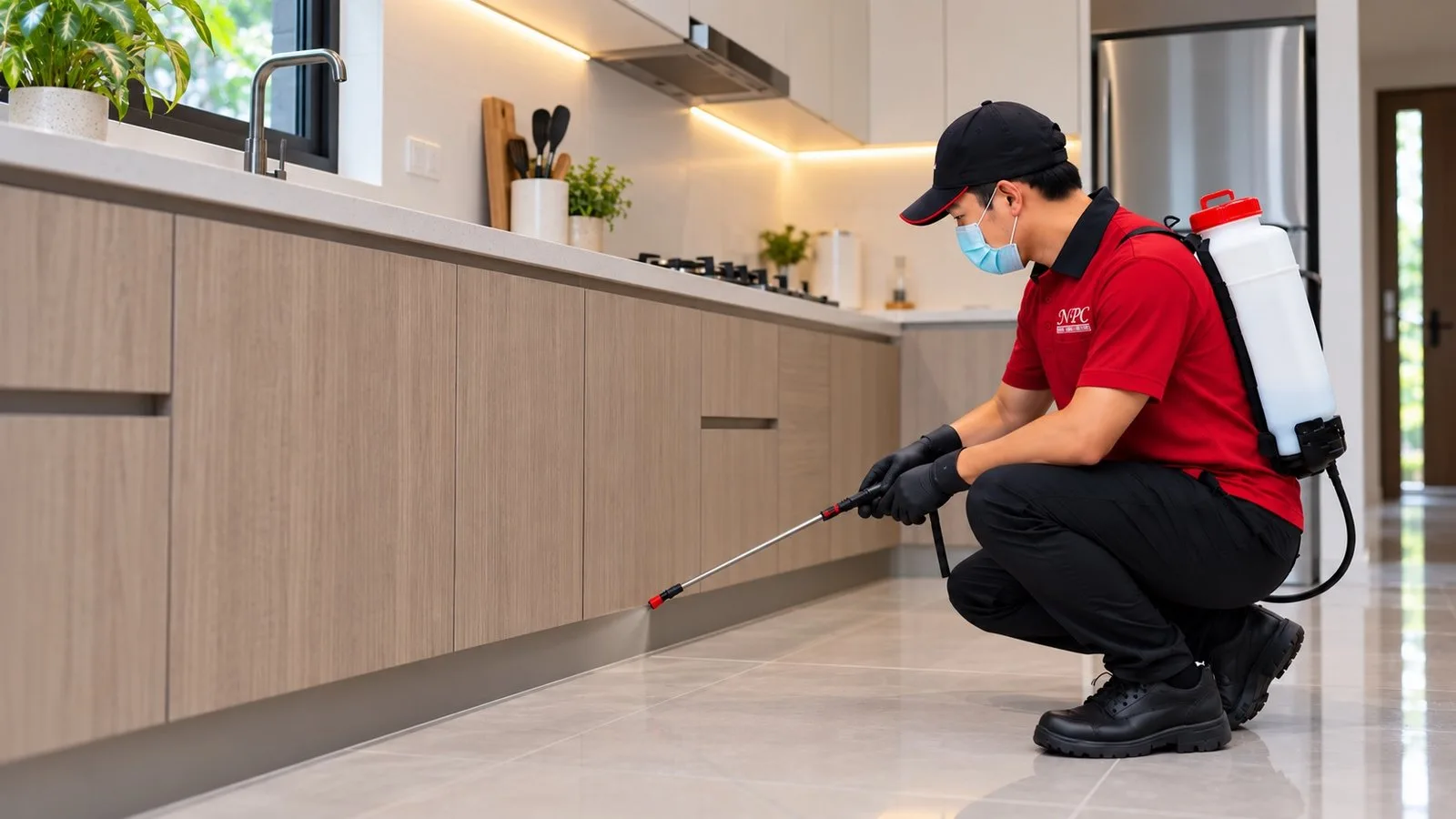
Here is a short look at NPC’s licensed team at work.

2Does Rat Proofing Really Work?
Quick Answer: Yes. In a controlled trial, rodent-proofed houses were infested far less often than houses left as they were: 3 of 28 against 13 of 36. The proofed houses also held about a quarter as many rodents. Sealing openings cuts both the chance of an infestation and its size.
| Housing group | Share of houses infested the following season (%) |
|---|---|
| Houses left as they were | 36.1% (13 of 36 houses) |
| Rodent-proofed houses | 10.7% (3 of 28 houses) |
| Rodents caught indoors | 23 in houses left as they were, against 6 in proofed houses |
Source: American Journal of Tropical Medicine and Hygiene, 1997, experimental rodent-proofing of staff housing in three US national parks (openings at pipe chases, roof eaves and attics sealed with wire mesh and insulation). Percentages calculated by NPC Pest Control, 2026.
The figures come from a 1997 study in the American Journal of Tropical Medicine and Hygiene. Researchers sealed openings at eaves, attics and pipe chases in randomly chosen houses and compared them with untreated ones. Over a quarter of the rodents caught indoors had first been marked outside.
The trial involved mice in rural American housing, so the numbers will not match a Selangor terrace. The principle carries over: rats in Malaysian towns live in drains, back lanes and gardens, and take the easiest way in. That is the gap rat proofing services in Malaysia are there to close.
Our guide to rat control for KL shophouses and homes shows how quickly rats return when the openings stay open.
3How Small a Gap Can a Rat Get Through?
Quick Answer: Smaller than most people think. Singapore’s National Environment Agency tells premises to keep gaps at doors and windows under 6 mm to stop rats. The US CDC notes that mice fit through a hole the width of a pencil, about 6 mm. Any gap you can push a finger into is a rat entrance.
| Opening | Published standard | Official source |
|---|---|---|
| Gaps at doors and windows | Less than 6 mm | NEA environmental sanitation guidelines, 2024 |
| Smallest hole a mouse can use | About 6 mm (width of a pencil) | US CDC seal-up guidance, 2024 |
| Wire mesh on windows and between false ceiling and ceiling | Openings no larger than 10 mm x 10 mm | NEA food establishment guidelines |
| Bottom of wooden doors | Metal plate on the bottom 300 mm | NEA food establishment guidelines |
| Floor traps, gullies and downpipes | Fitted with gratings | NEA food establishment guidelines |
| Holes in ceilings, floors and walls | Sealed with metal plates or cement | NEA food establishment guidelines |
Source: Singapore National Environment Agency guidelines (environmental sanitation, November 2024; precautionary measures for rat control in food establishments) and US CDC seal-up guidance (reviewed April 2024). Compiled by NPC Pest Control, 2026.
Singapore’s NEA environmental sanitation guidelines (November 2024) set the 6 mm gap limit. NEA’s precautionary measures for food establishments add the mesh, door and floor trap rules. We use them as a benchmark because the climate and buildings are close to ours.
What this means in practice:
- Door sweeps matter. A worn rubber strip under a kitchen door often leaves 10 to 15 mm, which is plenty for a young rat.
- Mesh size matters. Ordinary insect screen tears easily, and wide garden mesh lets rats straight through.
- Wooden doors need a kick plate. Rats gnaw the bottom edge until a small gap becomes a big one.
Good rat proofing services in Malaysia measure gaps rather than eyeballing them. Our overview of what a pest control service includes explains how the inspection report should record them.
4Where Do Rats Get Into Malaysian Homes and Shops?
Quick Answer: Rats mostly get in at ground level through drains, floor traps and gaps under doors, and higher up through roof eaves, air-conditioner holes and gaps around pipes. Terrace houses add shared roof spaces, and shophouses add back lanes. A proper rat proofing survey checks all of these zones, inside and out.
The US CDC’s seal-up guidance lists kitchen cabinets, doors, windows, pipes under sinks, floor drains and the roof space. Rat proofing services in Malaysia check those spots, plus a few local ones.
Entry points we find most often:
- Kitchen floor traps and drain outlets. Missing or loose covers link the kitchen directly to the drain line.
- Air-conditioner and water-heater holes. Installers often drill a hole bigger than the pipe and leave the gap open.
- Roof eaves and fascia boards. Gaps between tiles, fascia and gutters let roof rats reach the ceiling.
- Sliding and folding doors. The track and the bottom corner rarely close fully.
- Shared roof spaces. In terraces and shophouses, rats walk from one unit’s ceiling into the next.
Shops and eateries also need attention at loading doors and bin areas. See our guide to pest control for restaurants in Malaysia and our restaurant pest control page for food premises.
5Which Materials Can Rats Not Chew Through?
Quick Answer: Rats can chew through wood, plastic, rubber, foam and soft sealant. Proofing that lasts uses metal plates, galvanised wire mesh, steel wool held with sealant, cement mortar or metal gratings. Soft materials alone are fine for sealing out cockroaches and ants, but they do not stop a determined rat.
| Material | Floor traps and drains | Door bottoms | Pipe and aircon holes | Roof eaves and vents | Wall and floor cracks |
|---|---|---|---|---|---|
| Metal grating or plate | Good | Good | Partial | Partial | Partial |
| Galvanised wire mesh (10 mm or finer) | Partial | Poor | Partial | Good | Poor |
| Steel wool packed with sealant | Poor | Poor | Good | Partial | Partial |
| Cement mortar | Partial | Poor | Good | Poor | Good |
| Rubber door sweep alone | Poor | Partial | Poor | Poor | Poor |
| Expanding foam alone | Poor | Poor | Poor | Poor | Poor |
Source: illustrative guide by NPC Pest Control, 2026, applying the US CDC and Singapore NEA material recommendations to common entry points in Kuala Lumpur and Selangor buildings. Not a measured study.
The CDC recommends steel wool with caulk or spray foam for small holes, and lath screen, lath metal, cement, hardware cloth or metal sheeting for larger ones. NEA’s food premises guidance names metal plates and cement for holes in walls, floors and ceilings. The grid applies those rules to spots rat proofing services in Malaysia deal with every week.
Common proofing mistakes:
- Expanding foam on its own. Rats gnaw through it within days. Use foam only to hold steel wool or mesh in place.
- Plastic floor trap covers. They crack and get chewed. A metal grating with small slots lasts far longer.
- Sealing a hole with rats still inside. Trapped rats chew new exits, often through ceiling boards.
Sealing the same gaps also helps with other pests. Many of the openings rats use let cockroaches in from drains, which our cockroach control team treats alongside rat work where needed.
6Do You Need Rat Proofing, Baiting or Both?
Quick Answer: Most properties need both. Baiting and trapping remove the rats already inside, and proofing stops new ones replacing them. Proofing alone can trap rats indoors, and baiting alone keeps paying for rats that walk back in. Rat proofing services in Malaysia usually start once activity inside has dropped.
| Approach | What it does well | Where it falls short |
|---|---|---|
| Baiting and trapping only | Quick drop in rats already inside | New rats keep arriving through the same gaps |
| Proofing only | Fewer new rats get in | Rats already inside stay, breed and chew new exits |
| Baiting first, then proofing | Clears the building and keeps it clear | Needs a follow-up check after sealing |
A 2022 PLoS One study in a mixed-use area of Singapore found that baiting cut rodents caught by 62.7%, but every activity measure climbed again within four months once baiting ended. Closing the openings is how you slow that rebound.
For the treatment side, see our guide to rat control services in Kuala Lumpur. Rat urine and droppings also leave a mess, and our sanitisation service can disinfect affected areas once the rats are gone.
Rats keep coming back after every treatment?
We can combine baiting with a written proofing plan for your home or shop, so the gaps they use are closed once the building is clear. Ask about a rat proofing plan →
7How Long Does Rat Proofing Last?
Quick Answer: Metal, mesh and cement seals can last for years, but proofing often fails early because the building changes. New air-conditioner holes, plumbing repairs, roof work and worn door sweeps all reopen gaps. Book a check after any renovation and at least once a year to keep rat proofing services in Malaysia working.
| Approach | Month 0 | Month 6 | Month 12 | Month 18 | Month 24 |
|---|---|---|---|---|---|
| Sealed once, never checked | 100% | 88% | 74% | 63% | 52% |
| Sealed, checked once a year | 100% | 88% | 97% | 86% | 96% |
| Sealed, checked every six months | 100% | 98% | 97% | 97% | 96% |
Source: illustrative model by NPC Pest Control, 2026, reflecting common causes of seal failure in Klang Valley homes such as new aircon holes, plumbing repairs, roof work and worn door sweeps. Not a measured study.
The chart is an illustrative model from our field experience. Each contractor who drills a hole, lifts a ceiling panel or replaces a door can undo part of a one-time sealing job.
How to keep your rat proofing intact
These steps keep sealed gaps sealed between inspections.
- Keep the proofing report. Store the list and photos of every sealed point so you can check them later.
- Brief your contractors. Ask aircon, plumbing and renovation workers to seal around every new hole with metal or cement.
- Check door sweeps and kick plates. Replace worn strips once you can see light under the door.
- Keep floor trap gratings in place. Refit covers after cleaning and replace any that are cracked or loose.
- Book a yearly inspection. Ask for a check after heavy rain, renovation or any new sign of rats.
Monthly contracts for food premises usually include these checks. Our commercial pest control page explains how scheduled visits work for businesses.
8What Should a Rat Proofing Quote Include?
Quick Answer: A clear rat proofing quote lists each opening to be sealed, the material for each one, who does structural repairs, how it links to baiting or trapping, and when the follow-up check happens. Rat proofing services in Malaysia that quote from a written survey are much easier to compare.
Check each quote for these items:
- A point-by-point list. Each gap, where it is, and the material that will close it.
- Photos before and after. These let you, your landlord or an auditor see the work.
- A licensed operator for the treatment side. Pest control for hire must be licensed under the Pesticides Act 1974.
- A clear split of repairs. Big roof or drain repairs may fall to the landlord or management rather than the tenant.
- Follow-up terms. What happens if rats return, and whether resealing is covered.
Food businesses have a legal reason to keep records. Regulation 16 of the Food Hygiene Regulations 2009 requires food premises to be kept free from pests. For a wider checklist, read our guide to the questions to ask a rat control company.
9Conclusion: Close the Gaps, Then Keep Them Closed
Quick Answer: The best rat proofing services in Malaysia clear the rats first, then seal every gap over 6 mm with metal, mesh or cement, and come back to check. Keep the proofing report, brief contractors who drill new holes, and book a yearly inspection so the building stays sealed.
Rats find the same weak spots in almost every Malaysian building: drains, floor traps, door gaps, eaves and service holes. Rat proofing services in Malaysia that treat those spots with the right material, and keep checking them, give baiting a result that lasts.
For more on home and business pest care, visit the NPC Pest Control homepage or browse all our pest control services. Prefer Bahasa Malaysia? Read our panduan pest control untuk tikus rumah.
10Frequently Asked Questions
1. How much do rat proofing services in Malaysia cost?
It depends on how many openings need sealing, the materials and access, and whether baiting is included. A free inspection gives you a written list of gaps and one price.
2. Can I do rat proofing myself?
You can fit a door sweep or pack steel wool and sealant around a small pipe hole. Eaves, false ceilings and drains are harder, and sealing with rats inside makes things worse.
3. Will rat proofing trap rats inside my house?
It can if the openings are sealed before the rats inside are removed. That is why proofing usually follows baiting or trapping, once activity has dropped and the technician has confirmed where the rats were living.
4. Does rat proofing also keep out cockroaches?
It helps, because drains, floor traps and pipe holes are cockroach routes too. Cockroaches fit through much smaller cracks, so they may still need their own treatment.
5. Does NPC Pest Control offer rat proofing inspections?
Yes. NPC Pest Control is a licensed operator based in Puchong serving Kuala Lumpur and Selangor, and inspections are free. Call 03-8061 1875 or 016-335 9799, Monday to Saturday from 9am to 6pm.
Want the rats kept out for good?
Book a free inspection of your home or shop. We will map every entry point, clear the rats inside and seal the gaps with materials they cannot chew through.
Book a free rat proofing inspection →