Last updated: 23 September 2026
1Why Does the Same Pest Keep Coming Back?
Quick Answer: Because the source is usually outside the house. A treatment that stops at your four walls kills what is inside that day and leaves the drain, the shared wall or the bin bay feeding the next lot in. Pest control services in Puchong work outwards from the house, not inwards from the kitchen.
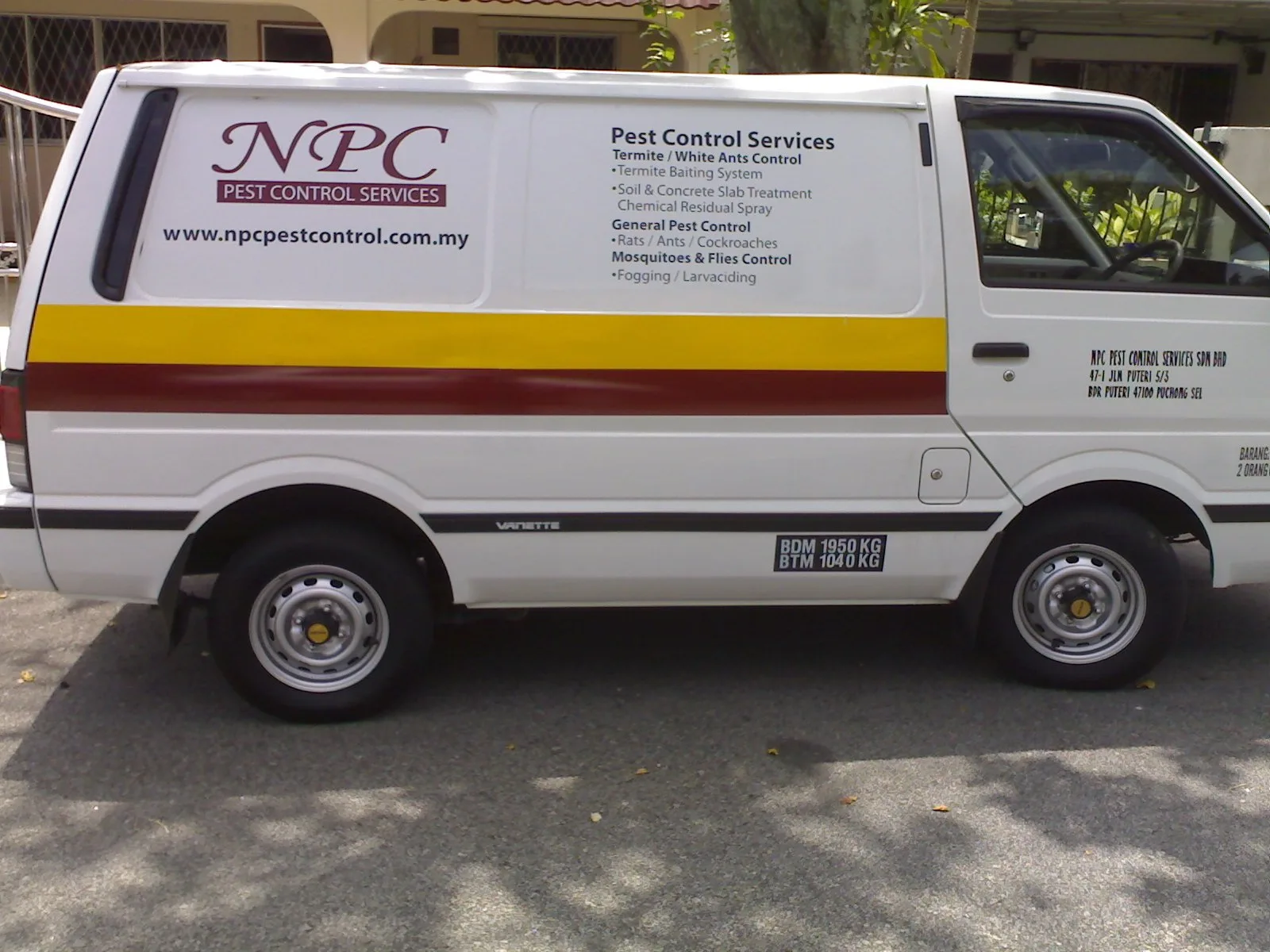
Our office is in Bandar Puteri, so most jobs behind this guide are ten minutes away. That teaches one thing quickly: the same six pests keep returning to the same addresses, and the reason is almost never the housekeeping.
Puchong was built in waves: old estate land, early taman, then Bandar Puteri and Bandar Kinrara, then towers along the LRT line, with shop rows and industrial lots between. So most homes here sit metres from something they do not own. This guide covers:
- Your boundary. What sits on it, depending on which part of Puchong you are in.
- The owner. Which pests start on your side, and which start on someone else’s.
- The fix. What you can close off yourself, and how to get the neighbour, the management or the council to move on the rest.
For the general picture, our guide to what pest control services include in 2026 explains what a normal visit involves.
Not sure where your problem is coming from?
A free inspection traces the source before anything is sprayed, so you do not pay to treat the symptom twice. See the pest control services we inspect for →
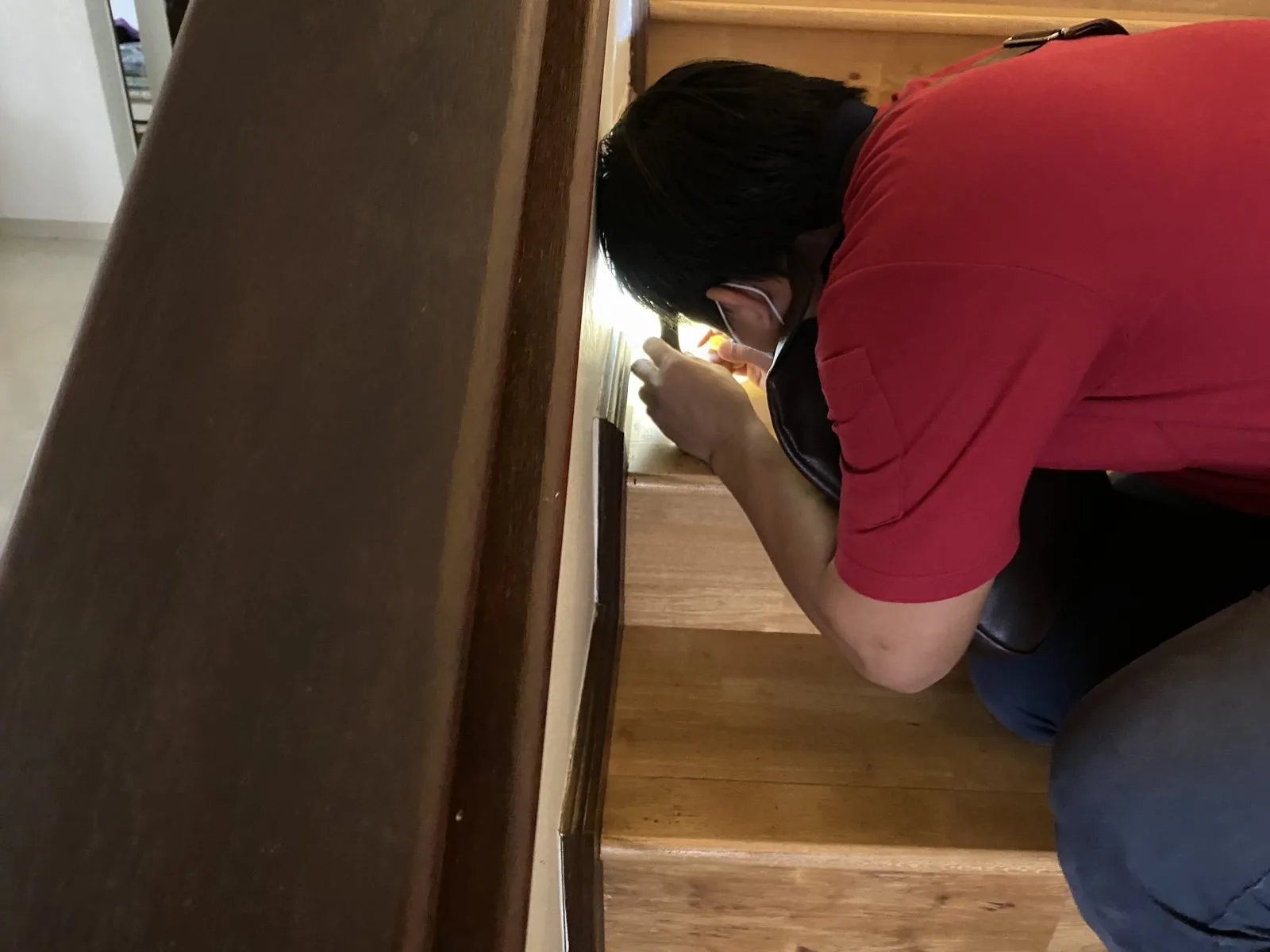
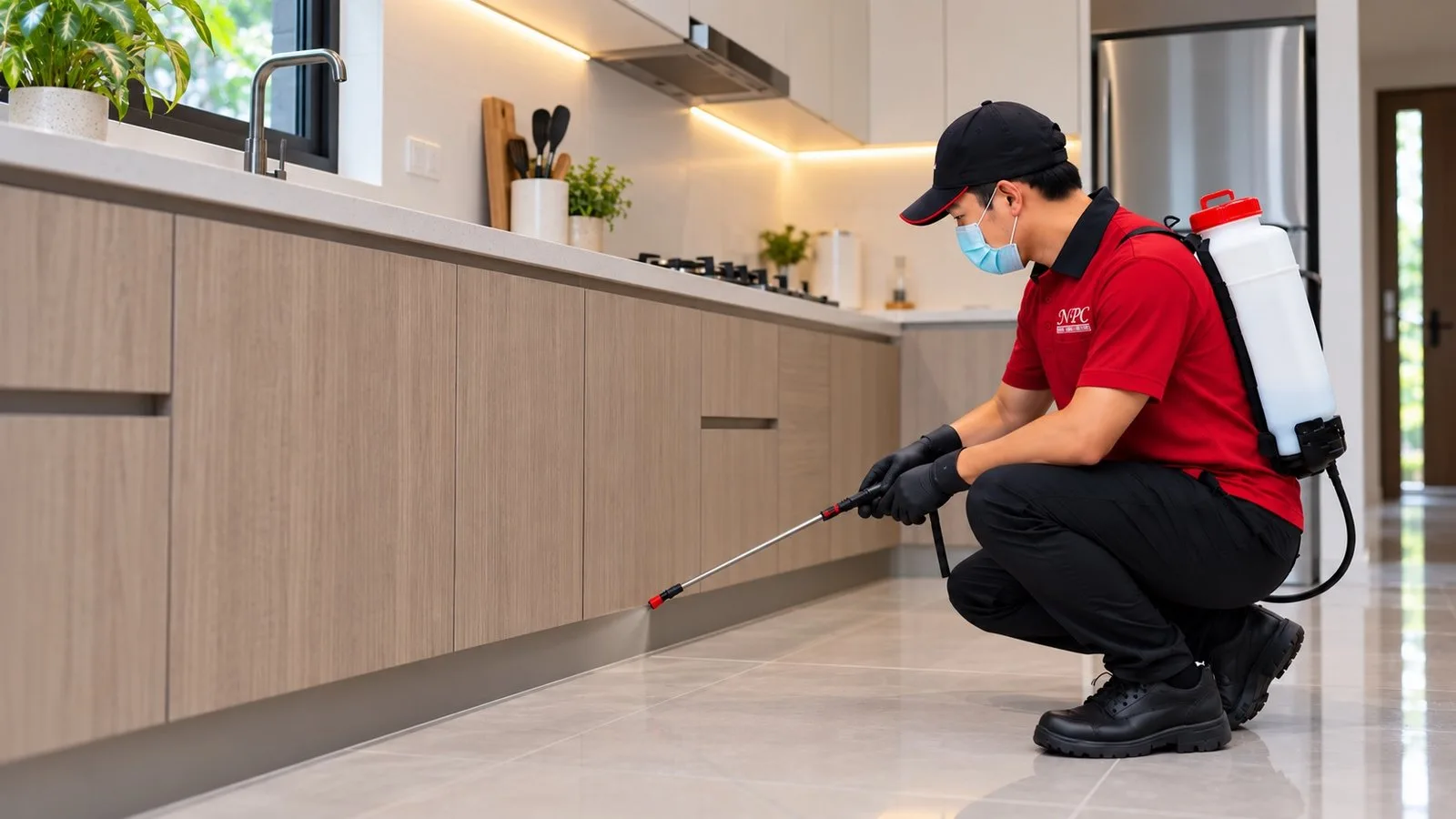
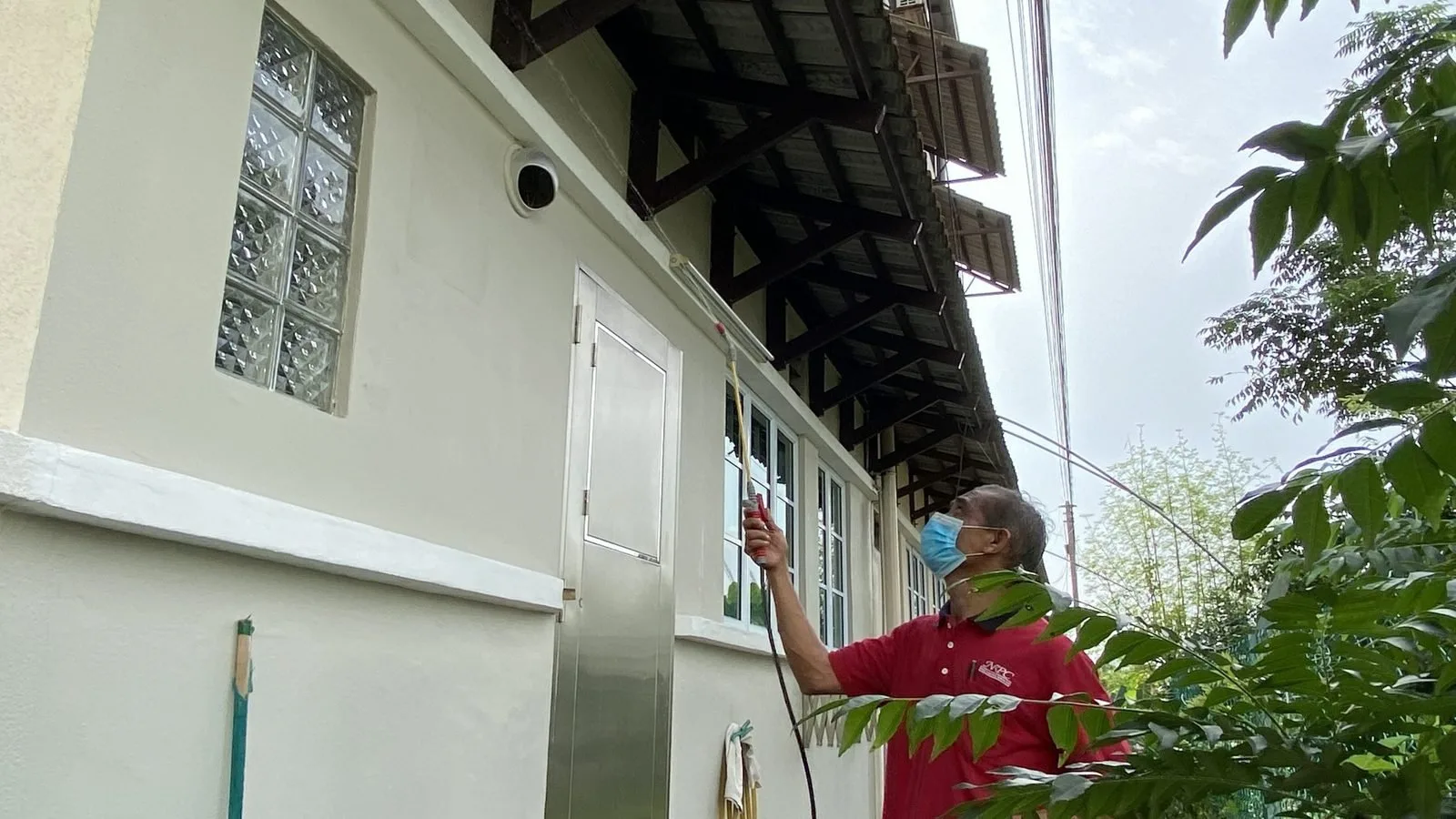
Here is a short look at our licensed team at work.

2What Kind of Puchong Address Do You Have?
Quick Answer: Five rough types cover most of Puchong: older taman terrace, newer link or semi-detached, high-rise condo unit, a home behind a shop row, and a home facing a vacant plot. Each puts a different thing on your boundary, and that decides which pest you get.
| Type of Puchong address | What sits on your boundary | What we usually get called about |
|---|---|---|
| Older taman terrace | Open monsoon drain, shared back lane, party walls. | Rats from the drain, termites in door frames, ants. |
| Link or semi-D in a newer scheme | Covered drain, private garden, fence to a neighbour. | Termites through garden soil, mosquitoes in pot trays. |
| High-rise condo unit | Refuse chute, riser ducts, corridor, the unit next door. | Cockroaches through ducts, bed bugs carried in. |
| House or unit behind a shop row | The row’s grease traps, bin bay and back lane. | Cockroaches and flies year round, rats after dark. |
| Home facing a vacant plot or site | Cleared land, site huts, ponded water, turned soil. | Mosquitoes, snakes in the grass, termites. |
Source: NPC Pest Control field observations across Puchong, 2026. Our own grouping, a guide rather than a survey.
Read the middle column first. It predicts the third column better than the age of the house, which is why pest control services in Puchong start outside.
- An open drain out front means rats. Older taman still run monsoon drains at the kerb, and a drain is a corridor.
- A private garden means termites. Newer link and semi-detached homes have soil against the structure, which is how subterranean colonies get in. See our termite control page.
- A refuse chute means cockroaches. In a tower, the chute and riser ducts connect every floor to every other.
- A back lane means both, plus flies. A grease trap five metres from your kitchen door is a permanent food supply.
Our guide to common pests by area in Kuala Lumpur shows the same effect, as does what Shah Alam residents face around industrial land.
3Which Pests Start on Someone Else’s Side?
Quick Answer: Rats and flies almost always start on the shared side, in council drains, bin bays and back lanes. Cockroaches and mosquitoes are split. Termites, ants and bed bugs usually start on your own side, and pest control services in Puchong price those jobs very differently as a result.
| Pest | You | Neighbour | Management | Council drain | Shop or site |
|---|---|---|---|---|---|
| Rats | Rarely | Rarely | Partly | Mostly | Partly |
| Cockroaches | Partly | Partly | Partly | Partly | Mostly |
| Mosquitoes | Partly | Partly | Partly | Partly | Mostly |
| Termites | Mostly | Partly | Rarely | Rarely | Rarely |
| Ants | Mostly | Partly | Rarely | Rarely | Rarely |
| Bed bugs | Mostly | Partly | Rarely | Rarely | Rarely |
| Flies | Rarely | Rarely | Partly | Rarely | Mostly |
Source: illustrative guide by NPC Pest Control, 2026, based on Puchong jobs. Not measured data.
The grid is illustrative, drawn from where we trace the source on Puchong jobs. Two rows matter most:
- Rats are almost never yours alone. They travel the drain and roof line of a whole terrace row. Our guide to sealing the gaps rats use covers proofing, and our rat control page the cure.
- Termites are almost always yours. The colony sits in the ground under or beside your own house, the one case where treating your property alone settles it.
Cockroaches sit in the middle, which is why they cause the most arguments in Puchong condos. German cockroaches breed indoors and spread unit to unit; American cockroaches come up from drains. Our guide to why cockroaches keep coming back explains why the two need different methods.
4What Can You Close Off Yourself This Weekend?
Quick Answer: More than most people expect. Gaps around waste pipes, unscreened windows, unlidded bins and water in pot trays account for much of what pest control services in Puchong find. None of it needs a licence, and all of it is on your own side of the line.
Walking the boundary also settles whose problem this is. Close your side and, if the pest still arrives, you have a stronger case with the neighbour, the management or the council.
How to walk your own boundary in Puchong
Give it an hour, with a torch, starting outside and working in.
- Start at the drain or bin bay. Look for droppings, smear marks and gnawed bin lids. Photograph what you find, with the date.
- Follow the wall line. Any gap wider than your thumb is a rat entry, nearly always around waste pipes and air-conditioner penetrations.
- Check the soil against the house. Mud tubes, soft skirting, timber touching soil. That is termite territory.
- Tip out standing water. Pot trays, buckets, gutters, the tray under the outdoor unit. Weekly, not once.
- Look at doors and windows. A gap under the back door and an unscreened window let in almost everything.
- Write down what you saw and where. A dated list turns a complaint into an action.
All of that is prevention, not treatment. Once an infestation is established, pest control services in Puchong cost less than a second failed attempt at it.
5Who Is Responsible, You or the Management?
Quick Answer: Inside your unit or fence is yours. Common property, including the refuse chute, bin room, ducts, corridors and internal drains, belongs to the management. Public drains and back lanes fall to the local council. Most stalled jobs for pest control services in Puchong are stuck on that second line.
Getting this right saves months:
- Your unit and compound. You arrange and pay, whether you own or rent, subject to the tenancy agreement.
- Common property in a strata scheme. The JMB or management corporation is responsible and funds it from the maintenance account.
- Public drains, back lanes and vacant land. Puchong falls under Subang Jaya City Council, so those complaints go there.
- Commercial premises near you. A restaurant or factory has its own duty to control pests, and a written complaint often moves fastest.
Put it in writing, attach photographs, keep a copy. A dated report gets a common-area problem onto the agenda, and any new operator will ask to see it. Our commercial pest control page covers what the premises next door should have.
Managing a block, shop row or factory in Puchong?
We survey bin areas, chutes, drains and back-of-house, then put visits on a schedule your residents or auditors can see. Get a free site survey →
6What Does the Research Say About Shared Space?
Quick Answer: That shared space carries real risk and closing your own boundary measurably helps. Across 7,200 households, homes given screening and similar improvements had about 32 percent lower odds of mosquito-borne disease. Local surveys show how much exposure sits outside the individual home.
| Figure | What it measures | Source |
|---|---|---|
| 78.2% | of 436 Klang Valley flat residents had antibodies from past dengue | PLOS ONE, 2025 |
| 34.7% | of 144 KL wet-market rats carried anti-leptospiral antibodies | Journal of Vector Borne Diseases, 2024 |
| 32% | lower odds of mosquito-borne disease where homes were screened | PLoS One, 2021 |
| 6.7% | of 6,027 containers surveyed held Aedes larvae | International Journal of Environmental Health Research, 2026 |
Sources: PLOS ONE 2025; Journal of Vector Borne Diseases 2024; PLoS One 2021; International Journal of Environmental Health Research 2026. Bars show each figure as a share of 100 and are not comparable with one another.
Four published figures are worth knowing before deciding how far to treat:
- Past dengue infection is common in dense housing. A 2025 study in PLOS ONE found 78.2 percent of 436 residents in 14 Klang Valley low-cost blocks carried antibodies from an earlier infection.
- Rats in shared commercial space carry disease. A 2024 study in the Journal of Vector Borne Diseases found 34.7 percent of 144 rats at four KL wet markets carried anti-leptospiral antibodies.
- Physical exclusion works. A 2021 meta-analysis in PLoS One pooled housing trials across 7,200 households and found an odds ratio of 0.68.
- Breeding is spread thin. A 2026 survey in the International Journal of Environmental Health Research found Aedes larvae in 6.7 percent of 6,027 containers in one Klang Valley neighbourhood.
People misread that last one. A low percentage across thousands of containers still means dozens of live breeding sites in one neighbourhood, which is why a single fog rarely settles anything. See our mosquito control page and our guide to whether fogging works.
7Does Treating the Whole Row Actually Pay?
Quick Answer: Yes, on connected property. A Selangor apartment trial that ran surveillance at block level recorded fewer dengue cases than the blocks without it. On a terrace row or a tower floor, pest control services in Puchong get a far longer result when the neighbours are treated on the same day.
| How far the treatment reached | Month 1 | Month 3 | Month 5 | Month 7 | Month 9 | Month 12 |
|---|---|---|---|---|---|---|
| Inside the unit only | 2 | 5 | 7 | 8 | 9 | 11 |
| Unit plus your own boundary | 2 | 3 | 4 | 4 | 5 | 5 |
| Whole row or block together | 2 | 2 | 1 | 1 | 1 | 1 |
Source: illustrative model by NPC Pest Control, 2026, for a ten-unit Puchong terrace row. Not measured data.
The model is illustrative, but the shape matches what we see. Treat one unit and next door refills it within months. Add its boundary and the curve flattens. Treat the row or floor together and it mostly stops.
There is trial evidence for it. A 2022 randomised controlled trial in Scientific Reports ran 18 months across eight Selangor apartment blocks, trapping mosquitoes to detect infection early and alerting the whole community when one turned up. The intervention blocks recorded fewer dengue cases than the controls.
Organising the neighbours is the hard part, and easier than people fear:
- Go to the immediate neighbours first. Two doors either side covers most movement on a terrace row.
- Ask for one date, not one contract. Nobody shares a bill for the treatments to land together.
- Let the management do the common areas. Your unit and the chute should be done the same week.
8How Do You Choose a Company Here?
Quick Answer: Check the licence, the written report and the follow-up before you compare prices. A company offering pest control services in Puchong should hold a valid pest control operator licence, give you a written record of what was used and where, and put the next visit in writing before they leave.
Local knowledge matters less than paperwork, but it is not nothing. Someone who works this township knows which taman still run open drains and which shop rows have a grease-trap problem. On paper, verify:
- A valid operator licence. Pest control in Malaysia is licensed work, and termite jobs need a licensed applicator physically present.
- A written service report. It should name the product, concentration, areas treated and quantity, and you should get a copy.
- Named pests and exclusions. General contracts often exclude termites and bed bugs. Read that clause.
- A free inspection, then a quote. A price given over the phone is a guess.
- A callback included. What happens between visits matters more than a discount.
Our 2026 checklist for choosing a pest control company sets out eight things worth verifying, and our Selangor pest calendar covers timing.
9Conclusion: Treat the Boundary, Not Just the House
Quick Answer: In Puchong the source is usually a few metres outside the house, in a drain, a chute, a back lane or the unit next door. Pest control services in Puchong work when the inspection starts there, the treatment reaches it, and the parties who own it are brought in early.
The short version: find what sits on your boundary, close your own side, work out who owns the rest, then get the neighbours or the management treated on the same timetable. That sequence separates a problem that ends from one that returns.
For more, visit the NPC Pest Control homepage or our pest control services hub, or go straight to termite control, rat control, cockroach control, ant control, bed bug control and sanitisation. If you run premises, our restaurant audit guide covers the records an inspector asks for.
10Frequently Asked Questions
1. How much do pest control services in Puchong cost?
It depends on the pest and the size of the property, not the postcode. As an indication of Klang Valley market ranges, a one-off cockroach or ant treatment for a terrace house sits in the low hundreds of ringgit, and termite work from about RM1,200 for baiting to RM2,500 and up for a soil barrier.
2. Do I need my neighbour’s agreement to treat a terrace row?
Not to treat your own house, but you get a far better result with it. Rats and cockroaches move along a terrace row through shared drains, party walls and roof spaces, so treating one unit in six often moves the problem next door.
3. Who is responsible for pests in a Puchong condo, me or the management?
Inside your unit is yours. Common property is the management’s: chute, bin room, riser ducts, corridors and drains. Report common-area sightings in writing to the JMB or management office, because a unit-by-unit treatment will not hold if the chute is the source.
4. Are pests worse in older parts of Puchong?
Different rather than worse. Older taman have open drains and ageing timber, which favours rats and termites. Newer high-rise areas concentrate people, bins and ducts, favouring cockroaches and bed bugs.
5. How do I book pest control services in Puchong?
Call NPC Pest Control on 03-8061 1875 or 016-335 9799, Monday to Saturday, 9am to 6pm. Our office is in Bandar Puteri Puchong, we are a licensed operator with over 15 years of work across Selangor and KL, and inspections are free.
We are down the road in Bandar Puteri
Tell us your road name and what you have been seeing. Pest control services in Puchong should start with a look, so we inspect free, walk the boundary with you and say which part is yours and which needs the neighbours, the management or the council.
Book a free inspection →