
Published: 10 November 2026
The tenant finds cockroaches in the kitchen two weeks after moving in. The landlord says the unit was clean at handover. Both are sure they are right, and nobody wants the RM300 bill. So who pays for pest control?
This guide is for landlords and tenants in KL and Selangor. It covers:
- Who usually pays, pest by pest and situation by situation.
- Where the condo management body fits in for common areas.
- What to write in the tenancy agreement and which evidence to keep.
This is general information, not legal advice.
Need a neutral view of the problem?
A licensed inspection tells both sides which pest it is and where it started. Our general pest control covers homes across KL and Selangor. See our pest control services →
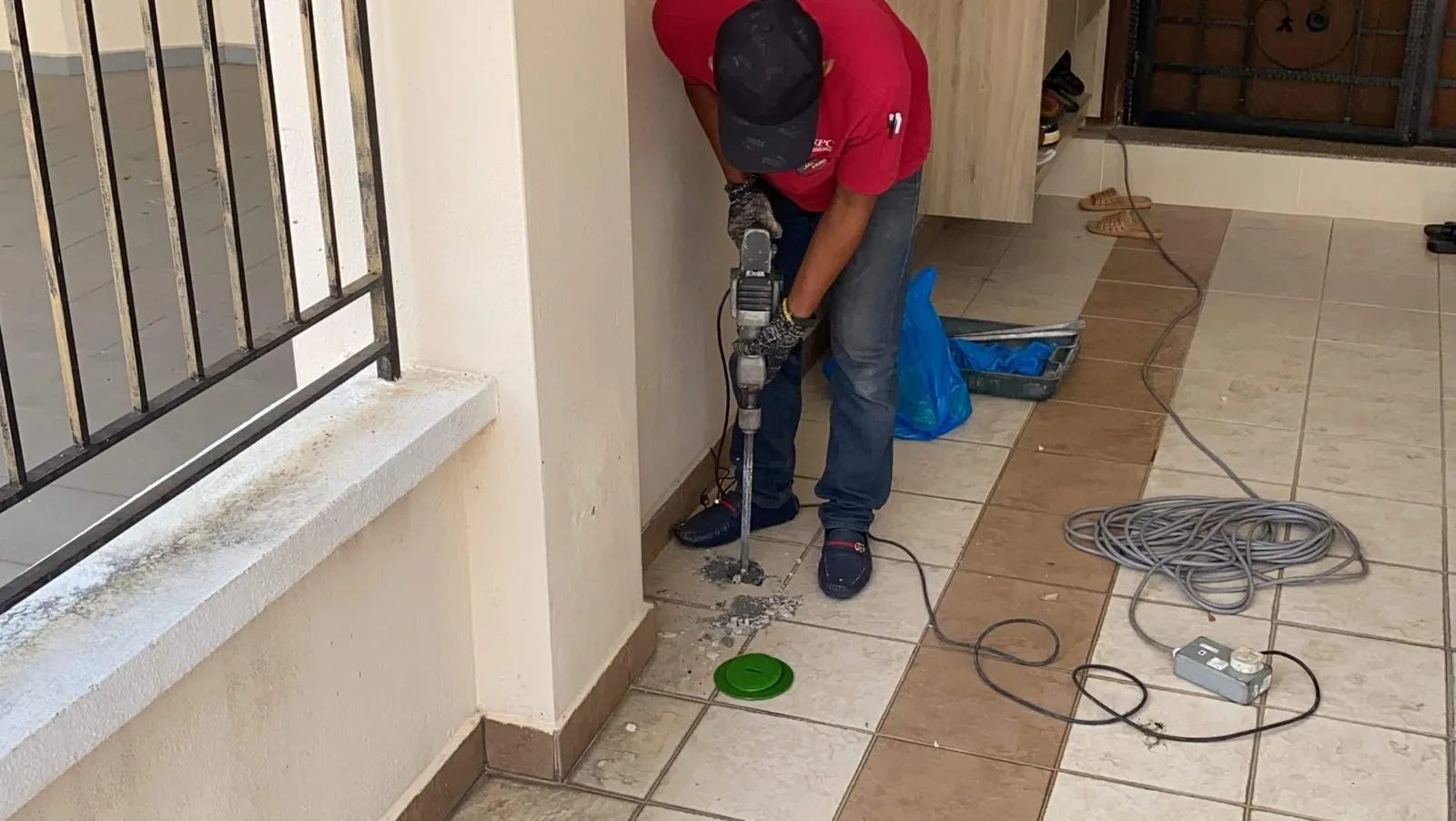
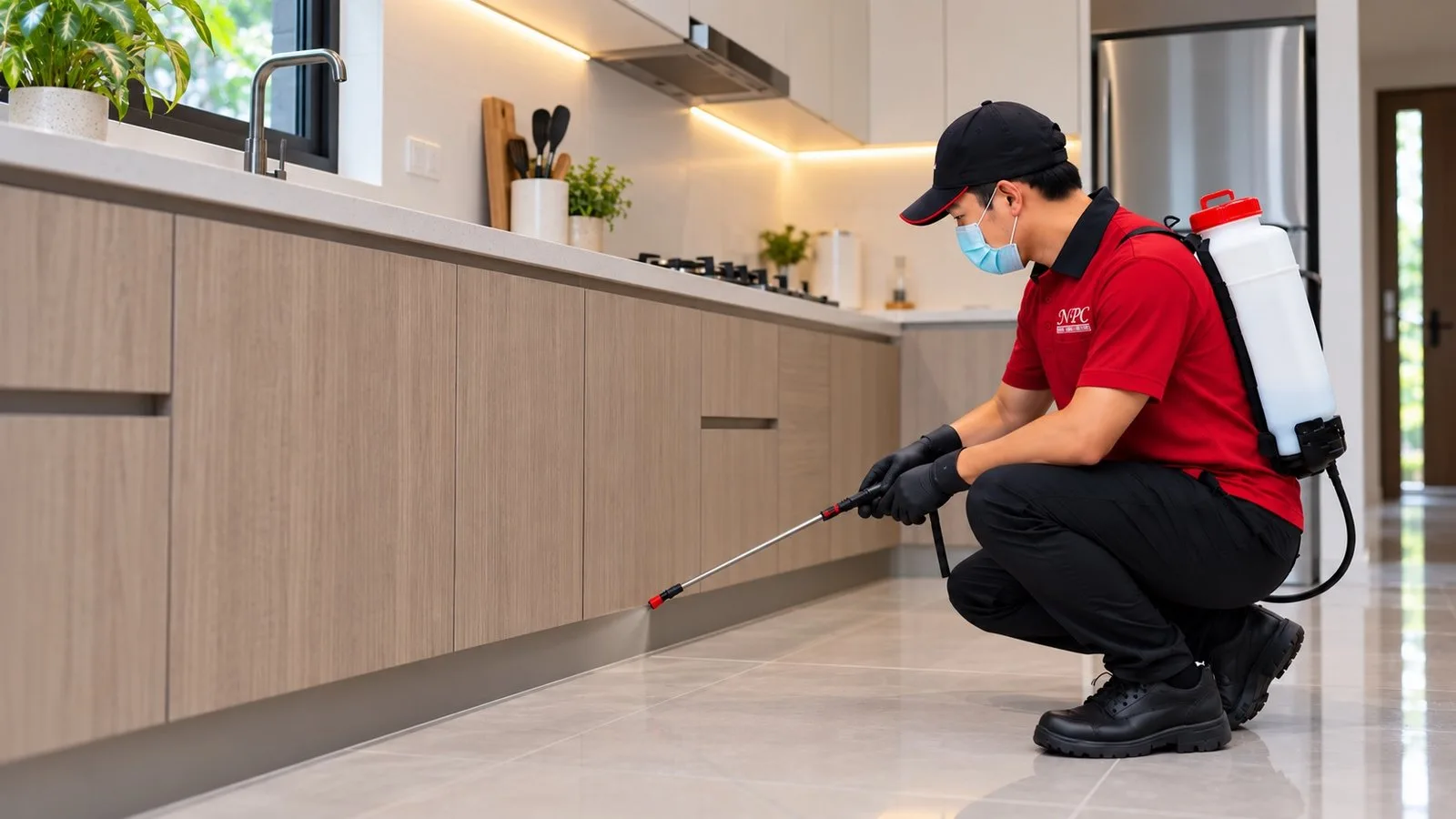
Here is a short look at NPC’s team at work.

1Who Pays for Pest Control in a Rental Home in Malaysia?
Quick Answer: In Malaysia, who pays for pest control in a rental home comes down to the tenancy agreement and the cause of the problem. Malaysia has no dedicated residential tenancy law yet, so the signed agreement is the main rulebook. Where it is silent, the usual practice is: the landlord pays for pre-existing and structural pests, and the tenant pays for pests they caused.
A Residential Tenancy Act has been discussed for years but is not in force. Until it is, the tenancy agreement and general contract law decide rental disputes.
The working rule most landlords and tenants follow:
- Landlord pays when the pest was there before the tenant arrived, or comes from a defect in the building.
- Tenant pays when the pest comes from how the home is used: food waste, pets, travel, second-hand furniture.
- Management body pays for common areas in strata buildings, funded by the service charge.
Strata buildings add one more layer. The by-laws in the Strata Management (Maintenance and Management) Regulations 2015 bind tenants and occupiers as well as owners. By-law 13 says a proprietor must take all necessary steps to keep the parcel free of termites, vermin, rodents, pests and insects. For a broader look at what a treatment visit involves, see our guide to what pest control services include.
2Who Pays for Pest Control for Termites, Bed Bugs and Cockroaches?
Quick Answer: Termites are almost always the landlord’s cost because they attack the structure. Bed bugs depend on timing: found soon after moving in points to the landlord, found months later after travel points to the tenant. Cockroaches and rats depend on whether a building defect or daily habits drew them in.
| Pest | Usually the landlord when | Usually the tenant when | Often the JMB or MC for |
|---|---|---|---|
| Termites | Almost always; the structure is the owner’s asset | Rarely, and only if the tenant caused the damage | Common walls, roof and grounds of a strata block |
| Bed bugs | Found soon after move-in, or in supplied furniture | Found months later, after travel or used furniture | Coordinating when several units are hit |
| Cockroaches | There at move-in, or from shared drains | Food waste, dirty dishes, open rubbish | Refuse rooms, chutes and common drains |
| Rats | Gaps, broken screens, roof holes | Rubbish left out, unsealed food | Bin centres, car parks and drains |
| Ants | A colony inside the walls | Crumbs, sugar and pet food | Gardens and landscaping |
| Mosquitoes | Blocked gutters or built-in ponding | Water in pots and trays | Common drains and open areas |
| Fleas | Left by a previous tenant’s pet | The tenant’s own cat or dog | Stray animals around the block |
Source: guide by NPC Pest Control, 2026, based on common rental practice in Kuala Lumpur and Selangor. General information only; your tenancy agreement and the facts of each case decide.
Timing is the strongest clue. A pest found in the first weeks of a tenancy was probably there already. One that appears months in, after a holiday or a new sofa, probably came with the tenant.
Three pests where people often guess wrong:
- Termites. Tenants sometimes assume they caused them. They almost never do; a colony builds over months or years. Learn to spot termite mud tubes on your wall and report them to the owner at once. Treatment falls under termite control.
- Mosquitoes. The Destruction of Disease-Bearing Insects Act 1975 puts the duty to prevent breeding on owners and occupiers. A tenant with larvae in plant trays carries that risk.
- Fleas. No pets does not rule them out. A previous tenant’s cat can leave eggs and cocoons behind. See our guide to flea bites on humans.
3Does the Landlord Have to Pay for Pest Control Before a Tenant Moves In?
Quick Answer: No general law forces a landlord to treat before every new tenancy. But on who pays for pest control at handover, a landlord who passes on an existing infestation is usually expected to fix it. A dated pre-move-in inspection is the cheapest way to avoid that argument.
A home should be fit to live in when the keys change hands. Live cockroaches or bed bugs on day one fail that test.
What a careful landlord does between tenants:
- Inspect the empty unit while cupboards are bare.
- Treat if anything is found, and keep the invoice.
- Fix entry points such as torn window screens, gaps around pipes and loose drain covers.
- Record the condition with dated photos in the move-in inventory.
Furnished units carry extra risk: supplied mattresses and sofas can hold bed bugs from the last occupant. Our KL condo and rental bed bug guide explains how to check a rented unit. A general visit costs roughly RM150 to RM330 in the Klang Valley, according to our Selangor pest control pricing guide.
4When Is the Tenant Responsible for Pest Control?
Quick Answer: When the problem comes from how the home is used, the answer to who pays for pest control is usually the tenant. Food left out, rubbish not taken down, untreated pets, bed bugs carried back from travel and standing water in pots all fall on the occupier.
Everyday pests follow food, water and clutter, which the tenant controls day to day.
Common tenant-caused situations:
- Kitchen habits. Dishes left overnight and open food draw cockroaches. Our cockroach control guide explains how gel baits and sprays are used.
- Rubbish. Bags left at the door or overflowing bins invite rats.
- Pets. Fleas on an untreated cat or dog.
- Travel and second-hand items. Bed bugs ride in luggage and used furniture. Learn to spot bed bug bites early.
- Standing water. Pot trays, pails and blocked balcony drains breed mosquitoes.
The same 2015 strata by-laws require wrapped rubbish, proper refuse disposal and prompt clean-up of spills, and they bind tenants as well as owners.
Not sure whether the problem started before you moved in?
An inspection can show how established a pest is, which helps both sides agree. Arrange a pest inspection for your rental →
5Why Is It Hard to Prove Who Caused a Pest Problem?
Quick Answer: It is hard to prove who caused an infestation because pests hide, people react differently to bites, and pests move between units. Studies of apartment buildings found many infestations unknown to both residents and management. That is why dated records and a licensed operator’s findings carry more weight than either side’s memory.
| Finding | Share |
|---|---|
| Infested units where property management did not know | 71% |
| Infested units where the residents themselves did not know | 49% |
| Bitten residents who showed any symptoms | 68% |
| Residents with bed bugs who sprayed insecticide themselves | 59% |
| Release flats where marked bed bugs reached a neighbouring unit | 5 of 6 flats |
Source: J Med Entomol, 2016 (PubMed 27049026), 2,372 apartments in New Jersey; Pest Manag Sci, 2016 (PubMed 25644070), one housing community; PLoS One, 2015 (PubMed 26352145), one apartment building.
In a study of 2,372 low-income apartments in J Med Entomol (2016), 49% of infestations were in units whose residents did not know. Only 68% of bitten residents reported any symptoms. In a housing community studied in Pest Manag Sci (2016), management did not know about 71% of infestations.
What this means for a dispute:
- “I had no bites” proves little. Many people do not react at all.
- Self-treatment muddies the picture. 59% of residents with bed bugs in the 2016 study sprayed insecticide themselves, which can scatter pests.
- Neighbours matter. In a PLoS One (2015) study, marked bed bugs reached a neighbouring unit from 5 of 6 release flats.
Our bed bug control page explains how a full treatment is planned once the source is found.
6Who Handles Pests in Condo Common Areas: JMB, MC or Owner?
Quick Answer: In a condo, the Joint Management Body (JMB) or Management Corporation (MC) handles pests in common areas such as refuse rooms, chutes, drains, car parks and gardens. Inside each unit, the owner is responsible under the by-laws, and the tenancy agreement then decides who pays for pest control between owner and tenant.
| Area or situation | Whole landed house | Condo or apartment unit | Room in a shared house |
|---|---|---|---|
| Pests already there at move-in | Landlord | Landlord | Landlord |
| Pests brought in by the occupant | Tenant | Tenant | Tenant |
| Daily hygiene pests inside the home | Tenant | Tenant | Shared |
| Roof, timber and building structure | Landlord | Shared | Landlord |
| Garden, drains and grounds | Tenant | JMB or MC | Landlord |
| Refuse room, chutes and car park | Tenant | JMB or MC | Landlord |
| Pests spreading from next door | Shared | JMB or MC | Shared |
Source: guide by NPC Pest Control, 2026. Not measured data. “Shared” means the parties usually split the work or cost. Strata areas follow the by-laws in the Strata Management (Maintenance and Management) Regulations 2015.
The by-laws spell out the split. The MC must maintain shared pipes, sewers and fittings used by more than one unit. Each proprietor must keep their own parcel free of pests, and may fit screens to keep insects out. The full text is in the 2015 strata regulations.
When pests come from the building itself:
- Report it to management in writing, with photos and the location.
- Coordinate treatment with neighbouring units if pests keep returning.
Office towers follow a similar split between management and tenants; our guide for building managers covers that side. For condo-specific issues in one township, see our Subang Jaya condo and landed tips.
7What Should a Tenancy Agreement Say About Pest Control?
Quick Answer: A tenancy agreement should say who pays for pest control in plain words: who treats before move-in, who pays for pests found in the first weeks, who pays for pests caused by the tenant, who handles termites and structural pests, and how to report a problem. Clear clauses prevent most disputes before they start.
Many agreements only say “keep the premises clean”. A few specific lines close the gap.
| Clause to include | What it settles |
|---|---|
| Pest-free handover, with a dated report | The starting condition of the unit |
| Reporting window, such as 14 or 30 days | Who pays for pests found early |
| Termites and structural pests to the landlord | The costliest pests are covered |
| Tenant-caused pests to the tenant | Daily hygiene and pets |
| Licensed operator, written notice, access | How treatment happens |
Being open helps landlords too. A model in PNAS (2019) found that telling new tenants about past bed bug problems raised landlord costs modestly at first but saved money over the long term. Insist on a licensed operator; our guide on how to check a pest control licence shows how.
8What to Do When the Landlord and Tenant Disagree
Quick Answer: When a landlord and tenant disagree on who pays for pest control, treat the pest first and settle the bill second. Delay lets the infestation spread and the quote grow. Notify in writing, get a licensed inspection, keep every record, and agree a split based on the findings. Seek legal advice if it still cannot be resolved.
| 3-bedroom condo, bed bugs | Week 1 | Week 3 | Week 5 | Week 7 | Week 9 |
|---|---|---|---|---|---|
| Rooms with signs | 1 | 1 | 2 | 3 | 3 |
| Indicative quote if treated that week (RM) | RM700 | RM800 | RM1,100 | RM1,500 | RM1,900 |
Source: illustrative scenario by NPC Pest Control, 2026, for one 3-bedroom condo unit. Not measured data. Quotes use the indicative Klang Valley ranges in our bed bug treatment cost guide (light about RM700, heavy about RM1,900).
Bed bugs spread from room to room, and our bed bug treatment cost guide shows how quotes rise with severity. Nine weeks of arguing can nearly triple the bill.
How to document a pest problem in a rental home
These steps build a record both sides can rely on.
- Photograph the evidence. Take dated photos of live pests, droppings, damage and where you found them.
- Notify in writing. Send a message or email to the landlord or agent the same day, with the photos.
- Keep a sample. A dead insect in a sealed bag helps identification.
- Get a licensed inspection. Ask for written findings on the pest, its spread and the likely source.
- Keep every invoice and report. Store them with the tenancy agreement and the move-in inventory.
- Agree the split in writing. Record who pays what before or right after treatment.
If talks fail, these records decide how strong each side’s case is. Our Serdang guide for homes and student rentals covers pests common in shared and short-term lets.
9Conclusion: Settle the Bill on Evidence
Quick Answer: Who pays for pest control in Malaysia depends on the agreement first and the cause second. Landlords generally cover pre-existing and structural pests, tenants cover pests from daily use, and management bodies cover common areas. A dated move-in check, clear clauses and fast reporting keep the argument short.
Visit the NPC Pest Control homepage to learn about our work across KL and Selangor, or see our pest control services to arrange an inspection.
10Frequently Asked Questions
1. Can a landlord deduct pest control from the deposit?
Only if the tenancy agreement allows it and the tenant caused the problem. A landlord who claims a deduction should show proof, such as a move-in report without pests and a written finding from a licensed operator. Without that, a deduction is easy to dispute.
2. Is there a law in Malaysia on who pays for pest control?
Not yet. A Residential Tenancy Act has been proposed but is not in force, so the tenancy agreement and general contract law decide most cases. In strata buildings, the by-laws also require owners and occupiers to take steps against pests.
3. Who pays when pests come from the unit next door?
Each unit usually pays for its own treatment, and the management body handles the common areas. When pests keep spreading, the most effective route is for the affected units and management to treat at the same time and share information.
4. Does NPC Pest Control offer free inspections?
Yes. NPC Pest Control is a licensed pest control operator in Puchong with over 15 years of work across Kuala Lumpur and Selangor, and inspections are free. Call 03-8061 1875 or 016-335 9799, Monday to Saturday, 9am to 6pm.
Landlord and tenant both want the pests gone?
Start with the facts. We inspect the unit, tell you which pest it is and how far it has spread, so the bill can be settled on evidence.
Book a free inspection →