
Last updated: 23 September 2026
1Why Is a Port Town Different?
Quick Answer: Because pests arrive here as freight. Most towns deal with what breeds locally. Klang also deals with what is unloaded, stacked and stored, which means a clean building can still have a problem by Friday. Pest control services in Klang have to look at deliveries, not only at drains.
A rat born in a back lane is a local problem you can trace. A beetle that arrives inside a sack of imported grain is not, and it is already breeding when it comes through your door.
- Goods move through, not past. Freight is unloaded, broken down, re-stacked and held. Every one of those stops is a chance to settle.
- Storage is everywhere. Warehouses, godowns, container yards and shoplot back rooms sit right beside housing along the same roads.
- Timber travels with the cargo. Pallets and crates are themselves food and shelter, which makes them the load, not the packaging.
- Volume hides the early signs. One bad pallet out of two hundred looks like nothing until the stack next to it is affected.
Our guide to what pest control services include in 2026 explains what a standard visit covers before any of this is layered on.
Not sure whether your problem was bred or delivered?
A free inspection traces where the population actually started, which decides whether the fix is at the door or in the drain. See the pest control services we inspect for →
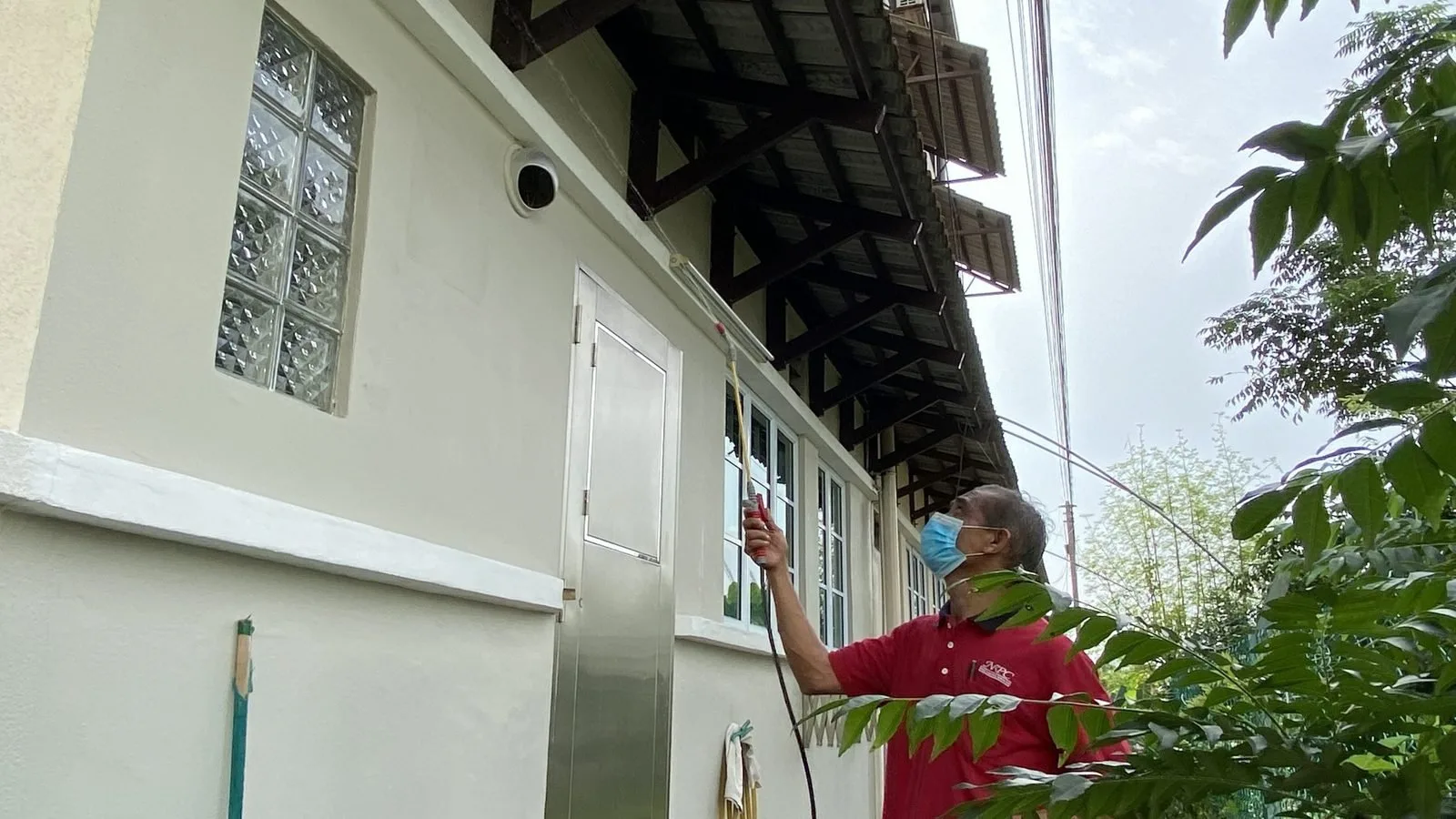
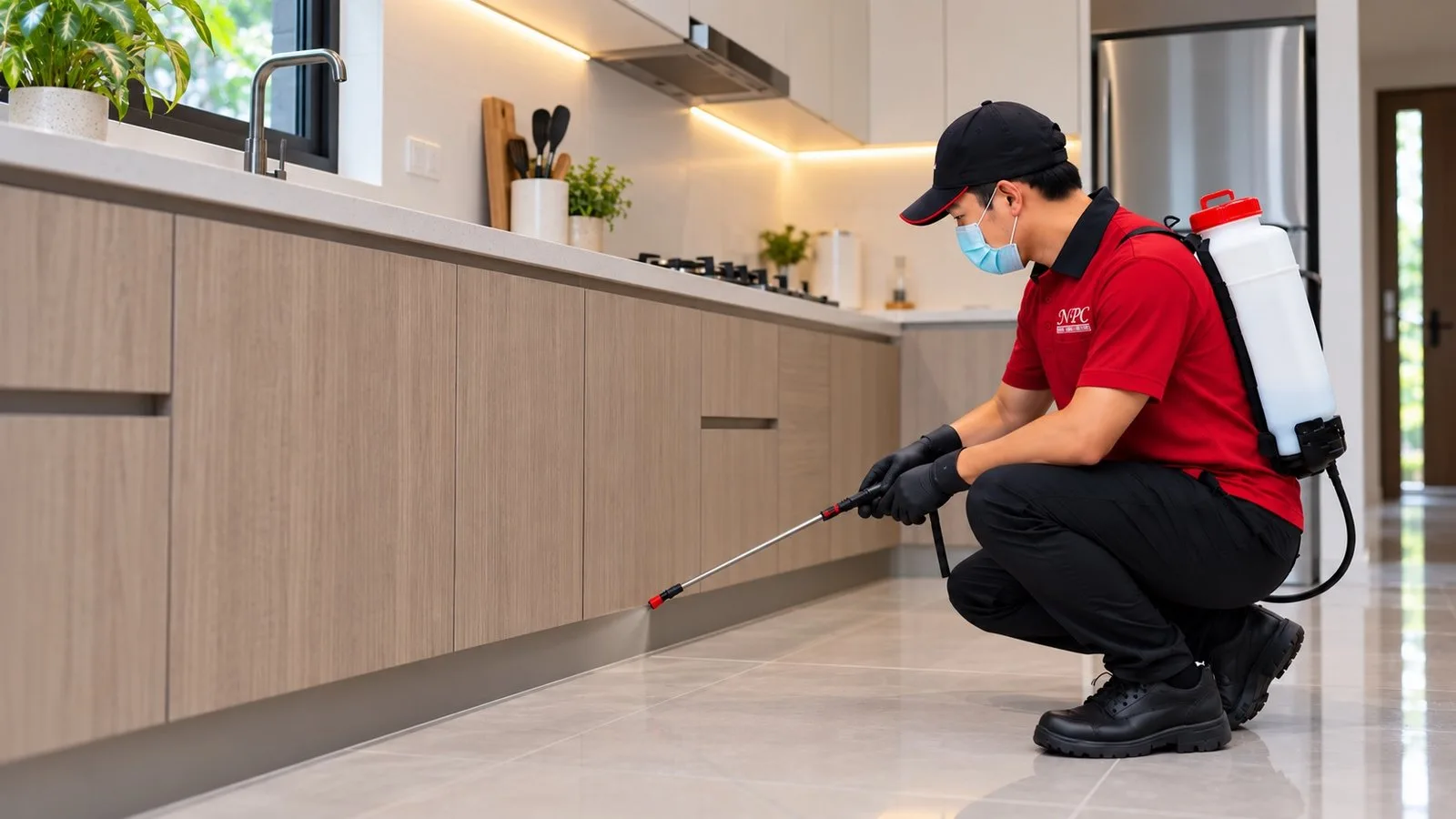
A short look at our licensed team at work.

2What Arrives On What?
Quick Answer: Untreated timber is the worst offender, then sacks of dry goods, then returned packaging. Shrink-wrapped stock on plastic pallets is the safest thing you can take in. Pest control services in Klang usually work backwards from the material a load arrived on rather than from the room it ended up in.
| How often we find something | What it arrives on | What tends to be in it |
|---|---|---|
| Very often | Untreated timber pallets and crates | Borers, ants and the odd rat nest in the void between boards. |
| Often | Sacks and cartons of dry goods | Stored-product beetles and moths, already breeding before delivery. |
| Often | Returned or pooled packaging | Cockroach egg cases wedged in folds and corner seams. |
| Sometimes | Empty containers left standing open | Rats and mosquitoes, depending on how long it sat and whether it held water. |
| Rarely | Shrink-wrapped goods on plastic pallets | Little to hide in, little to eat, nothing to chew through. |
Source: illustrative guide by NPC Pest Control, 2026, based on Klang jobs. Not measured data.
The ratings are illustrative, drawn from our own Klang jobs, but the ranking holds up across sites.
- Timber gives shelter and a meal at once. The void between pallet boards is dark, tight and edible, which is why wood-dwelling insects travel so well in it.
- Sacks arrive already infested. Stored-goods beetles do not find your store; they are delivered to it, often several generations in. That is why pest control services in Klang ask to see a goods-in record.
3What Does the Research Say About Ports and Pests?
Quick Answer: That proximity to a working port measurably raises risk, and that freight materials carry pests. One study found flea-borne typhus rose the closer a district sat to an international seaport still in use. Another found treated-pallet rules cut infestation in wood packaging by roughly a third to a half.
| What was studied | What it found | Why it matters in Klang |
|---|---|---|
| 476 murine typhus cases, Taiwan, 2000–2014 | Incidence rose the closer a district sat to a working international seaport, and showed no link to ports abandoned a century earlier. | It is the traffic, not the coastline, that raises risk. |
| 439 border interceptions of ants over eight years | Ants arrived predominantly on timber, and the species caught most often were arboreal or wood-dwelling. | Untreated pallets and crates are a live pathway. |
| Wood packaging inspected at ports, 2003–2009 | Infestation rates in wood packaging fell 36–52% after treated-pallet rules came in. | Insisting on treated timber measurably cuts what arrives. |
| 90 filth flies, wet markets in Klang, 2023 | 17.8% carried Salmonella, and 7 of 16 isolates resisted multiple antimicrobials. | Klang’s own markets are a documented fly problem. |
| Review of sanitation in stored-product pest control, 2023 | Where sanitation slipped, the effectiveness of other control methods fell by between 1.3 and 17 times. | Residue left in a store cancels out the treatment. |
Sources: PLOS Neglected Tropical Diseases 2017; Insects 2020; PLOS ONE 2014; International Journal of Food Microbiology 2023; Insects 2023.
The seaport finding comes from a 2017 study in PLOS Neglected Tropical Diseases, which mapped 476 human cases of murine typhus in Taiwan between 2000 and 2014. Incidence rose with closeness to seaports still in use, and showed no link at all to ports abandoned a century earlier. The risk travels with the traffic, not with the shoreline.
On the freight itself, a 2020 paper in Insects analysed 439 border interceptions of ants over eight years and found they arrived predominantly on timber, with arboreal and wood-dwelling species caught most often. A 2014 analysis in PLOS ONE then showed what fixing it looks like: after treated-pallet standards came in, infestation rates in wood packaging inspected at ports fell by 36% to 52%.
4Where Does It Settle Once It Is Off the Truck?
Quick Answer: In whatever is dark, still and undisturbed for longest. Pallet stacks on bare ground, dry goods godowns and shoplot back rooms take the most. Loading bays get flies and cockroaches instead. Pest control services in Klang inspect by storage type, because that predicts the pest list better than the industry does.
| Where the goods end up | Rats | Cockroaches | Stored-goods beetles | Flies | Termites |
|---|---|---|---|---|---|
| Pallet stack standing on bare ground | High | Medium | Medium | Low | High |
| Dry goods godown, sacks and cartons | High | Medium | High | Low | Medium |
| Loading bay and cold room door | Medium | High | Low | High | Low |
| Container yard and hardstanding | High | Low | Low | Medium | Low |
| Shoplot back-of-house store | Medium | High | High | Medium | Medium |
| Taman house beside a freight road | High | Medium | Low | Medium | Medium |
Source: illustrative guide by NPC Pest Control, 2026, based on Klang jobs. Not measured data.
Read your own row. A 200,000 square foot warehouse and a shoplot store room behave the same way if the goods sit the same way.
- Bare ground under a stack invites two problems. Rats burrow under it and subterranean termites reach the timber through the soil. Our termite control page covers the second.
- Doors decide the fly and cockroach load. Loading bays and cold room doors stand open, and everything that flies uses them. Our fly control page covers the trapping and screening side.
- Housing next to a freight road is in the same corridor. Rats do not stop at a fence line, which is why our Seri Kembangan guide describes the same pattern inland.
Storing stock anywhere in the Klang corridor?
We inspect warehouses, godowns and back-of-house stores and report by bay, door and stack, so you know which part of the building is carrying the problem. See how commercial pest control works →
5How Should You Check a Delivery Before It Goes Into Store?
Quick Answer: Check the pallet before the product. Look for the treatment stamp on the timber, check the bottom boards and the void between them, then sample sacks from the middle of the stack rather than the outside. Five minutes at the bay saves pest control services in Klang a month of chasing the spread.
Goods-in is the cheapest control point you have, and almost nobody uses it. By the time stock is racked, anything living in it has already moved.
How to check an inbound load at the bay
Take a torch and five minutes per delivery. You are looking for movement, damage and residue, not identifying species.
- Look at the pallet timber first. Check for a treatment stamp, then for bore holes, frass and loose bark on the bottom boards.
- Tip one pallet and look into the void. The space between the top and bottom boards is where hitchhikers actually sit.
- Sample sacks from inside the stack. The outer layer is the cleanest part of any load, so it tells you nothing.
- Run a hand along seams and folds. Cockroach egg cases sit in carton corners and in the creases of returned packaging.
- Look for webbing and fine dust. Both mean stored-goods insects have been breeding in there for weeks already.
- Reject or quarantine, do not just note it. A flagged load that still goes on the rack is the same as an unchecked one.
Keep the notes. A goods-in record is also the evidence an auditor asks for, and it tells whoever inspects which supplier to look at.
6What Do the Six Weeks After a Bad Delivery Look Like?
Quick Answer: Quiet, then sudden. Beetles multiply inside the sacks for about three weeks before anyone sees one, then damage and sightings climb together. Pest control services in Klang are usually called in week four or five, when the problem has already spread to several stacks.
| What is counted | Week 0 | Week 1 | Week 2 | Week 3 | Week 4 | Week 6 |
|---|---|---|---|---|---|---|
| Live beetles per sack sampled | 1 | 2 | 4 | 9 | 14 | 21 |
| Sacks showing damage | 0 | 1 | 2 | 5 | 9 | 16 |
| Sightings reported by staff | 0 | 0 | 1 | 3 | 8 | 15 |
| Pallet stacks affected | 1 | 1 | 2 | 3 | 5 | 8 |
Source: illustrative model by NPC Pest Control, 2026, one Klang dry goods store.
The model is illustrative, but the lag is the part worth remembering. Staff sightings are the last line to move, not the first.
- Monitoring beats reporting. Pheromone traps and scheduled sack sampling pick this up in week one, when it is still one stack.
- First-in, first-out limits the damage. Stock that sits for months gives beetles the uninterrupted run they need to reach these numbers.
A 2023 review in Insects found that where sanitation slipped in stored-product pest control, other methods lost between 1.3 and 17 times their effectiveness. Residue in pallet gaps and under racking quietly cancels out whatever is applied on top.
7What About Klang Town, the Markets and the Houses?
Quick Answer: They get the same corridor from the other end. Klang’s wet markets, shop rows and older town stock deal with heavy food waste and constant fly pressure, and the housing beside the freight roads gets the rats that work them. Pest control services in Klang treat the two ends as one route.
This is not only a warehouse story. Klang town has its own documented problem, and it is a food-safety one.
- The market flies are a measured risk. A 2023 study in the International Journal of Food Microbiology caught 90 filth flies at wet markets in Klang and found 17.8% carried Salmonella, with 7 of 16 isolates resistant to multiple antimicrobials.
- Rats work the whole stretch. Markets, shop rows and bin bays feed them, and the freight roads connect them, so pest control services in Klang map the route rather than the address. Our guide to sealing the gaps rats use covers the proofing that ends it at your wall.
- Older town stock adds termites. Settled ground and original timber, nothing to do with the port at all.
If you run a kitchen rather than a warehouse, our restaurant pest control page covers the records inspectors ask to see. For how this corridor compares with a food-led one, see our Cheras guide.
8What Should You Ask a Company in a Port Town?
Quick Answer: Ask whether they will cover goods-in, not just the floor. Any firm offering pest control services in Klang should hold a valid operator licence, inspect the bay, stacks and racking voids as well as the perimeter, and hand you a written report naming product, concentration and the areas treated.
The question that sorts a firm that understands freight from one that does not: will they set up monitoring at receiving, or only service what is already racked? Beyond that, verify:
- A valid operator licence. Pest control is licensed work in Malaysia, and termite treatment needs a licensed applicator present.
- A written service report every visit. Product, concentration, method, area and quantity, in a form an auditor will accept.
- Monitoring, not just treatment. Pheromone traps, bait stations and a trend line, so you see week one instead of week five.
- Named pests and exclusions. General contracts commonly exclude termites and stored-product insects, so name both if you store goods.
Our checklist for choosing a pest control company sets out eight things worth verifying, and our guide to common pests by area in Kuala Lumpur shows how the same firm should adapt from one district to another.
9Conclusion: Start at the Bay, Not the Back Wall
Quick Answer: In Klang, a good share of the problem was delivered. Check what arrives, on what, and where it goes to sit, and most of it never establishes. Pest control services in Klang hold when goods-in is part of the plan rather than an afterthought.
The short version: inspect pallets before product, sample from the middle of the stack, keep stock off bare ground and moving, monitor at receiving, and ask any company what they will do at the bay.
For more, visit the NPC Pest Control homepage or our pest control services hub, or go straight to rat control, commercial pest control and termite control.
10Frequently Asked Questions
1. How much do pest control services in Klang cost?
What you store moves the price more than the postcode does. As an indication of Klang Valley market ranges, a one-off treatment for a terrace house sits in the low hundreds of ringgit, while a warehouse or godown is quoted on floor area, the number of doors and bays, and how often it needs monitoring.
2. Can pests really arrive with my stock?
Yes, and it is well documented. Border records show ants arriving mostly on timber, and infestation rates in wood packaging fell by 36 to 52 per cent once treated-pallet rules were enforced. Stored-goods beetles usually arrive already breeding inside sacks.
3. My warehouse is cleaned every day. Why do I still get beetles?
Because sweeping the floor is not the same as clearing residue from pallet gaps, wall bases and the space under racking. A 2023 review found control methods lost between 1.3 and 17 times their effectiveness where sanitation slipped.
4. I live in a taman, not near the port. Does this apply to me?
Partly. The freight roads, markets and shop rows that feed the port corridor run right past housing, so rats and flies move along them. Termites, though, come from the soil under your own house and have nothing to do with the port.
5. How do I book pest control services in Klang?
Call NPC Pest Control on 03-8061 1875 or 016-335 9799, Monday to Saturday, 9am to 6pm. We are a licensed operator based in Bandar Puteri Puchong with over 15 years across Kuala Lumpur and Selangor. Inspections are free.
Find out what came in with your stock
We inspect free across Klang, from the port-side warehouses and godowns to the shop rows and tamans, and you get a written report naming what arrived, where it settled and what the treatment reaches.
Book a free inspection →