Last updated: 23 September 2026
During the pandemic, many KL offices booked a disinfection crew every week. Today most managers are asking a simpler question: how often do we really need office disinfection services in Kuala Lumpur, and what should our own cleaners do in between?
This guide is for office managers, HR teams and business owners in KL. It covers:
- Frequency. How often each office surface needs disinfecting, and by whom.
- Hotspots. What research found on keyboards and mice.
- Routines. Why a daily wipe beats a monthly spray, and how hand hygiene fits in.
- Triggers. When to book an extra professional visit.
For the service itself, see our sanitisation and disinfection service page. Buying for a shop, clinic or factory? Our commercial disinfection buyer’s guide covers scopes and contracts.
Want a routine sized for your office?
We visit, count the shared touchpoints and suggest how often a professional round makes sense. See how our office disinfection visits work →
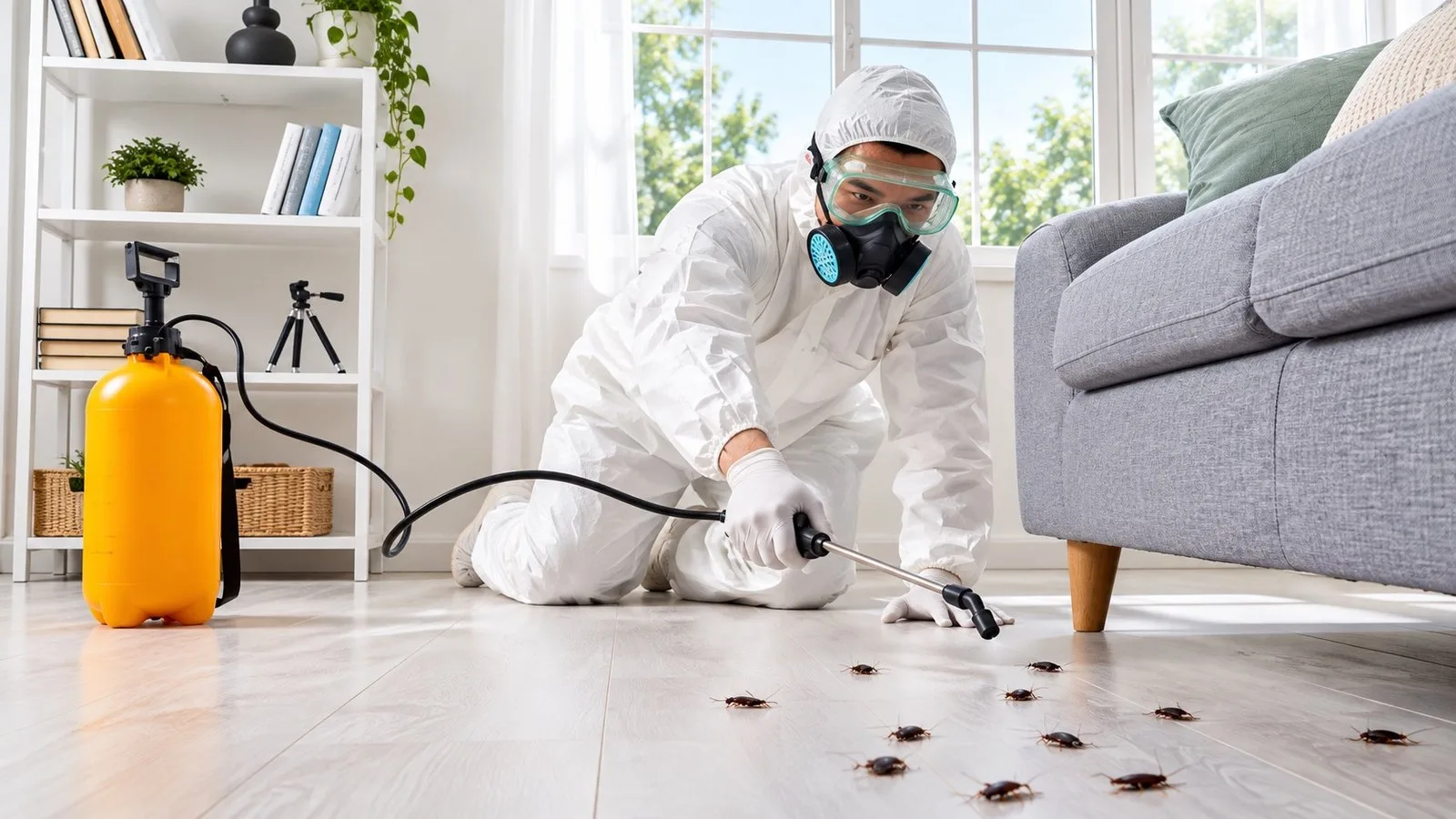
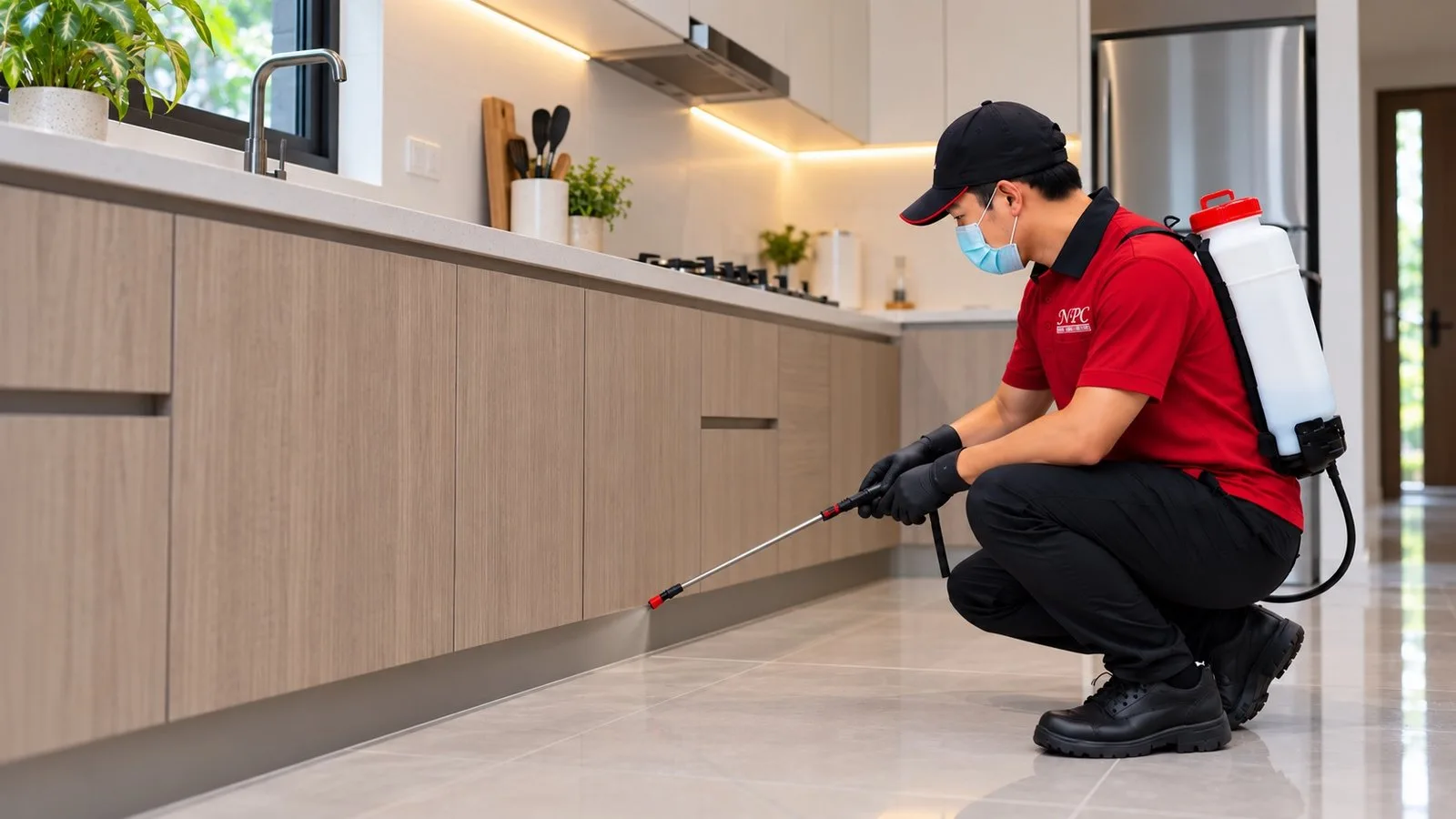
Here is a short look at NPC’s disinfection team at work.

1How Often Should an Office in Kuala Lumpur Be Disinfected?
Quick Answer: Shared high-touch points such as door handles, lift buttons and pantry taps should be wiped with a disinfectant two to three times a day. Desks and keyboards need a daily wipe by their users. Office disinfection services in Kuala Lumpur usually fit as a monthly or quarterly deep round, plus extra visits on clear triggers.
| Office surface | How often to disinfect | Who does it | When to add a professional round |
|---|---|---|---|
| Door handles, lift buttons, access card readers | 2–3 times a day | Your cleaners | After any illness case in the office |
| Shared desks, hot desks and meeting-room tables | Before each new user, or at least daily | Staff wipe; cleaners check | Monthly deep round |
| Keyboards, mice, phones and headsets | Daily, with electronics-safe wipes | Each user | Shared devices after every shift |
| Pantry handles, taps, fridge and microwave | 2–3 times a day | Your cleaners | Monthly deep round with food-safe products |
| Washrooms: taps, flush handles, locks | Several times a day | Your cleaners | Straight after a stomach-bug case |
| Floors, partitions, walls and ceilings | Normal cleaning only | Your cleaners | Only after a flood, leak or pest problem |
Source: compiled by NPC Pest Control, 2026, from the US CDC guidance on cleaning and disinfecting a facility and the WHO guidance on cleaning and disinfecting environmental surfaces.
The table follows two official sources. The US CDC guidance on cleaning and disinfecting a facility says high-touch surfaces need the most attention and names door handles, light switches, desks, phones, keyboards and washroom fixtures. The WHO guidance on surface disinfection adds that surfaces must be cleaned before they are disinfected, and that the product needs its full contact time.
Three rules sit behind every row:
- Frequency follows touches. A lift button pressed all day needs more care than a meeting-room wall.
- Daily work belongs to people on site. A contractor cannot wipe your door handles at 11am every day at a sensible cost.
- Floors and walls rarely need disinfecting. Normal cleaning is enough unless there has been a flood, a leak or pest activity.
2Which Office Surfaces Carry the Most Germs?
Quick Answer: The surfaces people touch most: keyboards, mice, phones, door handles, lift buttons and pantry handles. A 2026 study of 400 keyboards and mice found Staphylococcus aureus on 18.5% of them. Staff computers used by one person were as contaminated as shared ones, so office disinfection services in Kuala Lumpur should cover private desks too.
| Keyboard and mouse group (100 devices each) | Devices carrying Staphylococcus aureus |
|---|---|
| Personal-use student computers | 29% |
| Personal-use staff computers | 21% |
| Shared staff computers | 20% |
| Shared student computers | 4% |
Source: Pathogens, 2026, study of 400 computer keyboard-and-mouse sets used by staff and students at a university in Northern Thailand (bar length scaled for readability).
The study was published in Pathogens in 2026. Researchers swabbed 100 keyboard-and-mouse sets in each of four groups at a university in Northern Thailand. Staff computers used by one person (21%) carried S. aureus as often as shared staff computers (20%). About a quarter of the S. aureus found carried genes linked to food poisoning toxins, and four isolates were MRSA.
What this means for a KL office:
- Private desks get dirty too. People eat at their desks and touch their faces all day.
- Shared kit needs a wipe between users. Hot desks, meeting-room remotes and shared headsets rotate germs from person to person.
- Electronics need the right product. Alcohol wipes made for electronics are safer than sprays that drip into keys.
Pantries are the other hotspot. Food crumbs also draw cockroaches and ants, so if you see droppings near the microwave, book cockroach control before the next disinfection round.
3Is a Monthly Professional Round Better Than Daily Wiping?
Quick Answer: No single visit can keep an office clean for a month. Germs spread across shared surfaces within hours of people arriving, so a round done on Sunday is undone by Monday morning. Daily wiping by your cleaners carries the load, and office disinfection services in Kuala Lumpur add depth on top.
| Routine | Mon 8am | Mon 11am | Tue 11am | Wed 11am | Fri 11am |
|---|---|---|---|---|---|
| Monthly professional round only (done Sunday) | 5 | 100 | 100 | 100 | 100 |
| Daily cleaner wipes of high-touch points | 20 | 45 | 45 | 45 | 45 |
| Daily wipes plus a midday wipe of shared points | 20 | 30 | 30 | 30 | 30 |
Source: illustrative model by NPC Pest Control, 2026, built on a 2019 American Journal of Infection Control tracer study (contamination spread to all sampled surfaces within 2 hours). Index, peak = 100, not measured data.
The model above is illustrative. It is built on a 2019 American Journal of Infection Control tracer study, where a harmless virus placed on a door handle and a pen reached every sampled surface and hand within two hours. Targeted disinfection of high-touch points then cut it by 94.1%.
So what does a professional round add?
- Reach. Trained technicians treat the spots cleaners skip, such as chair arms, cabinet handles, phone cradles and under-desk edges.
- The right product. Registered disinfectants used at the correct strength and contact time.
- A reset after an event. A full, documented treatment after an illness case, flood or pest problem.
- Training. A good provider shows your cleaners which surfaces to wipe and how long to leave them wet.
Treat long-lasting “coating” offers with care. Our guide to buying commercial disinfection services covers a 2025 real-world test where a 30-day coating showed no effect.
4Does Hand Hygiene Matter as Much as Disinfecting Surfaces?
Quick Answer: Yes. Hands carry germs from surface to surface, so clean hands cut the number of surfaces that get contaminated. A one-year German office study found staff given hand sanitiser at work had much lower odds of colds, fever and coughs. Pair office disinfection services in Kuala Lumpur with sanitiser at every touchpoint.
The study appeared in BMC Infectious Diseases in 2010. Public administration staff in Greifswald were split into two groups for a year. One group got alcohol hand sanitiser at work; the other carried on as usual. Across 1,230 person-months of reports, the sanitiser group did better:
| Outcome | Odds ratio (sanitiser vs usual) | In plain terms |
|---|---|---|
| Common cold episodes | 0.35 | About two-thirds lower odds |
| Fever episodes | 0.38 | Close to two-thirds lower odds |
| Coughing episodes | 0.45 | About half the odds |
| Absence due to diarrhoea | 0.11 | Much lower odds of a day off |
Place sanitiser at the lift lobby, pantry and printer. It costs little and cuts the load on every surface.
Planning an office health routine?
We can set up a disinfection round alongside your cleaners’ daily checklist, with a written report after each visit. Plan an office disinfection routine with us →
5How Often Should Different Types of Office Disinfect?
Quick Answer: It depends on headcount and how much equipment is shared. A small private office can rely on daily wipes and book office disinfection services in Kuala Lumpur only on triggers. Hot-desking spaces, call centres and offices with canteens need tighter routines and a monthly professional round.
| Office set-up | High-touch wipes (your cleaners) | Desk and keyboard wipes | Pantry and washroom | Professional disinfection round |
|---|---|---|---|---|
| Small private office, under 20 staff | Daily | Each user, daily | Twice a day | On trigger only |
| Open-plan office, 50+ staff | 2–3 times a day | Each user, daily | 3 times a day | Quarterly, plus triggers |
| Hot-desking or co-working space | 2–3 times a day | Before every new user | 3 times a day | Monthly, plus triggers |
| Call centre or shift office | Every shift | Every shift change | Every shift | Monthly, plus triggers |
| Office with in-house canteen | 2–3 times a day | Each user, daily | After every meal service | Monthly, with pest visits |
| Tenant in a shared KL office tower | Management’s job in lobbies | Each user, daily | Twice a day | On trigger only |
Source: illustrative guide by NPC Pest Control, 2026, based on its office jobs in Kuala Lumpur and Selangor. Darker shading = more frequent. Not measured data.
The guide above is illustrative, based on our office work across KL and Selangor. What pushes an office towards the darker cells:
- Shared equipment. Hot desks and shared headsets pass germs between people every shift.
- Round-the-clock use. Call centres never get a quiet night for surfaces to be treated.
- Food on site. A canteen brings food hygiene duties and draws pests.
Food areas carry legal duties too. Regulation 16 of the Food Hygiene Regulations 2009 requires food premises to be kept free of pests, so an office canteen usually pairs disinfection with commercial pest control. Tenants in a shared KL tower should check what building management already covers in lobbies and lifts before paying twice.
6When Should You Book an Extra Office Disinfection Visit?
Quick Answer: Book an extra visit when something changes the risk: a confirmed illness case, a stomach bug outbreak, rat droppings, a flood or pipe leak, or reopening after a long closure. Office disinfection services in Kuala Lumpur can usually treat the affected zones after hours so staff return to a clean floor the next morning.
Triggers worth an extra visit:
- A staff member with flu, COVID-19 or HFMD symptoms. Treat their desk, meeting rooms they used and the shared pantry.
- Vomiting or diarrhoea in the office. Stomach bugs spread fast from washroom surfaces, so treat the washroom and pantry straight away.
- Rat droppings or urine trails. Do not sweep them dry. Book rat control first, then disinfect the area safely.
- A flood, burst pipe or aircon leak. Wet carpet and ceiling boards grow mould within days.
- Reopening after a long break. Dust and still water build up over Chinese New Year or Hari Raya closures.
One trigger needs a different service. If a staff member gets dengue, the risk is Aedes breeding around the office, such as in plant pots, aircon trays and roof gutters. Disinfection does nothing for that; see our guide to mosquito control services instead.
7How Do You Build an Office Disinfection Routine?
Quick Answer: Start with a list of shared touchpoints, give each one a frequency and an owner, then put the routine on a simple checklist your cleaners sign. Add a monthly or quarterly visit from office disinfection services in Kuala Lumpur, and review the routine after any illness outbreak.
How to set up an office disinfection routine
These steps take about a week to put in place.
- Walk the office and list touchpoints. Note every handle, button, shared device and pantry fitting.
- Give each touchpoint a frequency. Use the surface table in section 1 as a starting point.
- Assign an owner. Cleaners for shared points, each staff member for their own desk and keyboard.
- Stock the right products. Registered disinfectant for hard surfaces and electronics-safe wipes for devices.
- Use a signed checklist. Post it in the pantry and washrooms so misses are easy to spot.
- Book the professional round. Set a monthly or quarterly date and a same-day contact for emergencies.
Review the routine every six months or after any outbreak. If a pest problem keeps coming back, our guide to pest control services in Malaysia explains how a full programme runs.
Need help setting up the checklist?
Our technicians can walk your floor, mark the touchpoints and hand your cleaners a ready-to-use routine. Book an office walk-through →
8What Should You Ask Before Booking Office Disinfection Services in Kuala Lumpur?
Quick Answer: Ask what will be wiped by hand, which product is used and its contact time, whether electronics are covered, and how long staff must stay out. Also ask for a written report after each visit. Clear answers show that office disinfection services in Kuala Lumpur will match your routine.
Questions to put to any provider:
- Is it wipe-first? The CDC facility guidance says fogging and wide-area spraying are generally not recommended as the main method unless the label allows it.
- What product, at what contact time? Ask for the label and safety data sheet.
- How are keyboards and phones handled? Sprays near electronics can cause damage.
- When can staff return? Get the re-entry time in writing.
- What does the report show? Date, zones treated, product and technician’s name.
Prices depend on floor area, headcount, method and time of day, so compare quotes on the same scope. When the visit also covers pests, choose a licensed operator; pest control chemicals fall under the Pesticides Act 1974. For homes, our guide on when you need a sanitisation service is a better fit.
9Conclusion: Daily Wipes First, Professional Rounds on Top
Quick Answer: How often you need office disinfection services in Kuala Lumpur depends on your office, but the pattern is steady: wipe shared touchpoints two to three times a day, have staff wipe their own kit daily, add a monthly or quarterly professional round, and book extra visits on clear triggers.
Office disinfection services in Kuala Lumpur work best on top of a strong daily routine. For more, visit the NPC Pest Control homepage or browse all our pest control services.
10Frequently Asked Questions
1. How often do office disinfection services in Kuala Lumpur need to come?
For most offices, a professional round once a quarter or once a month is plenty, plus extra visits after an illness case, flood or pest problem. Daily wiping by your own cleaners matters more.
2. Is it still a legal requirement to disinfect offices every day?
The daily disinfection rules from the COVID-19 period no longer apply to ordinary offices. Daily wiping of high-touch surfaces is still good practice, and food areas must meet food hygiene rules.
3. Can we disinfect keyboards and phones with normal spray?
No. Spray can damage electronics. Use alcohol-based wipes made for electronics, switch the device off first, and let it dry fully before use.
4. Does NPC Pest Control disinfect offices in Kuala Lumpur?
Yes. NPC Pest Control is a licensed pest control company in Puchong with over 15 years of work across Kuala Lumpur and Selangor, and site inspections are free. Call 03-8061 1875 or 016-335 9799, Monday to Saturday, 9am to 6pm.
Not sure how often your office needs a professional round?
Tell us your headcount, floor area and office hours. We will visit for free and suggest a routine that fits, with your cleaners doing the daily work.
Book a free office visit →