Last updated: 22 September 2026
1What Is Anti-Termite Soil Treatment?
Quick Answer: Anti-termite soil treatment in Malaysia is a chemical barrier laid in the soil under and around a building. Subterranean termites nest in the ground and must tunnel through soil to reach timber. A continuous treated zone along every wall, pipe and joint stops them getting in, or kills the ones that try.
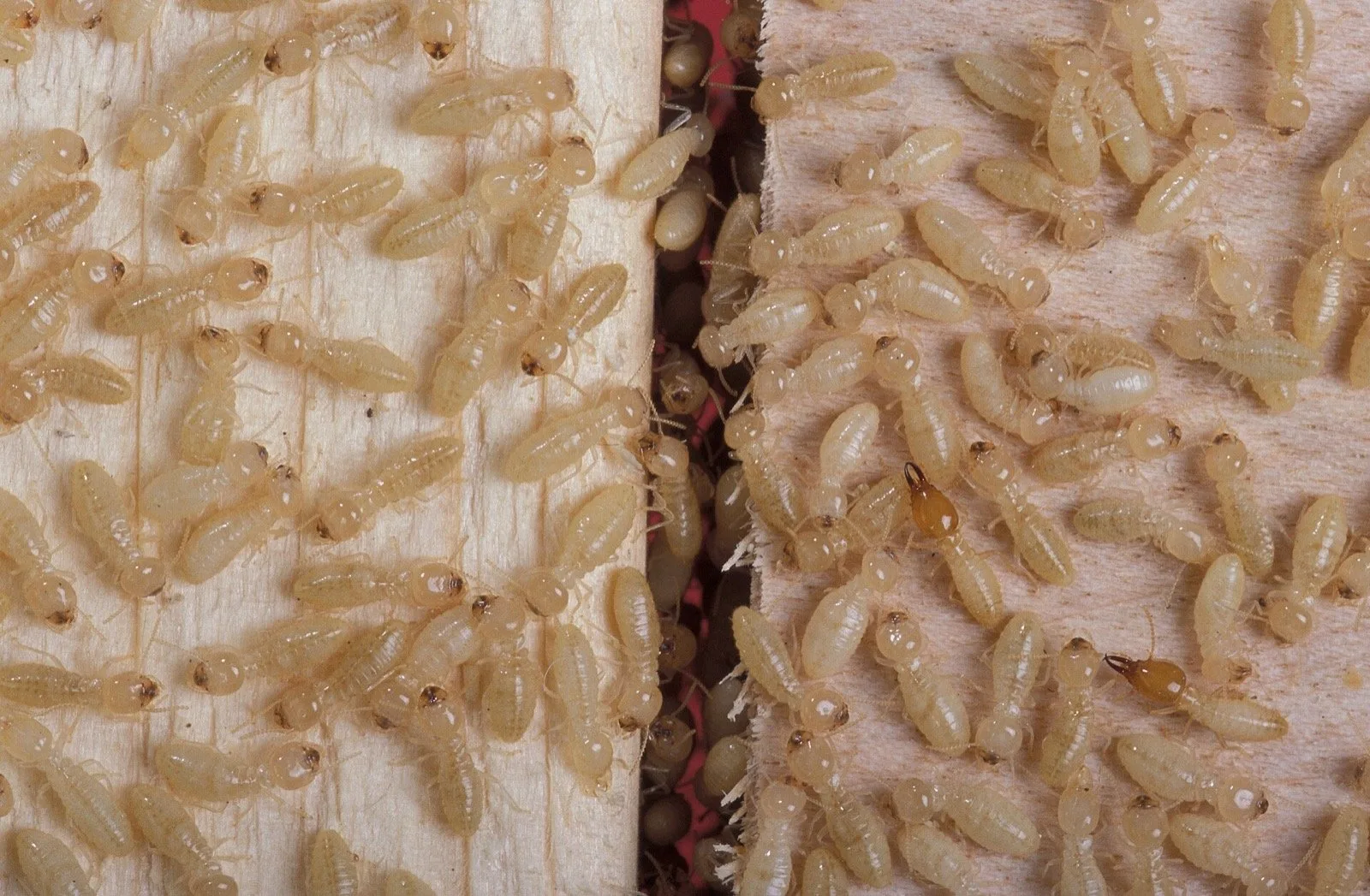
NPC Pest Control is a licensed operator based in Puchong, with over 15 years of termite work in Kuala Lumpur and Selangor. The question we hear most is: “If I treat the soil, will the termites die?” Think of anti-termite soil treatment in Malaysia as a fence. It keeps termites out of the house. It was never designed to wipe out the nest.
This guide explains how the barrier works, what happens on treatment day, how long it lasts and when it is the wrong first step. For the full service, from inspection to warranty, see our termite control services page.
- Before the slab is cast. Termiticide is sprayed onto the levelled soil of a new building. Our pre-construction anti-termite guide covers that job for builders.
- After the house is built. The chemical is injected through small holes drilled along the walls. This is the version most homeowners buy, and the focus of this guide.
Not sure if your home needs a barrier or bait?
Our team inspects for free, checks for live termites and tells you which treatment fits. See how our termite treatment works →
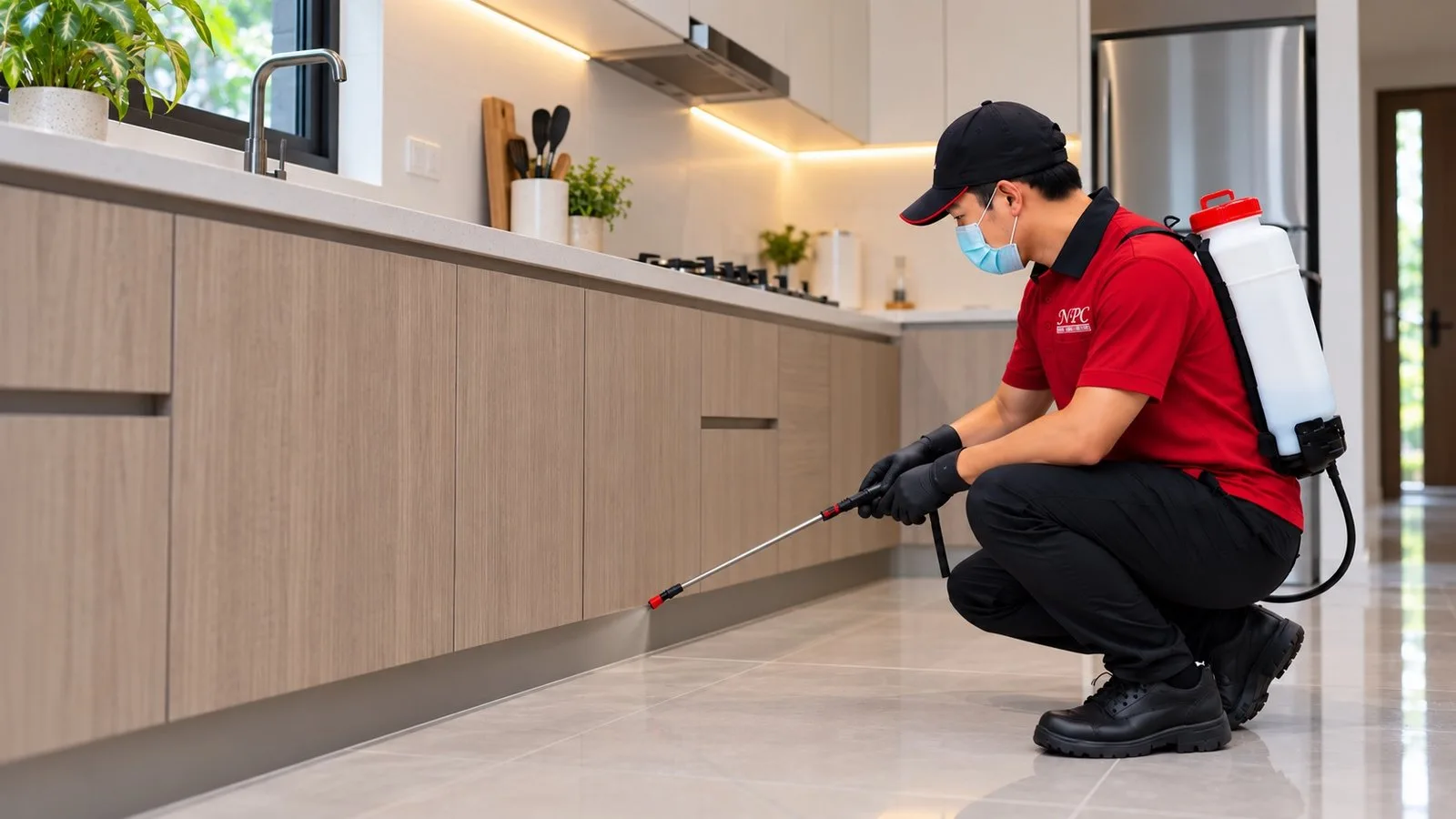
Here is a short look at NPC’s licensed team at work.

2How Does Anti-Termite Soil Treatment Work?
Quick Answer: Anti-termite soil treatment in Malaysia works by soaking a band of soil with liquid termiticide wherever termites could enter. Termites that tunnel into the band either die or turn back. The product type decides which. Repellent products make termites avoid the soil. Non-repellent products cannot be sensed, so termites crawl through, pick up a dose and die.
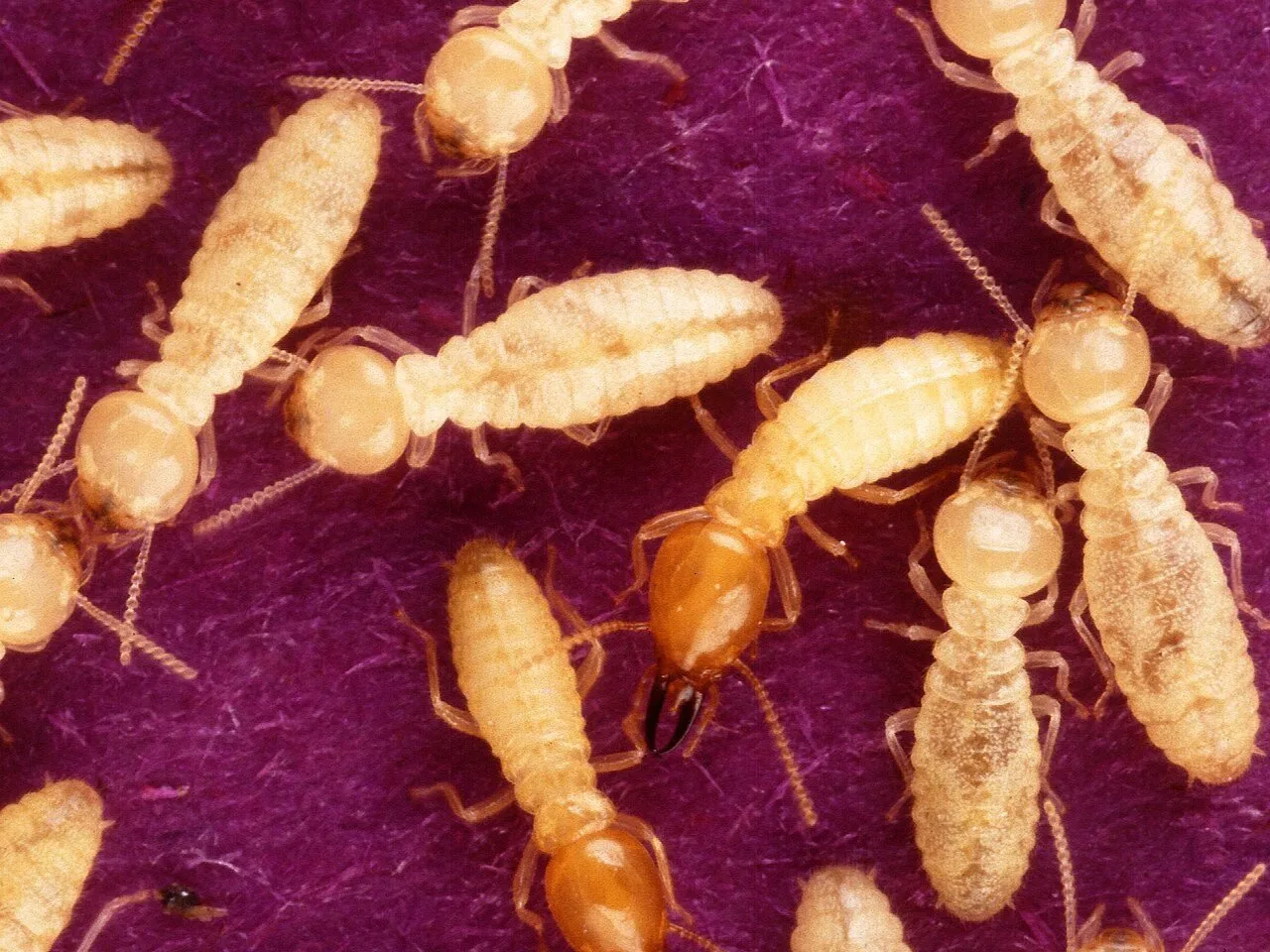
Most house-damaging termites in the Klang Valley are subterranean. A study in Tropical Life Sciences Research (2013) found Coptotermes gestroi in all nine infested buildings it examined in Pulau Pinang. These termites cannot survive long in open air. They travel through soil, cracks and mud tubes, so they must cross the ground next to the building to reach its timber.
That habit is what a soil barrier exploits. The weak points are the places where soil meets the structure:
- The wall line. The strip of soil under the floor slab along every external wall.
- Pipe and cable entries. Gaps around plumbing, drains and wiring that pass through the slab.
- Expansion joints and cracks. Hairline gaps in the slab are wide enough for a termite to pass.
- Porches, steps and planter boxes. Soil built up against the house, often with timber nearby.
A barrier is only as good as its weakest metre. One skipped hole or an untreated pipe gap leaves a doorway. That is why a careful technician drills at even spacing and treats every service entry, not just the walls you can see.
3Repellent or Non-Repellent Termiticide: Which Is Better?
Quick Answer: For anti-termite soil treatment in Malaysia, non-repellent termiticides are now the usual choice for finished homes, because termites cannot detect them and small gaps matter less. Repellent products, mostly pyrethroids, cost less and turn termites away, but termites simply search along the barrier for an untreated gap. The table compares the two.
| Feature | Non-repellent termiticide | Repellent termiticide |
|---|---|---|
| How termites react | Cannot sense it, so they tunnel straight in | Sense it and turn away |
| What happens to termites | Pick up a dose and die, often a short distance away | Mostly avoid it; few are killed |
| Effect of a small gap | Less critical, because termites do not search for gaps | Termites search along the barrier and use any gap |
| Common active ingredients | Fipronil, imidacloprid, chlorantraniliprole | Bifenthrin and other pyrethroids |
| Relative product cost | Higher | Lower |
| Best use | Drill-and-inject barrier in a finished home | Continuous spray on open soil before the slab is cast |
Source: NPC Pest Control field practice, Klang Valley, 2026; product behaviour as described in the Journal of Economic Entomology studies cited in Sections 5 and 6.
Neither type wins every time. A repellent product works when the barrier is continuous, such as a spray on open soil before a slab is cast. For anti-termite soil treatment in Malaysia’s older homes, where the soil under the floor cannot be seen, a non-repellent product is more forgiving.
Whichever product is used, it must be registered and applied by a licensed operator under the Pesticides Act 1974 (Act 149). Ask your provider to name the active ingredient on the quotation. Our guide to what to expect from termite control services lists the other questions worth asking.
4What Happens During a Drill-and-Inject Soil Treatment?
Quick Answer: A post-construction anti-termite soil treatment in Malaysia follows a set routine. The technician inspects and marks the wall line, drills small holes through the floor at regular spacing, injects diluted termiticide into the soil below, treats pipe entries and joints, then seals each hole with cement or filler. A terrace house usually takes a day.
| Treatment point | Intermediate terrace | Corner lot or semi-D | Bungalow | Shop lot or factory |
|---|---|---|---|---|
| External wall line | High priority | High priority | High priority | High priority |
| Pipe, drain and cable entries | High priority | High priority | High priority | High priority |
| Expansion joints and slab cracks | Medium | Medium | Medium | High priority |
| Kitchen and bathroom walls | High priority | High priority | High priority | Medium |
| Porch, steps and car porch slab | Medium | High priority | High priority | Medium |
| Planter boxes and garden beds | Low | Medium | High priority | Low |
Source: illustrative guide from NPC Pest Control site surveys, Klang Valley, 2026.
A corner lot or bungalow has more exposed wall and soil against the house, so it needs more holes and more termiticide than an intermediate terrace.
How to prepare your home for anti-termite soil treatment
These steps keep the job quick and your family safe.
- Clear the wall edges. Move furniture, boxes and rugs about half a metre away from external walls and the kitchen and bathroom walls.
- Empty low built-in cabinets. Cabinets along treated walls may need their base panel lifted so the floor beneath can be drilled.
- Point out every pipe and drain. Show the technician where water pipes, floor traps and aircon drains enter the slab.
- Keep children and pets away. Keep them in another room or out of the house during drilling and injection, and until the treated floor is dry.
- Cover food and utensils. Put away open food, dishes and pet bowls in the kitchen before work starts.
- Check the sealed holes. Before the team leaves, walk the wall line and confirm every hole is filled neatly.
Treating a finished home differs from a new build, and our post-construction anti-termite treatment guide walks through that job in more detail.
5Does Soil Treatment Kill the Termite Colony?
Quick Answer: Usually not. Anti-termite soil treatment in Malaysia protects the building, but a 2024 study on the local termite Coptotermes gestroi found fipronil-treated soil killed only a small share of the colony. Termites near the barrier died fast, the bodies built up, and the rest of the colony learned to avoid the area.
| Colony share (lowest-impact colonies) | Share of colony | % |
|---|---|---|
| Surviving, treated 7.5 or 12.5 m from nest | 98.5 | |
| Surviving, treated 1.5 m from nest | 76.5 | |
| Killed, treated 1.5 m from nest | 23.5 | |
| Killed, treated 7.5 or 12.5 m from nest | 1.5 |
Source: compiled by NPC Pest Control from the Coptotermes gestroi death-zone study, Journal of Economic Entomology (2024). Figures are the lowest mortality reported, 200 days after treatment; survival = 100 minus mortality.
Many providers sell anti-termite soil treatment in Malaysia as a colony killer, on the idea that termites carry the chemical home. Lab work on whole colonies of Coptotermes gestroi, published in the Journal of Economic Entomology (2024), tells a different story. When fipronil was applied 7.5 or 12.5 metres from the nest, some colonies lost as little as 1.5% of their members after 200 days. Even at 1.5 metres from the nest, mortality in some colonies was as low as 23.5%.
The reason is what the researchers called a “death zone”. Termites that touched the treated soil died quickly, their bodies piled up, and the rest of the colony stopped foraging within about 1 to 2.6 metres of the treatment. The authors concluded that a well-applied treatment can protect a structure, while the colonies around it are only lightly affected.
What this means for your home. The barrier keeps a colony out, but that colony stays alive in the garden or under the neighbour’s floor. If termites are already feeding on your timber, first remove the colony with a termite baiting system that kills the whole colony, then lay the barrier to keep the next one out.
Termites back after a soil treatment?
We will inspect for free, find where they are getting in and plan the fix. Book a free termite inspection →
6How Long Does Anti-Termite Soil Treatment Last in Malaysia?
Quick Answer: A well-applied anti-termite soil treatment in Malaysia typically protects for several years, but the chemical slowly breaks down in hot, wet soil, and the barrier is only as good as its coverage. Renovation, new cracks, flooding and heavy watering can open gaps sooner. Yearly inspections tell you whether it is still working.
| Scenario | Year 0 | Year 1 | Year 2 | Year 3 | Year 4 | Year 5 |
|---|---|---|---|---|---|---|
| Undisturbed, full coverage | 100 | 95 | 88 | 78 | 66 | 55 |
| Kitchen renovated in year 2 | 100 | 95 | 50 | 44 | 38 | 32 |
| Gaps left at pipe entries | 100 | 70 | 62 | 55 | 48 | 42 |
Source: illustrative model by NPC Pest Control, 2026 (100 = complete fresh barrier). Not a laboratory measurement.
This illustrative model shows why two homes treated with anti-termite soil treatment in Malaysia on the same day can end up with very different protection.
- Renovation breaks the barrier. Hacking floors, extending the kitchen or laying new tiles over drilled holes cuts through the treated soil. Retreat the disturbed areas after the work is done.
- Floods can weaken some products. A lab study in the Journal of Economic Entomology (2020) found a week of flooding reduced termite mortality on imidacloprid-treated sand at every tested strength, while bifenthrin and fipronil held up except at the lowest strength. After a flood, have the barrier checked.
- Constant moisture helps termites. Leaking pipes, blocked drains and planter boxes against walls keep soil damp and give termites easy food nearby.
Regular checks catch problems early. Our guide to termite inspection services in Malaysia explains what a yearly check covers.
7When Is Soil Treatment the Right Choice for Your Home?
Quick Answer: Anti-termite soil treatment in Malaysia is the right choice when a building has no active colony inside, or has just had one eliminated, and needs long-term protection. It suits new builds, freshly cleared homes and houses with a history of attack. It is the wrong first step when termites are actively feeding indoors.
| Your situation | Best first step |
|---|---|
| Building a new house or extension | Soil treatment before the slab is cast |
| Live termites in door frames or cabinets | Baiting until the colony is dead, then a barrier |
| Colony eliminated, termites common on your street | Drill-and-inject soil barrier |
| Just bought an older landed home | Inspection first, then decide |
| Condo unit above ground level | Usually spot or bait treatment, not soil |
Condo units do not touch the ground, so anti-termite soil treatment in Malaysia is mainly a landed-property job. If you are still unsure whether your house needs any treatment, our guide on whether your home needs anti-termite treatment gives a simple risk check. Shop lots, factories and warehouses have longer perimeters and more service entries, which our commercial pest control team plans for separately.
8How Much Does Anti-Termite Soil Treatment Cost?
Quick Answer: For an intermediate terrace house in the Klang Valley, drill-and-inject anti-termite soil treatment in Malaysia usually costs RM2,500 to RM4,500 as an indicative market range. Corner lots, semi-Ds and bungalows cost more because they have longer wall lines and more soil against the house. Pre-construction treatment is quoted by floor area instead.
The price of anti-termite soil treatment in Malaysia follows the wall length, the floor finish to be drilled and the product used. Marble takes more care than plain concrete, and non-repellent products cost more. These figures are a guide; a real quote comes after an inspection.
Before you sign, check that the quotation names the active ingredient, the treated areas, the warranty period and what voids the warranty. Our anti-termite treatment cost guide compares soil treatment with baiting and monitoring prices side by side.
9Conclusion: Build the Fence After the Fire Is Out
Quick Answer: Anti-termite soil treatment in Malaysia lays a termiticide barrier in the soil along a building’s walls and entry points, keeping subterranean termites out for years if the barrier stays intact. It rarely kills the colony, so treat an active attack with bait first, then use soil treatment to protect the home long term.
If you have seen mud tubes, wings or hollow timber, start with an inspection. It shows whether termites are active and whether your home needs bait, a soil barrier or both. For a wider view of home pest care, read what a pest control service includes, visit the NPC Pest Control homepage, or see our termite treatment service.
10Frequently Asked Questions
1. How long does anti-termite soil treatment last in Malaysia?
A well-applied barrier usually protects for several years, but hot, wet soil slowly breaks the chemical down, and renovation or flooding can open gaps sooner. Check the warranty period and book a yearly inspection.
2. Is anti-termite soil treatment safe for children and pets?
The termiticide goes into the soil under the floor, and the drill holes are sealed afterwards, so contact after treatment is limited. Keep children and pets out of the treated rooms during drilling and injection and until the floor is dry. Always use a licensed operator.
3. Will soil treatment get rid of termites already in my house?
Usually not on its own. Research on Coptotermes gestroi shows treated soil kills termites near the barrier but leaves most of the colony alive. If termites are feeding indoors, eliminate the colony with baiting first, then add the soil barrier.
4. Do I need to redo soil treatment after renovation?
Yes, wherever the floor was hacked, the slab extended or the soil dug up, because that cuts through the treated soil. Ask for those areas to be retreated once the building work is finished.
5. Does NPC Pest Control do soil treatment in Kuala Lumpur and Selangor?
Yes. NPC Pest Control provides anti-termite soil treatment in Malaysia across Kuala Lumpur and Selangor, after a free inspection that decides between a soil barrier, baiting or both. Call 03-8061 1875, Monday to Saturday from 9am to 6pm, or request an inspection through our contact page.
Want termites kept out for good?
NPC Pest Control inspects for free, checks whether a colony is still active and lays a complete soil barrier along every wall and pipe entry.
Book my free termite inspection →