Last updated: 22 September 2026
1Who Should Read This Before Paying for Anti-Termite Treatment?
Quick Answer: Anti termite treatment in Malaysia is often sold as something every house must have, every year. The honest answer is more useful: some homes need treatment now, some need a preventive barrier, and some only need a check. This guide helps you work out which group your home is in before you spend money.
It is for homeowners, landlords and buyers in Kuala Lumpur and Selangor. NPC Pest Control is a licensed operator in Puchong with over 15 years of termite work across the Klang Valley. We see homes where anti-termite treatment in Malaysia was urgent, and many where it was not needed yet. For the service itself, see our termite control services page.
Not sure whether your home is at risk?
A free inspection tells you whether termites are already there and which areas need protecting first. See how our termite inspection and treatment work →
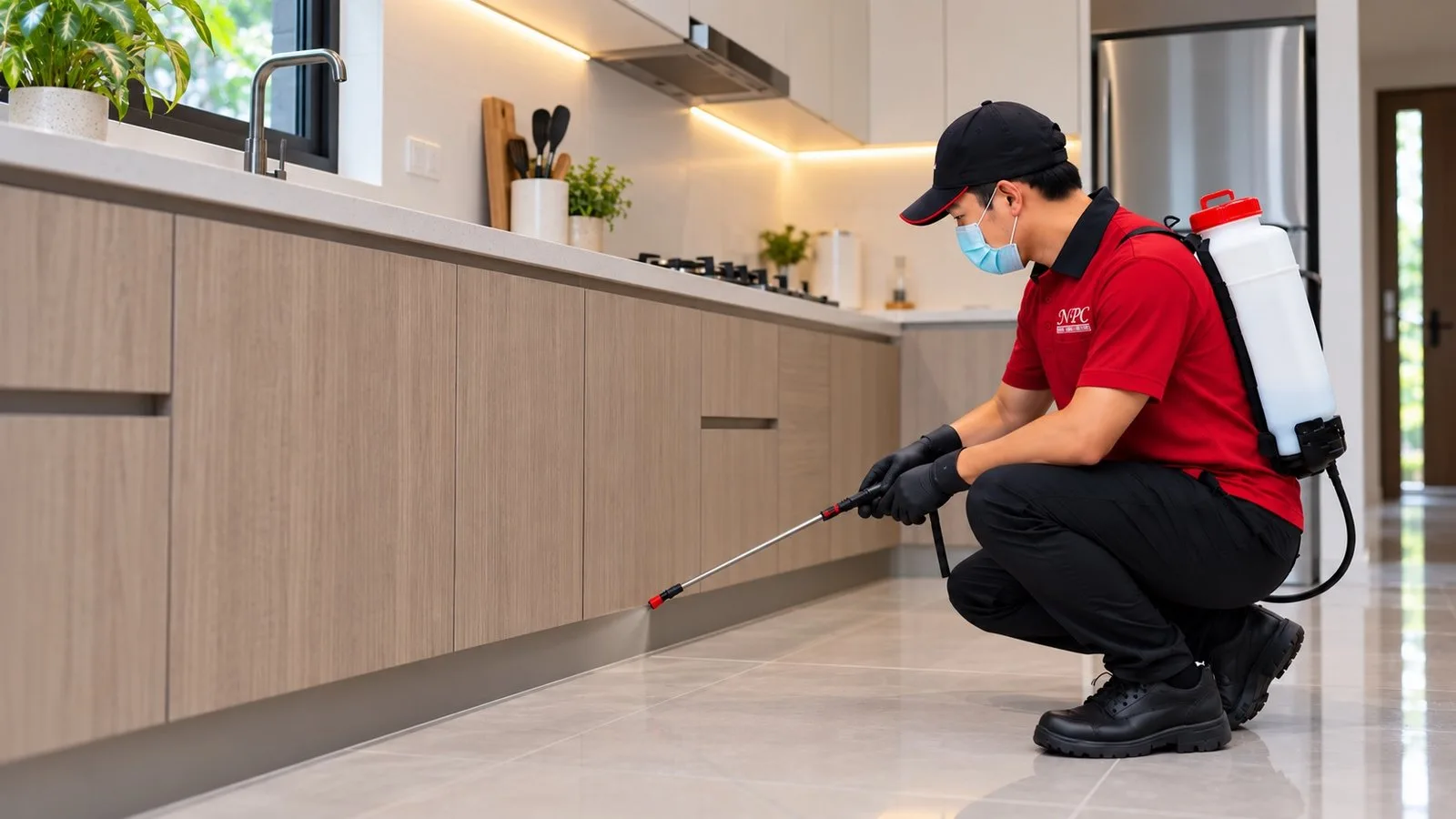
First, a short look at NPC’s licensed team at work.

2What Is Anti-Termite Treatment, and What Does It Protect?
Quick Answer: Anti termite treatment in Malaysia means any professional treatment that kills termites or stops them entering a building. It comes in two kinds. Curative treatment removes an active colony, usually with baiting. Preventive treatment builds a chemical barrier in the soil or places monitoring stations so termites are stopped or found early.
- Curative (active termites). Bait stations near the feeding points so workers carry slow-acting bait back to the colony. See how a termite baiting system kills the colony.
- Preventive barrier. Termiticide injected into the soil around and under the building. Our guide to anti-termite soil treatment explains the drill-and-inject method.
- Preventive monitoring. In-ground stations checked on a schedule, so termites are caught before they reach the timber.
- New builds. A barrier applied before the slab is poured, covered in our pre-construction anti-termite guide.
Anti termite treatment in Malaysia protects structural and fitted timber: door frames, parquet, skirting, kitchen cabinets, built-in wardrobes and roof trusses. It does not repair damage already done, and it does not cover other pests. General pest control is a separate service, as our overview of what a pest control service includes explains.
3Does Your Home Need Anti-Termite Treatment? A Quick Decision Table
Quick Answer: Your home needs treatment now if you see live termites, mud tubes, hollow timber or discarded wings. It likely needs preventive work if it is a landed home with several risk factors. It may only need an inspection if it is a high-floor unit with no signs. The table matches common situations to the right next step.
| Your situation | Next step | Why or what it involves |
|---|---|---|
| Live termites, mud tubes or hollow timber | Treat now | Curative baiting or spot treatment after inspection |
| Discarded wings near lights after rain | Inspect this week | Confirm species and whether a colony is inside |
| Neighbour treated for termites recently | Inspect, then consider prevention | Shared walls and soil let colonies spread |
| Landed home, ground-floor timber, damp areas | Preventive treatment | Soil barrier or monitoring stations |
| Buying an older landed house | Inspect before completion | Check for past treatment and hidden damage |
| Renovating with new built-in carpentry | Treat before carpentry goes in | Protects the new timber you are paying for |
| Low-floor condo with built-ins, no signs | Inspect every 1–2 years | Targeted treatment only if signs appear |
| High-floor condo, no signs, little timber | Self-check only | Inspect if signs appear or before renovation |
Source: NPC Pest Control home inspection guidance, Klang Valley, 2026.
“Inspect first” is the most common right answer. Many owners who call about anti termite treatment in Malaysia have seen something they are not sure about, such as flying insects near a light or a crack in the plaster. An inspection confirms whether it is termites, which species, and whether a colony is active before any money goes into treatment.
If you already know termites are active, skip ahead and read what to expect from termite control services, which walks through the full treatment programme step by step.
4Which Risk Factors Raise Your Home’s Termite Risk the Most?
Quick Answer: Soil contact and moisture raise termite risk more than anything else. A ground-floor home with timber floors, a leaking pipe near a wall and a past infestation next door is far more exposed than a new high-floor unit. Score your home against the factors below; the more that apply, the stronger the case for preventive treatment.
| Risk factor | Weight | Points | Why it matters |
|---|---|---|---|
| Past termites in this home | 20 | Colonies often return to the same area | |
| Termites next door or in the row | 15 | Shared soil and party walls | |
| Ground-floor timber floors or frames | 15 | Direct food source near soil | |
| Leaks or damp walls | 12 | Moisture draws termites in | |
| Home over 15 years old | 10 | More cracks, older timber | |
| Garden, planter boxes or timber decking | 8 | Soil and wood against the wall | |
| New built-in carpentry | 6 | Fresh timber fixed to walls | |
| Wall cracks or open service ducts | 4 | Hidden routes from soil or other units |
Source: illustrative scoring guide, NPC Pest Control, Klang Valley, 2026.
Most damage to buildings in Peninsular Malaysia comes from subterranean termites that nest in soil. A study in Tropical Life Sciences Research (2013) found the subterranean species Coptotermes gestroi in all nine infested buildings it examined in Pulau Pinang. Each one stood on sandy loam or loamy sand. That is why the scores above weight ground contact so heavily.
Add up your points honestly. Under 20 points usually means monitoring and a periodic inspection. Between 20 and 40 points makes preventive anti termite treatment in Malaysia worth pricing. Over 40 points, or any sign of live termites, means book an inspection this month.
5How Can You Check Your Home for Termites Before Deciding?
Quick Answer: You can do a useful first check yourself in about 30 minutes with a torch and a screwdriver handle. Look for mud tubes, tap timber for a hollow sound, check for wings near lights and windows, and inspect damp areas. Anything suspicious should be left untouched for a professional inspection.
How to check your home for termite signs
Work through these six steps once every few months, and after heavy rain.
- Walk the outside wall line. Look for pencil-thin mud tubes running up the wall, pillars or drainpipes from the soil.
- Tap the door frames and skirting. Use the handle of a screwdriver. Healthy timber sounds solid; eaten timber sounds hollow or papery.
- Open the lower kitchen cabinets. Check the back panels and base, where sink leaks keep timber damp.
- Check window sills and lights for wings. Piles of small, equal-sized wings after rain point to a swarm nearby.
- Look inside built-in wardrobes and store rooms. These are dark, rarely moved and often fixed to walls.
- Photograph anything suspicious and leave it. Do not break mud tubes or spray. Disturbed termites move and are harder to trace.
A home check misses hidden termites inside roof trusses or behind wall panels, which is why a professional inspection comes before any anti termite treatment in Malaysia. Our termite inspection checklist shows what a technician checks room by room. If you are not sure whether you saw termites or ants, the white ant early warning signs guide shows the difference.
Found mud tubes or hollow-sounding timber?
NPC inspects homes across KL and Selangor for free and gives written findings before recommending any treatment. Book a free termite inspection →
6Where Do Termites Usually Strike in Each Type of Home?
Quick Answer: In landed homes, termites usually enter from the soil into ground-floor door frames, parquet and kitchen cabinets, then move up to the roof. In condos and apartments, they mostly arrive through wall cracks, service ducts and built-in carpentry. The heat map shows the typical risk areas for six common home types.
| Home type | Ground-floor frames | Kitchen cabinets | Built-in wardrobes | Roof trusses | Wall cracks and ducts |
|---|---|---|---|---|---|
| Terrace house | High | High | Medium | Medium | Medium |
| Semi-D or bungalow | High | High | Medium | High | Medium |
| Older shophouse | High | Medium | Medium | High | High |
| Townhouse | High | High | Medium | Medium | Low |
| Low-floor condo unit | Medium | Medium | Medium | Low | High |
| High-floor condo unit | Low | Medium | Medium | Low | Medium |
Source: illustrative guide from NPC Pest Control home inspections, Klang Valley, 2026.
Your home type tells you where to look first. A terrace house shares walls and soil with neighbours, so a colony next door can cross the party wall. A semi-D or bungalow has a longer soil perimeter and more timber, so owners often choose a full soil barrier. Older shophouses carry high risk almost everywhere, while high-floor condo units mainly face risk from infested furniture and new carpentry. The right anti termite treatment in Malaysia depends on which of these rows your home sits in.
7Is Preventive Anti-Termite Treatment Worth It, or Should You Wait?
Quick Answer: Preventive treatment is worth it when your home scores high on risk, because termite damage is usually found late and repairs cost far more than prevention. For low-risk homes, waiting is reasonable if you pair it with regular inspections. The chart compares how total cost typically builds over five years under four approaches.
| Approach | Year 1 | Year 2 | Year 3 | Year 5 |
|---|---|---|---|---|
| Wait and see (high-risk home) | 0 | 20 | 100 | 140 |
| Inspection every year | 8 | 16 | 24 | 40 |
| Preventive barrier + checks | 45 | 50 | 55 | 70 |
| Monitoring stations + checks | 35 | 45 | 55 | 75 |
Source: illustrative model, high-risk terrace house in the Klang Valley, treatment plus repair costs, NPC Pest Control, 2026.
The expensive path is “wait and see” in a high-risk home. Termites can feed inside timber for months before the damage shows. By then the bill includes colony treatment and carpentry repairs, and sometimes replacing whole door frames or cabinets.
Preventive anti-termite treatment in Malaysia has its own cost, and it is not a one-off. Soil barriers weaken over time, and monitoring stations need checks. For price ranges by method and home size, see our anti-termite treatment cost guide. Whatever you choose, use a licensed operator: termiticides are controlled under the Pesticides Act 1974 (Act 149), which governs which products may be used.
8Do Condo and Apartment Owners Need Anti-Termite Treatment?
Quick Answer: For anti termite treatment in Malaysia, most high-floor condo units do not need a preventive soil barrier, because they have no direct soil contact and the building’s structure is concrete. They can still get termites through ducts, cracks and infested furniture. Low-floor units, ground-floor units with gardens and units with heavy built-in carpentry carry more risk and deserve a closer look.
Condo owners who call us for anti termite treatment in Malaysia usually fall into one of these groups:
- Termites found in built-ins. Wardrobes or kitchen cabinets eaten from the back. This needs a curative treatment inside the unit, not a barrier.
- Neighbour reported termites. Ask the management office whether the building has a termite programme, then inspect your unit.
- Before a renovation. A good time to inspect walls and floors while they are open, and to treat before new carpentry goes in.
- Ground or garden units. These behave more like landed homes and may need perimeter protection.
If several units are affected, treating one unit may only push termites next door. Management bodies can ask about a commercial pest control programme for common areas and shared ducts.
9Should You Treat a Home Before You Move In or Renovate?
Quick Answer: Yes, if the home is landed, older, or about to have new timber fitted, anti termite treatment in Malaysia is best done before move-in. Before moving in, the house is empty and every wall, cabinet and floor is easy to inspect and treat. Before a renovation, treatment protects the new carpentry you are paying for. Treating after furniture and cabinets go in is harder and more disruptive.
Subsale buyers should add a termite inspection before completion and look at three things:
- Signs of past treatment. Drill holes in the floor or bait stations in the garden mean the house had termites before. Ask the seller for the records.
- Freshly painted or replaced timber. New paint on old door frames can hide damage. Tap them.
- Renovation plans. New built-ins, parquet or timber decking should go in after treatment, not before.
For a finished house, the usual preventive option is a drill-and-inject barrier, explained in our post-construction anti-termite treatment guide.
Collecting keys soon, or planning a renovation?
We can inspect the empty house and treat before your new carpentry goes in. Plan termite protection for your new home →
10Conclusion: Know Your Risk, Then Decide
Quick Answer: Anti termite treatment in Malaysia is not a yes-for-everyone purchase. Treat now if termites are active, choose prevention if your home scores high on risk, and rely on regular inspection if it does not. The decision gets easy once you know what is under your floor and behind your cabinets.
Start with a self-check, score your home against the risk factors, and book an inspection whenever you find something you cannot explain. For more on keeping your home and family safe from every kind of pest, visit the NPC Pest Control homepage, or see how our termite treatment service works.
11Frequently Asked Questions
1. Is anti-termite treatment necessary for every house in Malaysia?
No. Anti termite treatment in Malaysia is necessary when termites are active. It is worth considering when a landed home has several risk factors, such as ground-floor timber, damp walls or termites nearby. Low-risk high-floor units usually only need a self-check and an inspection before renovation.
2. How do I know if my house has termites?
Look for pencil-thin mud tubes on walls and pillars, timber that sounds hollow when tapped, small equal-sized wings near lights after rain, and sagging or blistered parquet. Photograph what you find and leave it undisturbed, then book an inspection so the technician can trace the colony.
3. How long does preventive anti-termite treatment last?
It depends on the method, the soil and how much the ground is disturbed. Soil barriers weaken over the years, especially after renovation or landscaping, and monitoring stations only protect while they are checked. Ask your provider how long their method is expected to last and what the warranty covers.
4. Do condos need anti-termite treatment?
Most high-floor condo units do not need a preventive soil barrier. They can still get termites through ducts, wall cracks and infested furniture. If you find signs in built-in carpentry, you need a curative treatment inside the unit, and you should tell the management office in case neighbouring units are affected.
5. Does NPC Pest Control offer free termite inspections?
Yes. NPC Pest Control inspects homes and businesses across Kuala Lumpur and Selangor for free and gives written findings before recommending any treatment. Call 03-8061 1875, Monday to Saturday from 9am to 6pm, or request an inspection through our contact page.
Want to know whether your home really needs anti-termite treatment?
Talk to NPC Pest Control. We inspect for free, show you exactly what we find, and only recommend treatment when your home needs it.
Book my free termite inspection →