
Last updated: 9 October 2026
Most people only think about a pest control license when a council officer, food auditor or building consultant asks to see it. That is a bad moment to find out your contractor was never licensed. This guide covers:
- The three licences and what each allows.
- The register and how to search it.
- The paperwork: time limits, renewals and Form H.
- The red flags that can cost an operator its licence.
Malaysian law spells it “licence”; most searches use “license”. Same document.
Need licence proof for an inspection or audit?
Ask us for our licence number on the first call, and see which jobs our team covers. See the pest control services we offer →
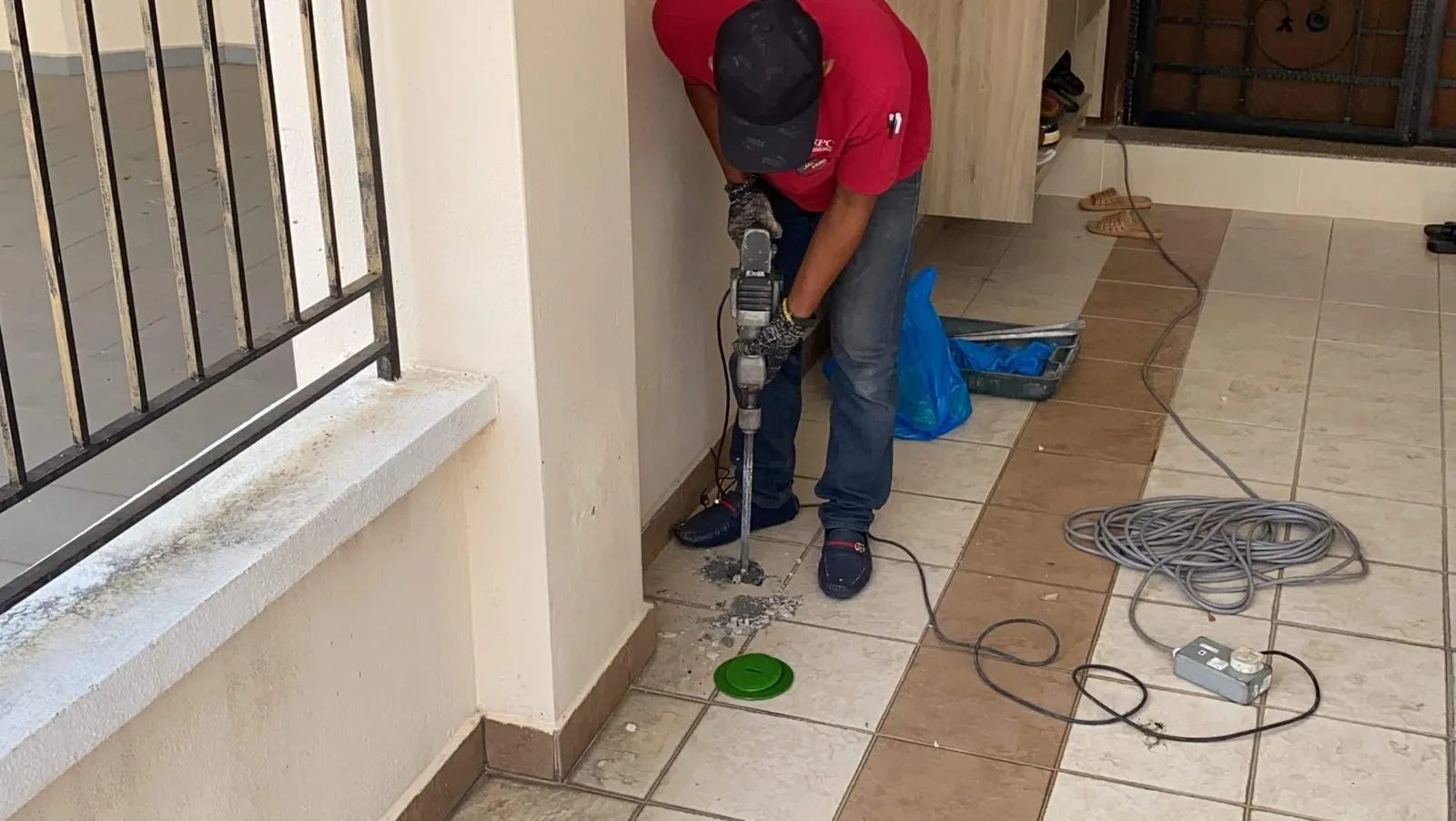
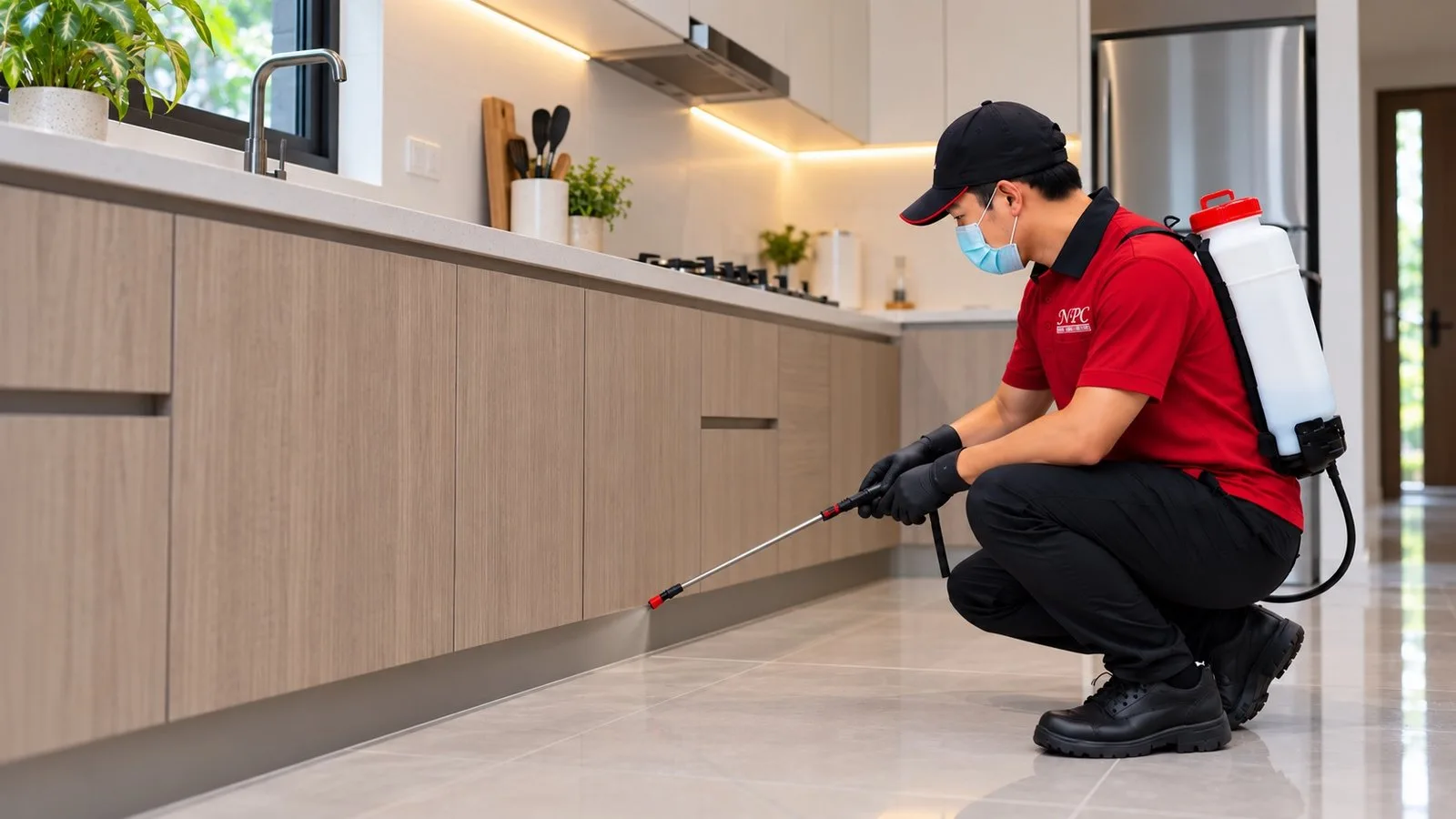
Here is a short look at NPC’s team at work.

1What Is a Pest Control License in Malaysia?
Quick Answer: A pest control license is a permit from the Pesticides Board, under the Department of Agriculture, that lets a company or person treat someone else’s property for a fee. It comes from the Pesticides Act 1974 and the Pesticides (Pest Control Operator) Rules 2004, and every licence must be renewed every two years.
The legal base is the Pesticides Act 1974 (Act 149), which controls how pesticides are registered, sold and used. The detail for pest control firms sits in the Pesticides (Pest Control Operator) Rules 2004. Under rule 3, anyone paid to do these jobs on another person’s property needs a licence:
- General house pest control. Rats, cockroaches, ants and similar pests in any building.
- Termite control. Every anti-termite job, from baiting to soil treatment.
- Public health and weed control. Work such as mosquito control or weed spraying in public places.
Rule 3 also says only Board-registered pesticides may be used. The World Health Organization publishes guidelines on licensing public health pest control operators. Comparing firms more broadly? Our checklist for choosing the best pest control company covers price, method and follow-up.
2What Are the Three Types of Pest Control Licence?
Quick Answer: The Pesticides Board issues three licences. The pest control operator licence covers the business. The pesticide applicator licence covers the technician who treats and supervises. The assistant pesticide applicator licence covers technicians who may only work under supervision. A real pest control license setup needs all three working together.
| Licence | Who holds it | Entry requirement | What it allows | Where to check |
|---|---|---|---|---|
| Pest control operator licence (Form C) | The business doing pest control for hire | A licensed applicator must work for it | Trade from one named premises, licence on display | PCO licence list |
| Pesticide applicator licence (Form E) | Lead technician | Board exam; Form Five or 3 years as an assistant | Treat any job and supervise assistants | PA & APA list, category PA |
| Assistant pesticide applicator licence (Form G) | Supporting technician | Board exam; Standard Six or 2 years’ experience | Minor jobs supervised; major jobs with an applicator on site | PA & APA list, category APA |
Source: Pesticides (Pest Control Operator) Rules 2004, rules 4 to 8 and Forms C, E and G; Department of Agriculture e-Lesen LRMP public registers. Compiled by NPC Pest Control, 2026.
Why this matters to a customer:
- Applicators sit an exam. Under rule 5, both applicators and assistants must pass a Board exam before they can apply.
- The company needs an applicator first. The Board issues the operator licence only once a licensed applicator runs or works for the business.
- One licence, one address. The company licence names a single premises and must be displayed there at all times.
- Cards are worn. Applicator and assistant licences must be worn on the job, so you can read the name and number.
Our pest control services page shows the jobs a licensed team handles.
3Which Jobs Need a Licensed Applicator on Site?
Quick Answer: The Rules split work into minor and major jobs. For minor jobs, an assistant may work under an applicator’s general supervision. For major jobs, which include termite control, house pests in commercial premises and public health work, a licensed applicator must be physically present. A pest control license alone does not settle who must attend.
The job class decides who must be at your premises during treatment:
| Job class | What it covers | If an assistant does the work |
|---|---|---|
| Minor job | House pests in private homes; public weed control | Works under an applicator’s supervision |
| Major job | Termites; house pests in commercial premises; public health pests | Applicator must be physically present |
The major row covers every restaurant, factory, hotel and building site, so an assistant alone at your kitchen or slab is outside the rule. Rule 9(2) also binds developers treating their own sites. Our guide to certificate pest control for anti-termite warranties at handover covers the handover paperwork, and our pre-construction anti-termite guide the site work.
4How Do You Check a Pest Control License Online?
Quick Answer: Open the Department of Agriculture’s e-Lesen LRMP portal and choose the PCO licence list. Search by company name, registration number or licence number, and filter by state. A valid pest control license shows the premises, licence number and validity dates. A second list checks applicators and assistants by name, MyKad or licence number.
The register is public and needs no login:
- The company. The PCO licence list takes a company name or registration number, a licence number and a state.
- The technician. The applicator and assistant licence list takes a name, MyKad or passport number, or licence number, and lets you pick PA (applicator) or APA (assistant).
- The employer link. The same portal also lists applicators and assistants with no employer on record. If your technician appears there, ask which company they work for.
- The products. The Board’s registered pesticide list lets you look up each product named on your report.
Match three details to your quotation: name, registration number and address. A licence covers one premises, so a different address can mean a different business.
5How Long Is a Pest Control License Valid?
Quick Answer: Operator, applicator and assistant licences each last two years from the date of issue. Renewal opens three months before expiry, and a late renewal costs the fee plus a 50% penalty. Because a pest control license runs out on a fixed date, a two-year service contract will often cross a renewal.
| Item | Time limit (bar: 5 years = full width) |
|---|---|
| Pesticide product registration | 5 years (Act s.9) |
| Staff medical records kept by the operator | 5 years (rule 14(2)) |
| Operator, applicator and assistant licences | 2 years each (Forms C, E, G) |
| Form H report copy kept by the operator | 2 years (rule 14(3)) |
| Renewal window before expiry | 3 months (rule 10) |
| Notice before moving premises | 10 days (Form C) |
| Pesticide accident reported to the Board | 7 days (rule 14(4)) |
Source: Pesticides Act 1974, section 9; Pesticides (Pest Control Operator) Rules 2004, rules 10 and 14 and Forms C, E and G.
Two limits matter most to customers:
- The two-year licence term. Note the expiry date when you sign.
- The two-year report record. The operator must keep a copy of each Form H report for two years, so a lost report can usually be reissued.
Food businesses feel this most, as council licences renew too. Our guide to the pest control certificate for food business licence renewal lines the two up.
6What Should a Form H Service Report Show?
Quick Answer: Form H is the written report a licensed applicator or assistant must hand you after each treatment, under rule 14(3). It records the site, the date, the active ingredient, trade name, concentration, method, area and quantity, plus the applicator’s licence number and signature. Only a holder of a pest control license can issue it.
On the operator’s letterhead, it covers:
- The site. Customer, address, premises type, purpose and date.
- The products. Active ingredient, trade name, dilution, method, area treated and total quantity.
- Termite detail. Hole spacing, the number of holes drilled and the quantity per hole.
- The people. Who applied it, the licensed applicator’s name, licence number and signature, and your signature on receipt.
Auditors check it line by line, as our guide to certification for pest control in HACCP and GMP audits explains. At home, it proves what was sprayed and by whom.
7Who Asks to See a Pest Control License?
Quick Answer: Councils, health officers, food auditors, building consultants and strata managers all ask for proof from a holder of a pest control license, because only a licensed operator can lawfully do the work and sign a Form H report. What they check, and how closely, depends on the type of premises.
| Buyer | Company licence on register | Applicator on register | Form H report | Registered product check |
|---|---|---|---|---|
| Homeowner | Important | Important | Essential | Useful |
| Condo or strata management | Essential | Important | Essential | Important |
| Restaurant or retail outlet | Essential | Important | Essential | Important |
| Food factory or exporter | Essential | Essential | Essential | Essential |
| Developer or contractor | Essential | Essential | Essential | Important |
Source: planning guide by NPC Pest Control, 2026, based on the job classes in the Pesticides (Pest Control Operator) Rules 2004. Not measured data.
Each buyer has its own reason:
- Restaurants and retail. Council renewals and health inspections. See our restaurant pest audit guide and the restaurant pest control page.
- Food factories. Auditors want the licence copy and trend reports. See our factory pest control page.
- Developers. Termite reports carry weight at handover. See our termite control services.
Facing an inspection, audit or handover soon?
Tell us what the inspector or auditor has asked for, and we will plan the visits and paperwork around it. Plan your commercial pest control →
8How to Verify a Pest Control Operator Before You Sign
Quick Answer: Ask for the licence number, search it on the public register, match the name and address to the quotation, check the applicator who will lead the job, and look up the products. Then get a Form H report promised in writing. A provider with a genuine pest control license will help with every step.
How to verify a pest control operator before you sign
Run these checks on every company on your shortlist.
- Ask for the licence number. Get it on the first call, with the company registration number.
- Search the register. Confirm the company appears on the PCO list and the licence is in date.
- Match the details. Name, registration number and address must match the quotation.
- Name the applicator. Look that person up on the applicator list.
- Check the products. Look each one up on the registered pesticide list.
- Confirm the report. Get a signed Form H promised for every visit.
- Diary the expiry date. Ask for the renewed licence when it falls due.
| Licence age at signing | Sign | Month 3 | Month 6 | Month 9 | Month 12 | Month 15 | Month 18 | Month 21 | Month 24 |
|---|---|---|---|---|---|---|---|---|---|
| Licence issued the month you sign | 24 | 21 | 18 | 15 | 12 | 9 | 6 | 3 | 0 |
| Licence issued 12 months earlier | 12 | 9 | 6 | 3 | 24 | 21 | 18 | 15 | 12 |
| Licence issued 21 months earlier | 3 | 24 | 21 | 18 | 15 | 12 | 9 | 6 | 3 |
Source: illustrative model by NPC Pest Control, 2026, based on the two-year licence term in the Pesticides (Pest Control Operator) Rules 2004. A jump back to 24 means the licence was renewed on time.
As the chart shows, a licence a year old at signing renews mid-contract. For pest-specific shortlists, see our eight checks for a termite control company or the questions to ask a rat control company.
9What Are the Red Flags of an Unlicensed Operator?
Quick Answer: Warning signs include no licence number on the quote, a name or address that does not match the register, technicians without licence cards, unnamed products, no written report and anyone claiming to be sent by the council. Rule 12 lists most of these as grounds to warn, suspend or cancel a pest control license.
Rule 12’s grounds read like a red-flag checklist:
- A borrowed licence. Letting another person use it.
- Wrong products. Unregistered pesticides, or use against the label.
- Unsupervised assistants. Working without the required applicator.
- Scare tactics. False or misleading claims about an infestation.
- Fake officials. Posing as a government or council officer to win the job.
- Missing paperwork. No records, no reports, or false ones.
Low prices often hide these shortcuts. See our Selangor pest control pricing guide and our commercial pest control contract guide.
10Conclusion: Check the Licence Before You Pay
Quick Answer: A pest control license means the company, the technician and the products all answer to the Pesticides Board. Check the company and applicator on the public register, match the details to your quotation, and insist on a signed Form H report after every visit.
For more, visit the NPC Pest Control homepage, or start with our guide to what pest control services in Malaysia include.
11Frequently Asked Questions
1. Is a pest control license required in Malaysia?
Yes. Anyone paid to do pest control on another person’s property needs a licence from the Pesticides Board under the Pesticides Act 1974 and the Pesticides (Pest Control Operator) Rules 2004. People treating their own non-commercial home are exempt, but developers treating their own building sites are not.
2. Does SSM registration or a council business licence replace a pest control license?
No. SSM registration only shows the business exists, and a council licence covers trading at an address. Neither allows pesticide work for hire. Only the Pesticides Board issues the pest control operator, applicator and assistant licences, and each one appears on the Department of Agriculture’s public register.
3. What happens if a pest control company renews its licence late?
Renewal is due within the three months before expiry. Under rule 10 of the 2004 Rules, a late application pays the renewal fee plus a penalty of 50% of that fee. Ask your contractor for the renewed copy once it is issued.
4. Is NPC Pest Control licensed?
Yes. NPC Pest Control is a licensed pest control operator based in Puchong, with over 15 years of work across Kuala Lumpur and Selangor. Ask us for our licence number and check it on the public register yourself. Call 03-8061 1875 or 016-335 9799, Monday to Saturday, 9am to 6pm.
Check our licence first, then book us
Book a free inspection. Ask for our licence number when you call and look it up on the public register before any work starts.
Book a free inspection →