
Know what you are dealing with before you treat it

Eight pests cause most of the callouts we attend across Kuala Lumpur and Selangor. Each one leaves a different first sign. Learn to read the sign, and you already know which treatment the problem actually needs.

8 Pests Identified
Licensed & Registered
Backed by Published Research
Klang Valley Coverage
Start here

The eight pests behind most Malaysian callouts

In short: termites, cockroaches, mosquitoes, rats, ants, flies, bed bugs and ticks cause most pest problems in Malaysian homes and businesses. Each leaves a different first sign — mud tubes, egg cases, larvae in standing water, gnaw marks, trails, maggots, blood spots or a tick on a pet. Read the sign and you know what to treat.

Malaysia has no cold season, and that changes everything here. Kuala Lumpur and Selangor sit at the same warmth and humidity in January as in July, so termite colonies keep foraging, cockroach eggs keep hatching and mosquito larvae keep maturing all year. A problem ignored in March is bigger in June.

Guessing is expensive. The same small insect on a kitchen floor might be an ant you can bait in a fortnight, or a termite worker feeding on structural timber — two very different treatments, and one has a deadline.

Last updated: 23 September 2026

Not sure what you are looking at?

Send a photo on WhatsApp and we will identify it.
Free inspection across Kuala Lumpur and Selangor.
Hotline open Monday to Saturday, 9am to 6pm.

Quick reference: what each pest looks like, and the sign it leaves

Size, colour and first visible sign for eight common Malaysian pests.
PestSizeColourFirst sign you notice
Subterranean termite4–10 mmCream workers, brown-headed soldiersMud tubes climbing a wall or pillar
Cockroach13–40 mmReddish-brown, or tan with two stripesPepper-like droppings in cupboard corners
Mosquito4–7 mmDark with white markingsLarvae wriggling in standing water
Rat16–40 cm with tailBrown, grey or near blackCapsule droppings and gnawed packaging
Ant1.5–5 mmYellow-brown to blackA single-file trail to food or bins
Fly6–9 mmDark grey, striped thoraxMaggots in a bin, dark specks on ceilings
Bed bug4–7 mmMahogany, red after feedingBlood spots and ink-dot marks on bedding
Tick3–11 mm engorgedUniform red-brownTicks behind a pet’s ears or between toes

Compiled by NPC Pest Control from field identification of the species commonly encountered on Klang Valley jobs.

Pest profiles

Identify it, then treat it properly

What each pest is, what it does inside a Malaysian property, and the evidence behind its treatment.

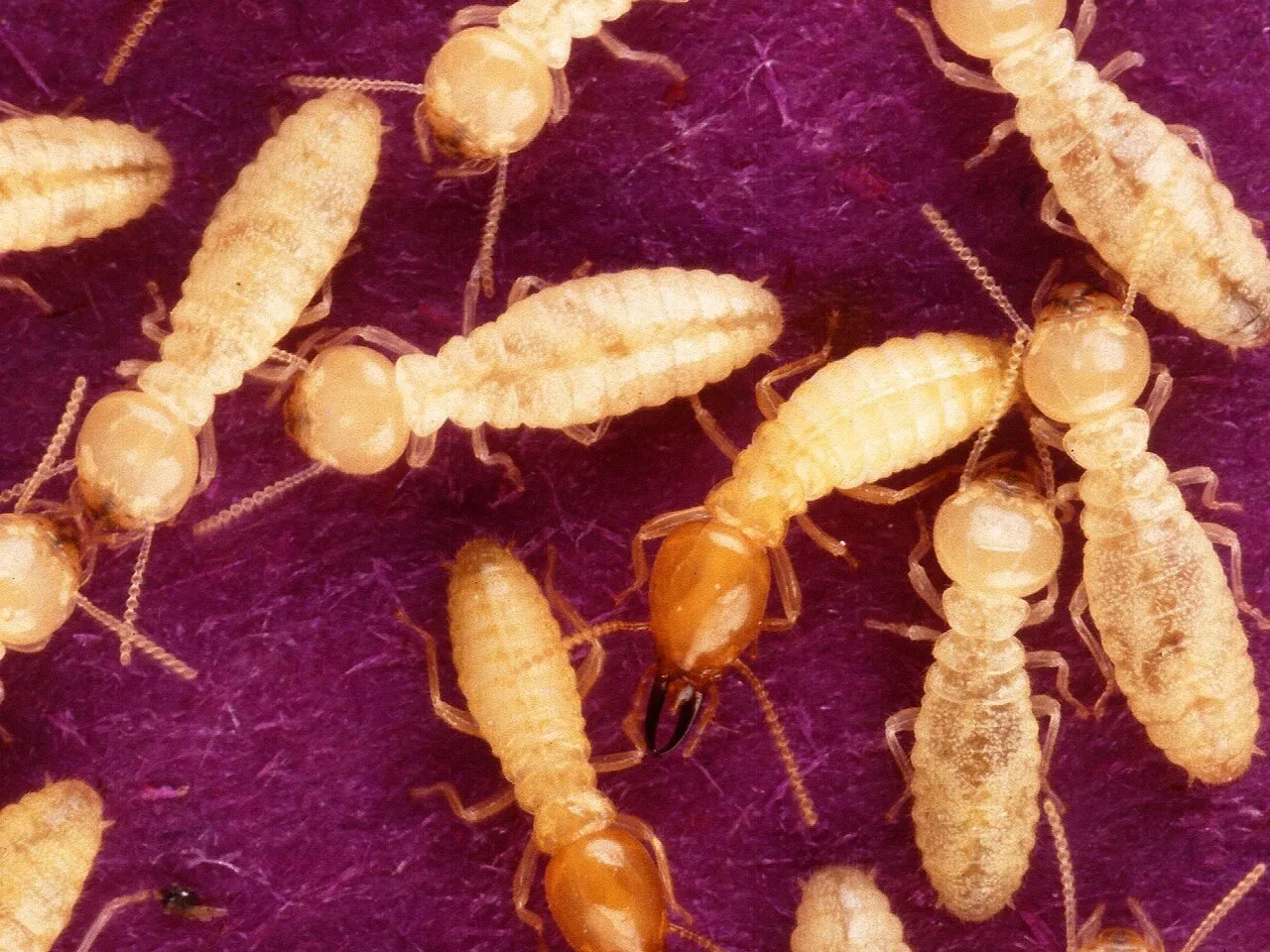
Subterranean termite workers on damaged timber.

Colour

Cream, brown heads

Legs

6

Size

4–10 mm

Active

All year

Subterranean termites

Coptotermes gestroi — the Asian subterranean termite

Quick answer: subterranean termites live in soil and build mud tubes to reach timber above ground. They are the most destructive pest in Malaysian buildings, eating structural wood from the inside out, and a colony can work for months before anything shows.

The colony stays underground and sends workers up through cracks in concrete, expansion joints and service penetrations. Because they avoid open air, they build the mud tubes you see on foundations and car porch pillars — the single most reliable sign, and the reason an inspection starts at ground level.

Pencil-width mud tubes on walls, pillars or beam undersides.
Skirting, door frames or parquet sounding hollow when tapped.
Discarded wings on window sills after an evening swarm.

Placement matters more than product volume. In a 2023 field study, above-ground baits placed on active workings eliminated C. gestroi colonies in an average of 6.4 weeks, while none of the 83 in-ground stations were ever intercepted. A ring of stations achieves nothing if the termites do not walk through it.
Key takeaway: mud tubes mean an active colony. Treat the colony, not the timber you can see.

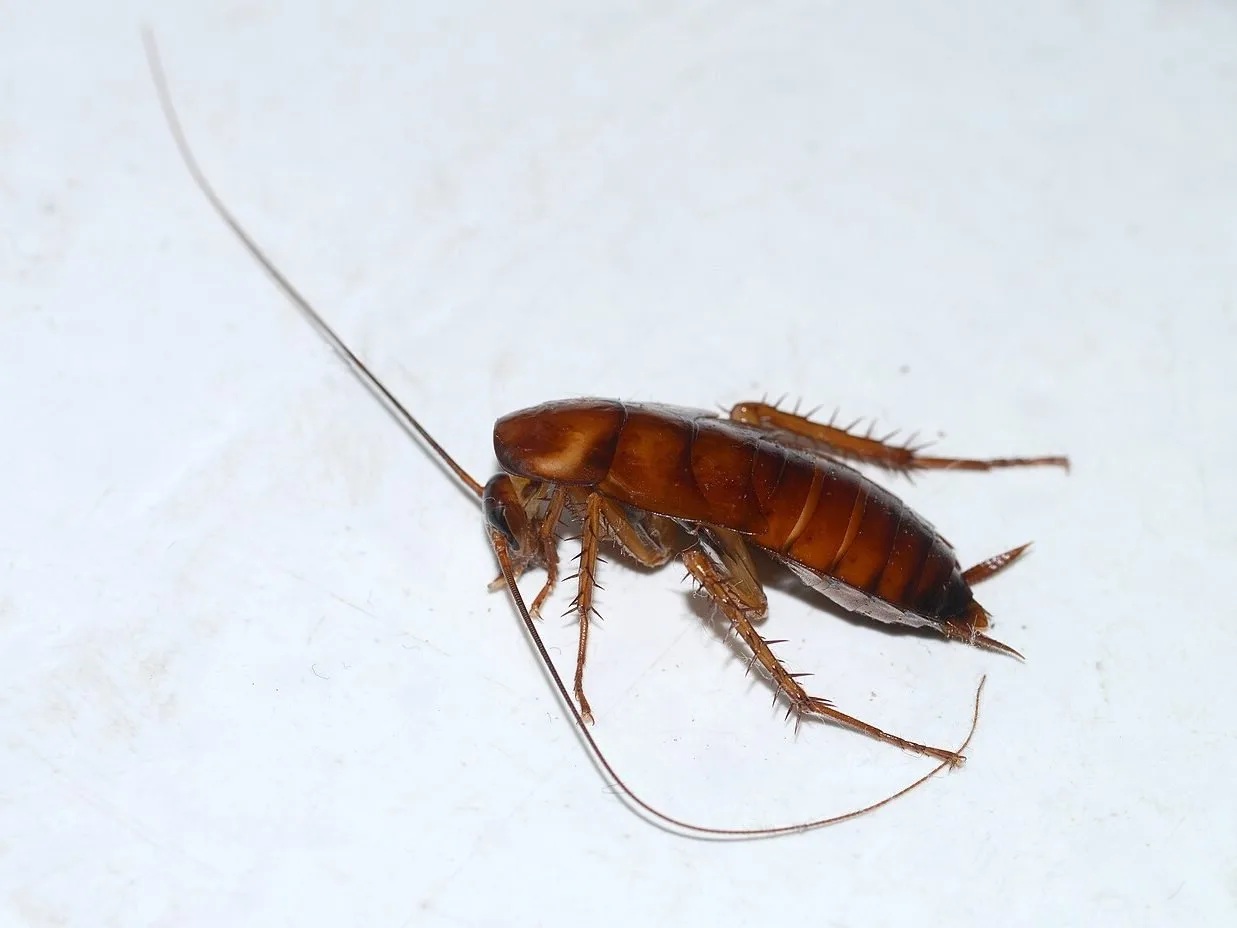
The American cockroach, the larger of the two species we see most.

Colour

Reddish-brown or tan

Legs

6

Size

13–40 mm

Active

Night

Cockroaches

Periplaneta americana and Blattella germanica

Quick answer: two species dominate here. The large reddish-brown American cockroach comes up from drains and rubbish areas. The small tan German cockroach lives inside kitchen equipment and breeds far faster. Which one you have decides whether you treat the drains or the kitchen.

They walk across drains and then across food surfaces, which is what makes them a hygiene problem rather than an unpleasant one. They hide in warm, tight gaps — behind the fridge motor, between two cabinets, under a rubber mat. Seeing one in daylight usually means the harbourage is already full.

Droppings like ground black pepper in cupboard corners.
Purse-shaped egg cases glued behind appliances.
A musty, oily smell in an enclosed kitchen or store.

Spraying is why so many kitchens never clear. A 2025 review of 102 studies found the German cockroach resistant to 60 active ingredients, strongest against pyrethroids — the class most supermarket aerosols rely on. Gel baiting reaches the insects the spray never touches.

Key takeaway: roaches returning weeks after every spray means the treatment is reaching the wrong place.

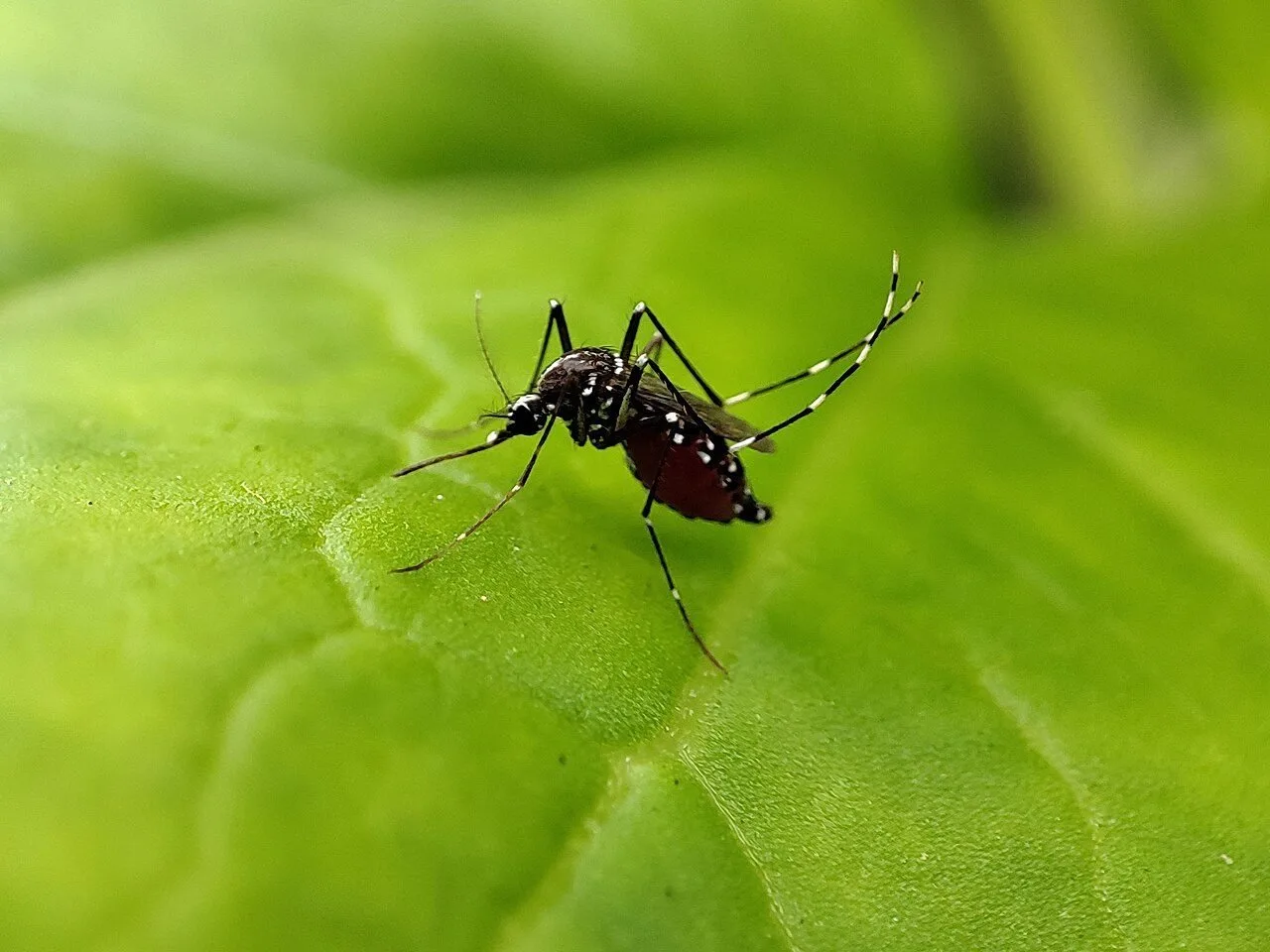
Aedes mosquitoes breed in clean, still water close to the house.

Colour

Dark, white markings

Legs

6

Size

4–7 mm

Active

Dawn and dusk

Mosquitoes

Aedes aegypti and Aedes albopictus

Quick answer: the mosquitoes that matter here are the two Aedes species that carry dengue. They breed in small volumes of clean, still water within metres of the house, and they bite during the day, not only at night.

A pot saucer, a blocked gutter or an aircon drip tray is enough. Because the breeding sites sit on your own compound, fogging alone is temporary: it kills the adults flying at that moment and nothing else.

Wrigglers visible in any water standing longer than a week.
Daytime bites around ankles, indoors and in shaded corners.
Drip trays or stored containers along a boundary wall.

Where you live shapes the risk. A GIS study of Kuala Selangor dengue records, 2020 to 2024, found the strongest clustering in terrace housing, tied to dense built-up areas with vegetation against the buildings. A 2026 study also found Ae. albopictus strains resistant to every insecticide it tested.

Key takeaway: source reduction beats fogging. Remove the water first.

Rats gnaw constantly, which is what puts cabling at risk.

Colour

Brown to near black

Legs

4

Size

16–40 cm with tail

Active

Night

Rats

Rattus rattus and Rattus norvegicus

Quick answer: the roof rat climbs and nests in ceilings and upper floors. The larger Norway rat stays low, in drains, storerooms and ground-floor voids. Both gnaw continuously to keep their incisors short, which is why wiring gets damaged.

Rats follow the same runs nightly and leave greasy rub marks where their fur touches skirting and pipes. Those marks tell a technician where to place control points. Sealing entry points is the half of the job most DIY attempts skip.

Capsule droppings, 10–20 mm, along walls and in storerooms.
Gnawed packaging, cable insulation or timber door edges.
Scratching or running overhead in a false ceiling at night.

There is a health reason not to wait. A 2024 survey of rats trapped at four Kuala Lumpur wet market areas found 34.7% of the 144 rats seropositive for Leptospira. Rat urine in a storeroom or back lane is a real exposure route, not a theoretical one.

Key takeaway: baiting without proofing buys a quiet month, then their replacements arrive.

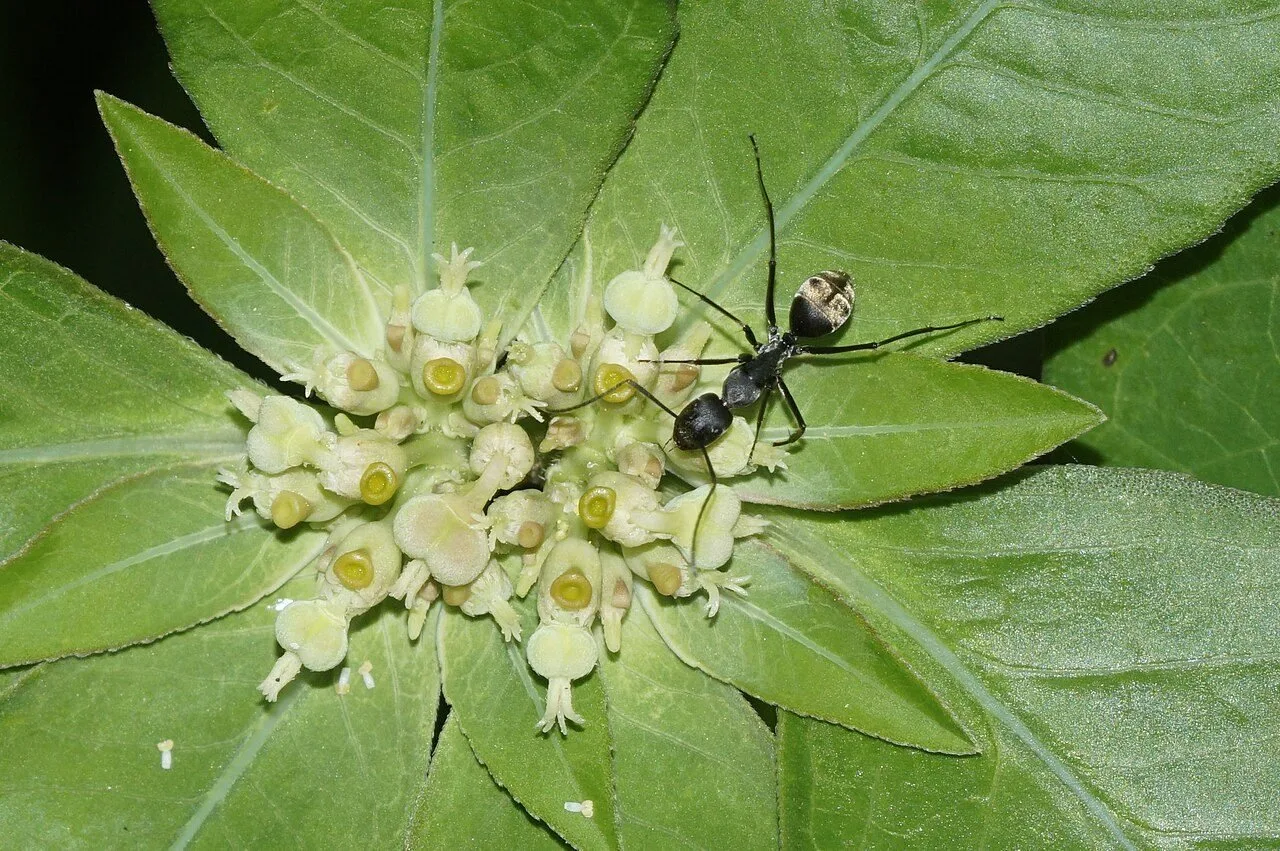
Ant trails lead back to a nest that is usually inside a wall void.

Colour

Yellow-brown to black

Legs

6

Size

1.5–5 mm

Active

All day

Ants

Monomorium pharaonis, Tapinoma and Anoplolepis species

Quick answer: ants indoors are foraging from a nest hidden in a wall void, under tiles or around hot water pipes. The trail is the supply line, not the problem — kill it and the nest replaces it within days.

Malaysian kitchens usually see small sugar-feeding species that arrive within minutes of a spill. Winged ants at an evening window mean something else: a colony old enough to be producing reproductives.

A single-file trail running to a bin, sink or pet bowl.
Fine soil pushed out of a tile joint or skirting gap.
New trails appearing in other rooms shortly after you spray.

That last sign is the important one. A 2025 study found that over-the-counter aerosols made Pharaoh ant colonies split and bud into new nests. Spraying a trail of this species does not reduce the colony — it scatters it, and you end up with several nests instead of one.

Key takeaway: with ants, baiting is the only option that reaches the queen.

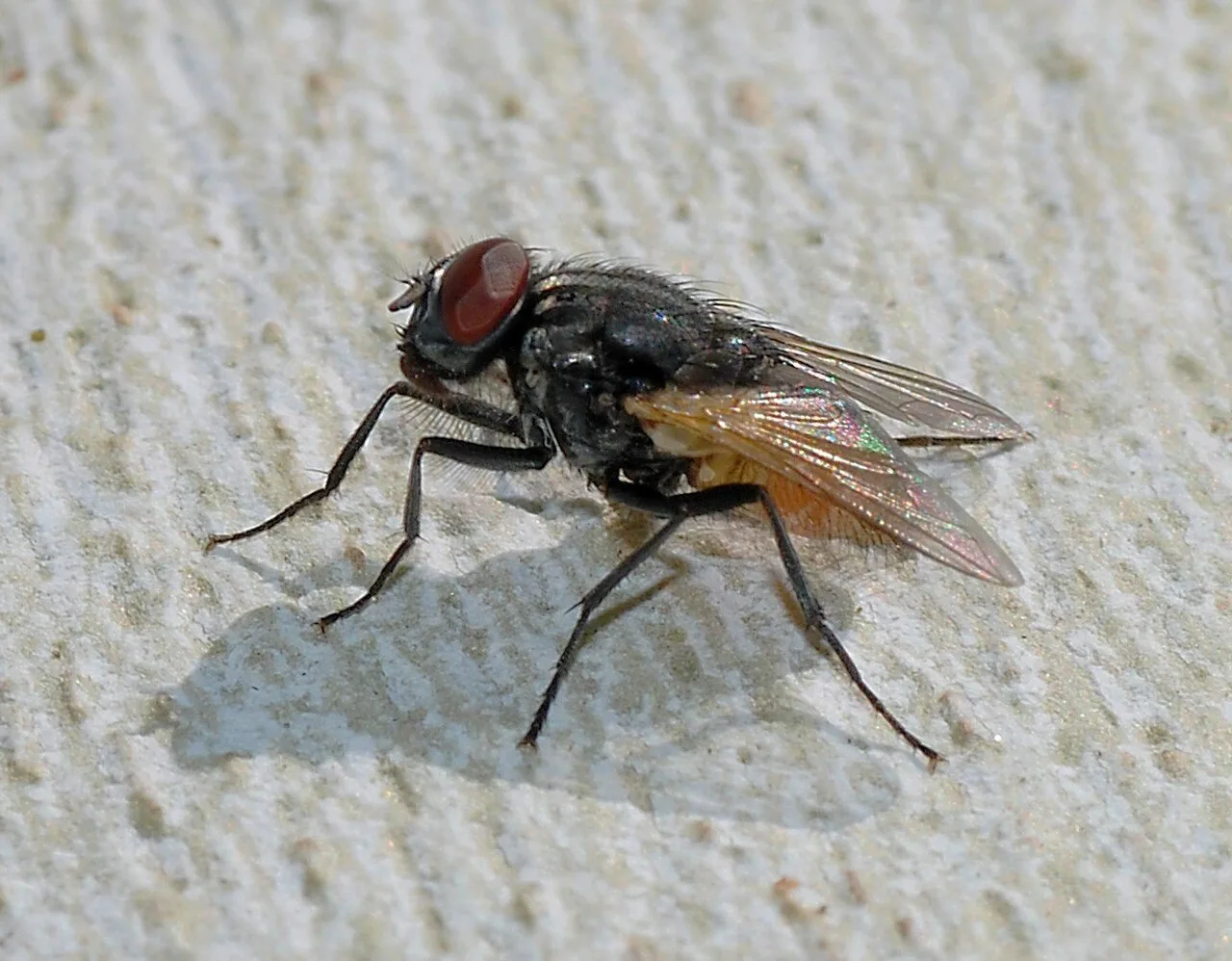
House flies move between waste and food surfaces within minutes.

Colour

Dark grey, striped

Legs

6

Size

6–9 mm

Active

Daylight

Flies

Musca domestica and other filth flies

Quick answer: flies are a breeding-site problem, not a flying-insect problem. Every adult you see came out of waste nearby. Clear the source — a bin, a floor drain, a grease trap — and the numbers fall on their own.

For food businesses it is an audit issue too. Inspectors check the bin area and the drains before the fly units, because that is where the evidence is.

Maggots in a bin base, floor drain or under a grease trap lid.
Dark fly specks on ceilings and light fittings.
Flies clustering at a back door or loading area at midday.

The risk is documented locally. Testing of filth flies caught at wet markets in Klang found 17.8% of the 90 flies carrying non-typhoidal Salmonella, several resistant to multiple antibiotics. A fly landing on prepared food is a transfer, not a nuisance.

Key takeaway: flies rebounding within days means the breeding site is still on site.

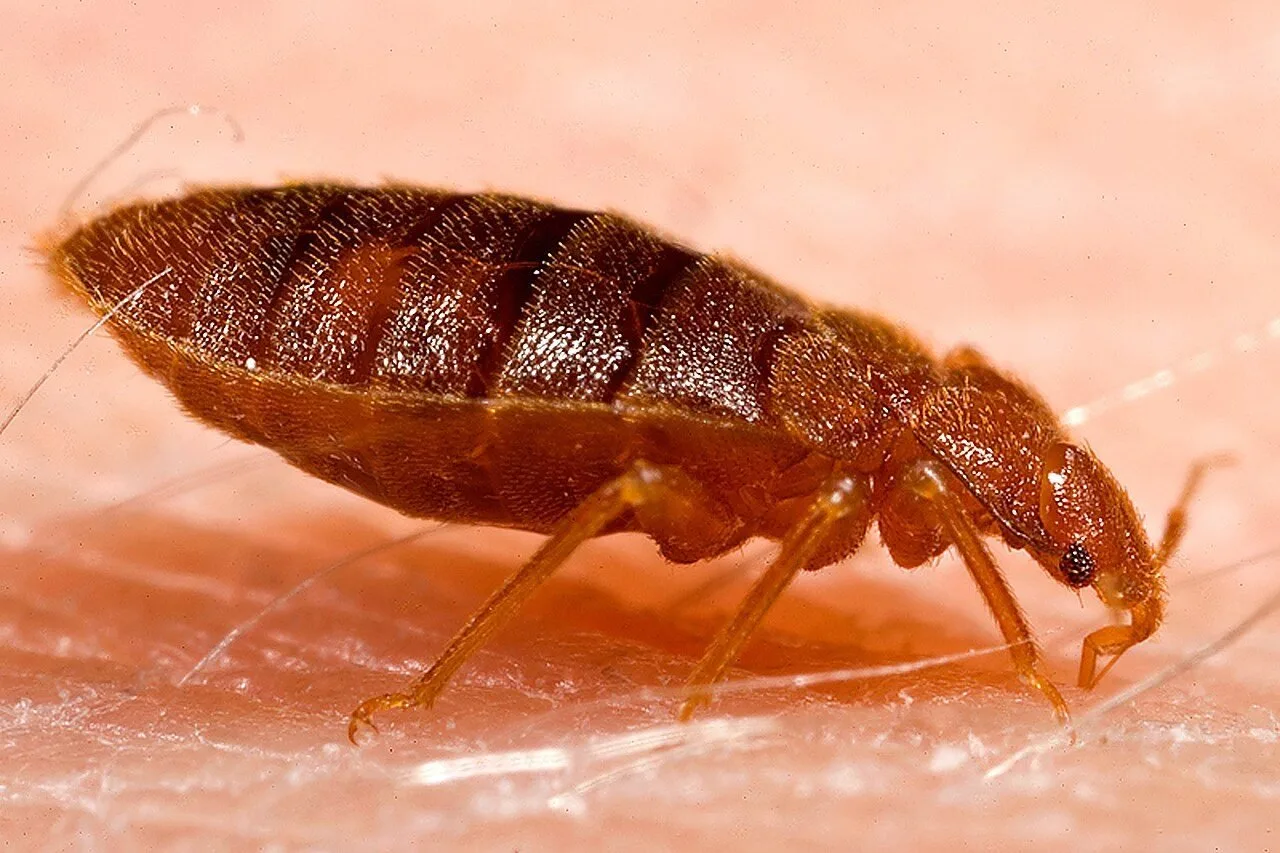
Bed bugs hide in seams and joints, not in the open.

Colour

Mahogany, red when fed

Legs

6

Size

4–7 mm

Active

Night

Bed bugs

Cimex hemipterus — the tropical bed bug

Quick answer: bed bugs do not come from dirt. They arrive in luggage, bags and second-hand furniture, then hide in mattress seams and bed frame joints near where someone sleeps. They feed at night and stay hidden by day.

In apartments, hostels and hotels they spread along shared walls and through moved furniture, so treating one room and leaving the next untouched rarely holds. Inspection covers the rooms either side.

Small rust-coloured blood spots on sheets and pillowcases.
Dark ink-dot faecal marks along mattress piping and bed slats.
Shed skins in frame joints, and bites in rows on exposed skin.

Shop products are close to useless here. Testing of tropical bed bug strains, including one from Kuala Lumpur, found insects surviving over 300 times the label dose of two pyrethroid products, with eggs resistant to everything tested. Hence repeat visits timed to egg hatch.

Key takeaway: one treatment is never enough. The follow-up kills the generation that hatches after it.

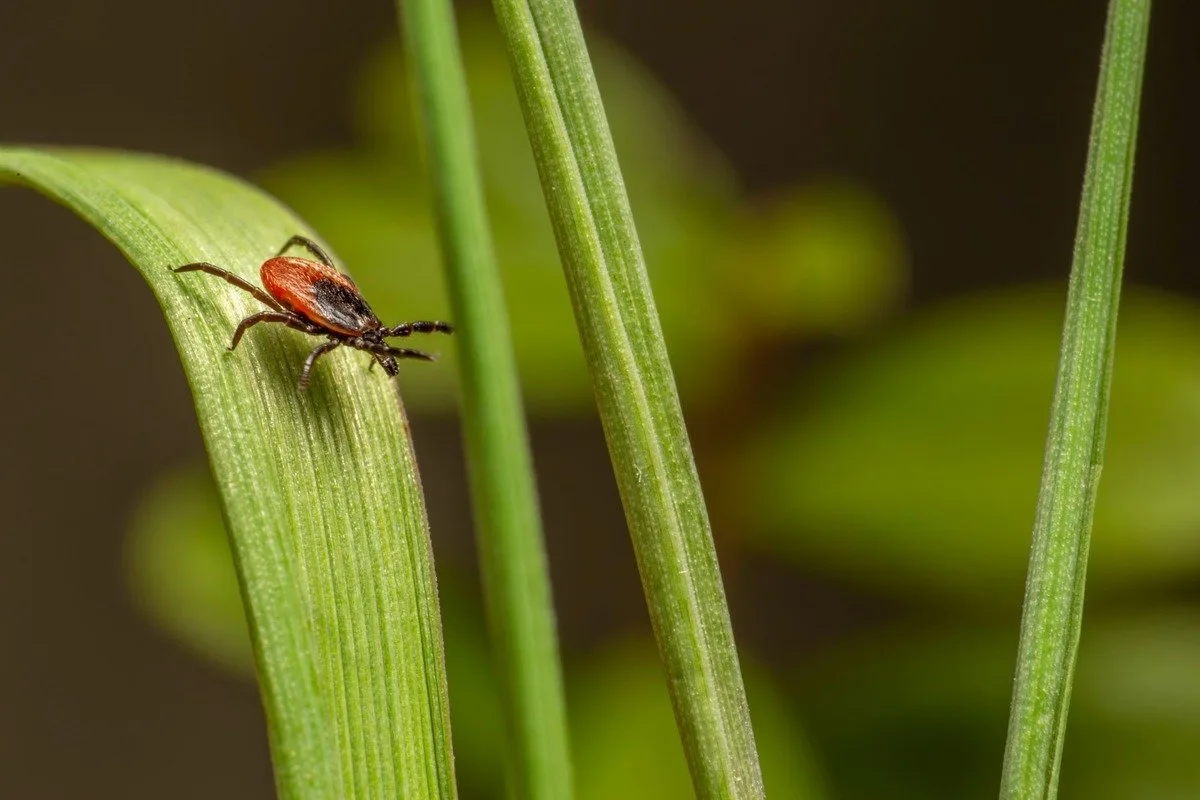
Brown dog ticks wait on low vegetation and in cracks indoors.

Colour

Uniform red-brown

Legs

8

Size

3–11 mm engorged

Active

All year

Ticks and fleas

Rhipicephalus linnaei — the brown dog tick

Quick answer: ticks attach to a pet outdoors, feed, then drop off indoors to hide and lay eggs. Treating the animal alone fails because most of the population is in skirting cracks, furniture joints and pet bedding, not on the dog.

Fleas follow the same pattern: the adults on the animal are a fraction of the total, while eggs and larvae sit in carpets, mats and floor gaps.

Ticks behind a pet’s ears, under the collar or between the toes.
Gritty specks (flea dirt) in pet bedding that redden when damp.
Small brown ticks climbing walls or sitting in skirting gaps.

Numbers build faster than owners expect. A 2026 Malaysian study collected 360 brown dog ticks from just 13 stray dogs in Kampar, Perak, carrying bacteria of veterinary and zoonotic concern including Ehrlichia.

Key takeaway: treat premises and pet together, or indoors restocks the animal within a fortnight.

Identified it? Get a free quote

Tell us the pest, we will get back to you.

The evidence

What the research says about pests here

Five published findings that change how these pests should be treated.

Quick answer: published work on Malaysian pest populations keeps pointing the same way — the shop-bought products most households reach for are the ones local pests have already adapted to. Resistance, colony budding and disease carriage all argue for targeted treatment over spraying.

Five findings and what each one means for your property

Peer-reviewed findings on Malaysian and regional pest populations, with practical implications.
FindingStudyWhat it means for you
German cockroaches resistant to 60 active ingredients Trop Life Sci Res, 2025 — review of 102 studies, 23 countries Repeat spraying selects for survivors. Gel baiting is the durable route.
Tropical bed bugs survived 300× the label dose of two pyrethroid products J Econ Entomol, 2020 — strains including Kuala Lumpur Shop sprays will not clear a room. Plan a treatment plus a timed follow-up.
34.7% of rats at four KL wet market areas seropositive for Leptospira J Vector Borne Dis, 2024 — 144 rats surveyed Rodent activity near food or storage is a health exposure, not just damage.
17.8% of filth flies at Klang wet markets carried non-typhoidal Salmonella Int J Food Microbiol, 2023 — 90 flies tested Fly control in food premises is a food-safety control, and auditors treat it so.
Above-ground baits cleared termite colonies in 6.4 weeks; 83 in-ground stations were never hit J Econ Entomol, 2023 — Coptotermes gestroi Ask where stations go and why. Placement beats station count.

Sources linked per row. Compiled by NPC Pest Control, September 2026.

Not sure whether what you have needs a licensed operator?

A free inspection settles it — we identify the species, show you where it lives and explain the treatment before you commit.

By property type

Which pest turns up where

The building shapes the problem. A high-rise unit and a factory rarely present the same pest.

Quick answer: landed homes see termites, ants and mosquitoes most, because they have soil contact and an outdoor compound. High-rise units see cockroaches, bed bugs and ants moving through service risers. Food premises see cockroaches, flies and rats, and warehouses see rats and flies around loading and waste areas.

How often each pest is the presenting problem, by property type

Likelihood band for each of eight pests across four Klang Valley property types.
PestLanded homeHigh-rise unitShoplot / F&BFactory / warehouse
TermitesHighLowMediumMedium
CockroachesMediumHighHighMedium
MosquitoesHighLowMediumMedium
RatsMediumMediumHighHigh
AntsHighHighMediumLow
FliesLowLowHighHigh
Bed bugsMediumHighLowRare
Ticks & fleasHighMediumRareRare
High
Medium
Low
Rare

Planning guide compiled by NPC Pest Control from the pest types typically presented on Klang Valley jobs. Bands are indicative, not measured service data.

Typical time to bring each pest under control, once a programme starts

Indicative week ranges to control, with the factor that usually decides the timeline.
PestTypical weeksRelative timelineWhat decides it
Flies1–2How fast the breeding source is removed
Mosquitoes2–4Whether standing water is cleared
Cockroaches3–6Species, and access to harbourage
Ants3–6Whether bait reaches the nest
Ticks & fleas4–8Pet and premises treated together
Bed bugs4–8Follow-up timed to egg hatch; adjoining rooms
Rats4–10Entry points sealed, not only baited
Termites8–16Colony size and station placement

Planning guide only. Ranges are indicative for scoping a job and are not a service guarantee — your property is assessed at the free inspection.

Got a pest on this page in your building?

Tell us the property type and the sign you spotted, and we will explain what the treatment involves.

When DIY stops working

Four signs it is time to call a licensed operator

Quick answer: call a licensed pest control operator when you see mud tubes, when the problem returns within weeks of every treatment, when you find droppings or maggots in a food preparation area, or when the pest is spreading between rooms. Shop products do not resolve those four.

There is nothing wrong with handling a small, contained problem yourself. The line is whether the population has a base you cannot reach.

Mud tubes, hollow timber or discarded wings. Termite damage is structural and it is never a DIY job.
It comes back every few weeks. The nest or harbourage is somewhere your treatment is not reaching.
Evidence in a food area. Droppings, maggots or roach activity near food handling is a compliance issue too.
It is spreading. Bed bugs or rats moving between units need a coordinated treatment.

One practical point: ask to see the licence. Pesticide use in Malaysia is regulated, and a licensed operator can tell you what is being applied, at what rate, and how long before you re-enter.

Why NPC

Licensed operator, registered with the Ministry of Health and on the MPSJ panel.
Serving Kuala Lumpur and Selangor since 2006.
Residential, commercial, industrial and healthcare premises.
Free inspection and a written scope before work starts.
Need help?

Still not sure what you have?

Send a photo of the pest on WhatsApp and we will tell you what it is, or call the hotline and describe it.

Licensed & Registered
Residential & Commercial
Klang Valley Coverage
Frequently asked questions

Common pest questions.

What people ask us most about identifying and treating these pests.

Subterranean termites, cockroaches, mosquitoes, rats, ants, flies, bed bugs and ticks account for most residential callouts in Kuala Lumpur and Selangor. Warmth and year-round humidity mean they breed continuously here, so there is no off-season in which a problem fixes itself.

Check the waist and the wings. Termites have a thick, straight body, straight antennae and four wings of equal length. Ants have a pinched waist, elbowed antennae and front wings longer than the back pair. Mud tubes mean termites, never ants.

Aerosols kill the insects you can see and leave the egg cases and harbourage untouched, so the population rebuilds within weeks. German cockroaches are also widely resistant to pyrethroids, the class most household sprays use. Gel baiting reaches the ones behind the fridge.

Bed bugs are not known to transmit disease. The bites cause itchy welts and broken sleep, and scratching can lead to infection. The real cost is how fast they spread through a building in luggage, bags and second-hand furniture.

Treat it as urgent. Rats gnaw constantly to keep their incisors short, putting cabling and pipes at risk, and rats surveyed in Kuala Lumpur wet market areas tested positive for Leptospira. Baiting rarely finishes the job without sealing entry points.

Yes. We serve houses, condominiums, restaurants, hotels, factories, healthcare premises and warehouses across Kuala Lumpur and Selangor, as a licensed operator registered with the Ministry of Health and on the MPSJ panel.

Get started today

Found your pest? Let us deal with it.

Book a free inspection and we will confirm the species, show you where it lives and quote the treatment it actually needs.